Cleanse, moisturize, sun protect—these are the building blocks of a skincare routine. But they miss one crucial step: Exfoliation.
You could think of exfoliation as something like a deeper clean, but that might be missing the point. In fact, sufficient exfoliation not only cleanses the skin, but also helps to tone (by shedding old, dead skin cells) and moisturize (by supporting skin barrier maintenance). In this light, not only is exfoliation an important step in anyone’s skincare routine, but can also boost the effectiveness of its other steps, too.
Products like scrubs and peels are intended to exfoliate the skin, using a variety of ingredients to do so—from rice bran to fruit enzymes. But there are also a group of acids that are commonly found in chemical exfoliants. If you were to list them A to Z, you’d come to alpha hydroxy first—one of the most popular acids of its kind. Here’s a brief introduction to alpha hydroxy acids, including what benefits they could offer your skin, no matter your skin type.
What are alpha hydroxy acids?
Alpha hydroxy acids, or AHAs are a common type of acid. They’re carboxylic compounds (where a carboxylic acid is connected to a substituent) with a hydroxyl carbon attached to an alpha carbon—this is how they’re distinguished from other acids prevalent in skincare, like beta hydroxy acids (BHAs).
AHAs’ claim to fame is their incredible benefits for skin. Discovered about 50 years ago, AHAs have not only expanded our understanding of skincare but our market as well. Today, AHAs can be found in all sorts of formulas, like exfoliating masks and skin-smoothing cleansers. The doctors who pioneered research of AHA were early to note its effectiveness on all skin types, even sensitive skin. (They were recognized at 2010’s Cosmetic Surgery Forum.)
According to the Food and Drug Administration, the primary use of AHAs is to exfoliate. When applied to skin, these acids break down the substances binding the top layer of old skin cells to the layers beneath it, allowing this layer to more easily lift off. How much exfoliation occurs depends on a variety of things, from the concentration of AHAs to the rest of the formula that contains them.
What are the types of AHAs?
There are several types of alpha hydroxy acids that are commonly found in skincare formulations, each named for its source. Most AHAs are derived from fruit or milk. You may see some of the following terms on your favorite formulation’s ingredient labels.
Citric acid. Derived from citrus fruits and juices, this AHA promotes skin peeling, and can even exhibit anti-aging benefits, according to the Environmental Working Group.
Malic acid. This apple-derived acid has been shown to brighten skin, help promote collagen production, and even boost hydration levels, according to some studies. It’s also particularly prized for its gentleness.
Lactic acid. Lactic acid comes from milk. In addition to exfoliating, lactic acid also binds water—moisturizing the skin while sloughing away old cells.
Glycolic acid. One dermatologist told Glamour that glycolic acid, the simplest and smallest AHA on a molecular level, was the most effective for penetrating deep into the skin’s outermost layer. It’s no wonder, then, why it’s so popular in formulas that balance oil levels in the skin.
Tartaric acid. This little-known acid found in limes and grapes is likely to be found in fruit-flavored desserts, but also has skincare properties; the antioxidants in tartaric acid helps repair oxidative damage to skin cells.
What does AHA do for skin?
AHAs benefit skin in myriad ways. The simple act of loosening the bonds between older and newer cells not only leads to a more luminous complexion, but it helps support the skin’s natural functions by accelerating its turnover process. When you apply an AHA consistently, these are the kinds of skin benefits you can expect.
- Exfoliation. It’s one of the most important parts of anybody’s skincare routine. Whether you choose a chemical liquid exfoliant, or something physical like a scrub, it’s important to clear the way so skin can focus on growth—and skincare can get to where it needs to go faster. AHAs, which fall into the chemical exfoliant category, are a tried-and-true way to exfoliate.
- Moisturization and hydration. The structure of AHAs allow them to easily bind to water, which is why many help to hydrate the skin—they can’t help but pull water out of the air and into the skin. Certain AHAs, like lactic acid, are also already a part of skin’s natural moisturization complex, and help to seal up the skin against water loss when applied.
- Smoothing and plumping. Glycolic acid is one AHA that has been observed to increase the gene expression for collagen and hyaluronic acid in the skin, according to a 2015 comparative study, which is why so many glycolic products are used in anti-aging formulas that can reduce the appearance of fine lines or offer plumping benefits to skin.
- Clearing out acne. The Mayo Clinic cites glycolic and lactic acids as two examples of AHAs that can help quell acne before it begins, by helping remove dead skin from pores—and soothing inflammation.
What AHA products benefit skin?
Due to the many ways in which they help skin, you can find AHAs in a wide variety of skincare formulations. If you’re looking to add AHAs into your routine, consider where there might be gaps—and what the right products to fill them may be.
A skin-softening AHA toner. Tatcha’s Texture Tonic is lightweight, but packs an exfoliating punch. It harnesses a suite of active botanical ingredients from Japanese wild rose (which visibly tightens pores) and mugwort (which can calm redness). It also incorporates AHAs derived from a cornucopia of fruits like apple, grapefruit, orange, lemons and limes that resurface uneven, dull, and dry skin, and remove debris and the buildup of dead skin cells.
A skin-brightening AHA serum. Like the alpha hydroxy acid, vitamin C is a fruit derivative shown to deliver many benefits to skin. Between fading dark spots and fighting inflammation, it’s an ingredient that—when correctly stabilized—can turn on your glow. This potent antioxidant joins fruit-derived AHAs in the Violet-C Brightening Serum, intended to resurface dullness and uneven skin—and adding plants like the Japanese angelica root that help to reduce the look of discoloration.
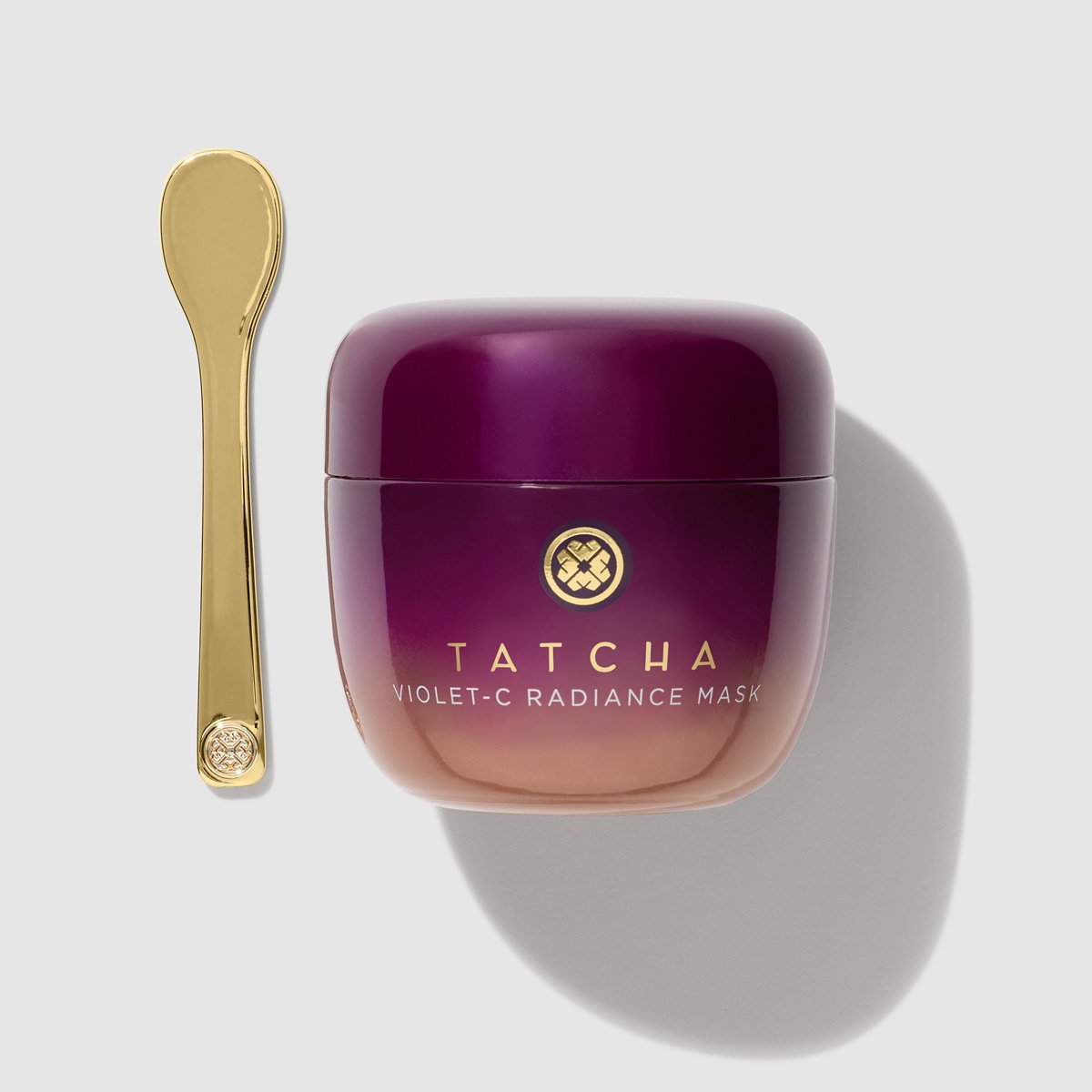
A skin-smoothing AHA mask. For those who have a complete daily routine, but might be looking to add other ingredients into their overall skincare, consider the mask—a once- or twice-weekly treatment, and an opportunity to try something new. AHAs are a common mask additive, and in the Violet-C Radiance Mask, they join two forms of vitamin C in one creamy, hydrating formula. A fast-acting vitamin C derivative absorbs quickly to fight premature aging and support surface cell turnover, while a long-lasting vitamin C derivative repairs free radical damage. It’s gentle enough for any skin type, yet totally effective for all of them.