It’s as if the world runs on an endless series of balancing acts. The expansive universe, of which we are just a microscopic particle of a particle, expands and contracts constantly, maintaining its density while growing infinitely. Inside of our bodies, a complex array of systems run to keep us in homeostasis, our lives dependent on their balance.
Indeed, balance might be at the heart of everything we do. Shintoism, Japan’s national religion, emphasizes the quality of balance through its rituals and teachings. Harmony staves off chaos. You can see reverberations of this philosophy through many facets of Japanese culture, from ritual acts of bathing to mindful skincare practices.
When it comes to washing one’s face, balance takes on a special meaning. Not only do we want to keep oil and water in check, or cleanse and moisturize at the same time, but we also want to keep our skin’s pH balanced. Some ingredients are better at balancing skin than others. Read on to find out about the best pH balancing cleanser for your skin—but first, in an effort to achieve some balance in your own understanding, we’ll provide a little background on what pH is, and how it affects the ecosystem of our skin.
The meaning of skin pH
For centuries, scientists have known about the chemical composition of liquids, and that hydrogen in particular plays an important role in understanding the properties of those liquids. But it wasn’t until the beginning of the 20th century that a Danish scientist condensed this understanding into a simple scale, in which each liquid can be categorized with a pH—or potential hydrogen—value. The pH scale ranges from 0 to 14, with water representing the dead center of the scale, at 7. Any value lower is considered acidic, and anything higher is considered basic, or alkaline.
pH is important because it helps us to understand how a liquid behaves, and how it may interact with other liquids or substances. The United States Geological Survey takes a measurement of pH any time water is studied. If you work in a chemistry lab, you probably hear the term pH uttered multiple times daily. Otherwise, it’s possible that the last time you heard the term was in high school science class. But knowing that our bodies are made up mostly of water, it should come as no surprise that pH levels exist throughout the systems of our body—including in our skin. (After all, our skin is mostly water—about 64%.)
Skin’s average pH is between 4 and 6, on the acidic side of things. It can be slightly higher in different areas of the body, such as in the groin and armpit, where microbial activity is distinct from, say, the skin on the chest or back of the calves. The average pH of the skin on the face is 5.5, according to The Cleveland Clinic. But it’s important to note how these values can fluctuate from person to person due to genetics, environmental factors, and even the skincare we apply to our faces. Your skin’s pH is not fixed. This is where the quality of balance enters the picture.
The purpose of pH balancing skincare
What happens when our skin’s pH goes out of whack?
Think of the world’s ecosystems, from arid deserts to drenched rainforests. All have unique flora and fauna that depend on the climate of the region to allow them to live. Change in those weather systems can cause life to die out and the ecosystem to change. In a way, this is how pH functions in the body: By providing location-specific conditions for a particular system to work. You can see how balance is critical to maintaining these systems.
Our skin’s pH can and will change depending on what we apply to it. Even washing one’s face with alkaline tap water is shown to increase pH up to six hours after application before things start returning to normal. Balance means staying acidic—but not too acidic. As Dr. Oz explained to Good Housekeeping, "the skin’s pH maintains the balance of acidity and alkalinity that protects us from germs, the elements, and toxic substances while keeping us hydrated and storing nutrients and minerals." When pH goes too acidic or too alkaline, you can see it in your skin via dryness, or roughness, or the surfacing of inflammatory skin issues like eczema.
The skin barrier, often the target of our skincare attention, is sometimes called the acid mantle, reflecting its acidic nature. Keeping it in this balanced zone is critical for maintaining skin health. But it’s easier said than done—unless you know about pH balancing skincare.
The difference between pH balanced and pH neutral
While the terms pH balanced vs. pH neutral sound similar, they are critically different. The latter term, pH neutral, refers specifically to water, which has a pH of 7—the midpoint of the pH scale. Washing your face with pure water is beauty advice as old as time. But keep in mind that water is more basic than your skin. The term pH balanced, when applied in a skincare context, usually means keeping skin’s pH near its slightly acidic baseline.
Our skin remains balanced thanks to the work of buffers, which are found throughout the body and help keep pH at the right functional level. Generally, being gentle with your skin, avoiding over-washing or extra exfoliation, is good for maintaining pH balance. But a good skincare formula can also help keep things under control—especially when it comes to cleansing your face.
The best pH balancing cleanser
All of this is why Tatcha formulated the Matcha Cleanse—the newest addition to its bestselling face wash lineup.
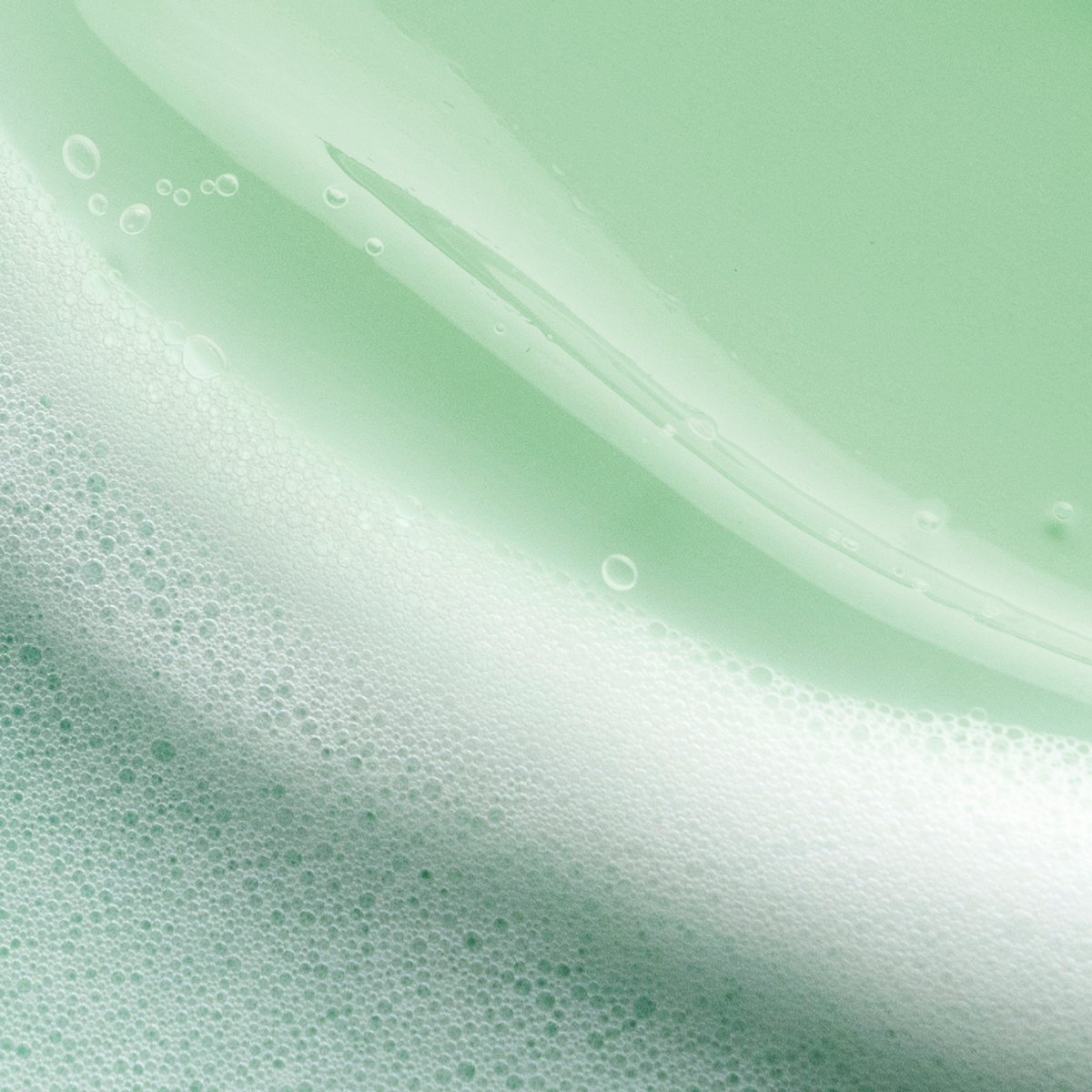
Soaps and harsh detergents can be disruptive to your pH level, which is why dermatologists and other experts alike recommend gentle formulas that cleanse skin without stripping. Products that work with skin, not against it, is the philosophy behind all of Tatcha’s products, and is achieved using a combination of centuries-old Japanese botanicals and contemporary skincare technology. Enter the Matcha Cleanse, a soft gel cleanser that lathers into a cloud of foam—made with a combination of BHA alternatives, as well as kyo-matcha and Japanese mugwort—time-tested ingredients that have been used to balance body and mind, inside and out.
The Matcha Cleanse is particularly good for oily skin types. Maybe they’ve overwashed their skin and dried it out, leading to bouts of over-oiliness. But in essence, they’re looking for balance in their daily skincare routines. Regular use of the Matcha Cleanse, along with proper exfoliation and moisturization, can help achieve the skin balance you seek. With both a balanced complexion and mind, it’s hard not to feel peace radiate from within.