Did you know that red lipstick is about as old as human civilization? According to historians, it was the ancient Sumerians, who lived more than 5000 years ago, who initially crushed red rocks into a lip tint. In light of this fact, it’s easy to see how the mouth—particularly, the lips that surround it—has become one particular locus of our beauty attention for as long as we’ve attended to beauty.
Of course, we’ve come a long way in the intervening five millennia or so. The options for tinting one’s lips could span into an infinitesimal assortment of shades far outside the geological palette—from reds to pinks to blues to prismatic glosses. We shade our lips, we line them, we shellac them, and we have fun doing it.
Skincare has caught up, too. Indeed, while the ancient Sumerians probably had techniques for lotioning their skin, and protecting it from the sun, today’s skincare offerings promise to specifically target unique areas of skin on the body. This is why we have different moisturizers for our bodies than for our faces. But have you ever considered a lip care routine with special skincare for your lips? This highly sensitive, special area of exposed skin on the body has long been a focus of makeup. But why not skincare, too?
What is a lip mask?
Beauty lovers are doubtless familiar with face masks, which take potent skincare formulas and dole them out into more than effective formulas. Because of their potency, these products are likely to be used only a few times a week, as opposed to in your daily skincare routine.
Many of these masks offer additional hydration to areas of the skin. Unlike a typical hydrator or moisturizer, a mask is intended to be left on the skin for a short period of time. Sometimes, these are also applied to sheets that trap, in the manner of a greenhouse, the ingredients between the mask and the skin, to amplify its effectiveness. In occlusive creams, these can provide a seal of moisture that allow the product to sink into skin beneath. Some masks are made for daily use, but most often they are employed once or a few times per week as a helping hand to the rest of your skincare attentions.
While most of us are familiar with the need to moisturize our lips—and this is why a lip balm may be the first beauty product many of us ever use—this skincare step often feels insufficient, or at least it requires multiple applications. By contrast, the best lip mask can be used to supercharge lips with moisture—keeping them healthy, hydrated, and comfortable for longer periods of time.
Do my lips need a mask?
It is hard to think of a part of the skin that sees more action from day to day than the skin on our lips.
The skin on our lips is unlike the skin anywhere else on our body. In contrast to the 16 or so layers that comprise the skin on our face, the vermillion of our lips—the part of your lips that are naturally tinted—are between three to five cellular layers, making them exceptionally thin. Our lips are free of the hair follicles and oil glands that appear elsewhere on skin. Crucially, they also provide a boundary between the skin on the outside of the body and the mucous membrane that lines our innards, from our mouths on down.
Think about what the lips accomplish in a day. For many, spoken language and consumable sustenance cross this threshold multiple times a day. Unlike our delicate mucous membranes, the skin on our lips is also exposed to the elements, and susceptible to sun damage or other environmental stresses. Common allergic reactions, inflammatory responses, or even stress can also contribute to lip dryness, or chapping.
Keeping our lips hydrated, and using moisturizer on them regularly, is the official advice from the American Academy of Dermatology Association on how to keep them healthy. For very dry lips, a “thick ointment,” like petroleum jelly can help seal moisture in. A bit of trend marketing has rebranded applying petroleum jelly as something called slugging, but this is really an act of masking: Leaving a concentrated product on for a short duration up to a few times a week. While lips may not need a mask, mask treatments have shown to help stay skin moisturized for longer. (And applying them infrequently is easier than carrying a lip balm on you at all times!)
What are the benefits of a lip mask?
Our lips need hydration and moisturization, two things which masks excel at. But how, exactly, do they do that? The best lip masks provide many benefits; here are a few things they can do.
Hydrate and moisturize delicate lips. The long lasting effects (and often more potent ingredients) that masks employ are specially suited to care for the lip area. Due to lips’ unique properties, notably a lack of oil glands that help other parts of skin self-moisturize, it’s necessary to reapply hydrators and moisturizers, and masks allow you to go longer between applications.
Repair environmental damage. Like the skin on our cheeks, arms, or feet, our lips are also susceptible to stress induced by the environment around us—some pollutants can cause oxidative stress, for example, and of course ultraviolet radiation from sun exposure can accelerate aging. Thickly applied masks not only help trap moisture that skin needs to keep itself healthy (and naturally repair itself against stress), but they can also have a protective quality, too.
Prime and prep for makeup. Few things help to prepare skin to apply makeup than a base of good skincare. While makeup primers can help pigments adhere to the skin on your face, they’re unlikely to work on dry skin. And when it comes to lips, which can easily chap and flake, the moisturizing power of a lip mask makes for a perfect primer. (They also turn the quotidian act of applying lipstick into a slightly more decadent affair.)
The best lip mask & how to use it
The best kind of lip mask is one that you like enough to use frequently, but that also feels something like a treat—it is, after all, more of a treatment than a daily skincare product. This is why the world’s most beloved lip masks feel like something of an indulgence. Unlike other indulgences, this one is pretty good for you.
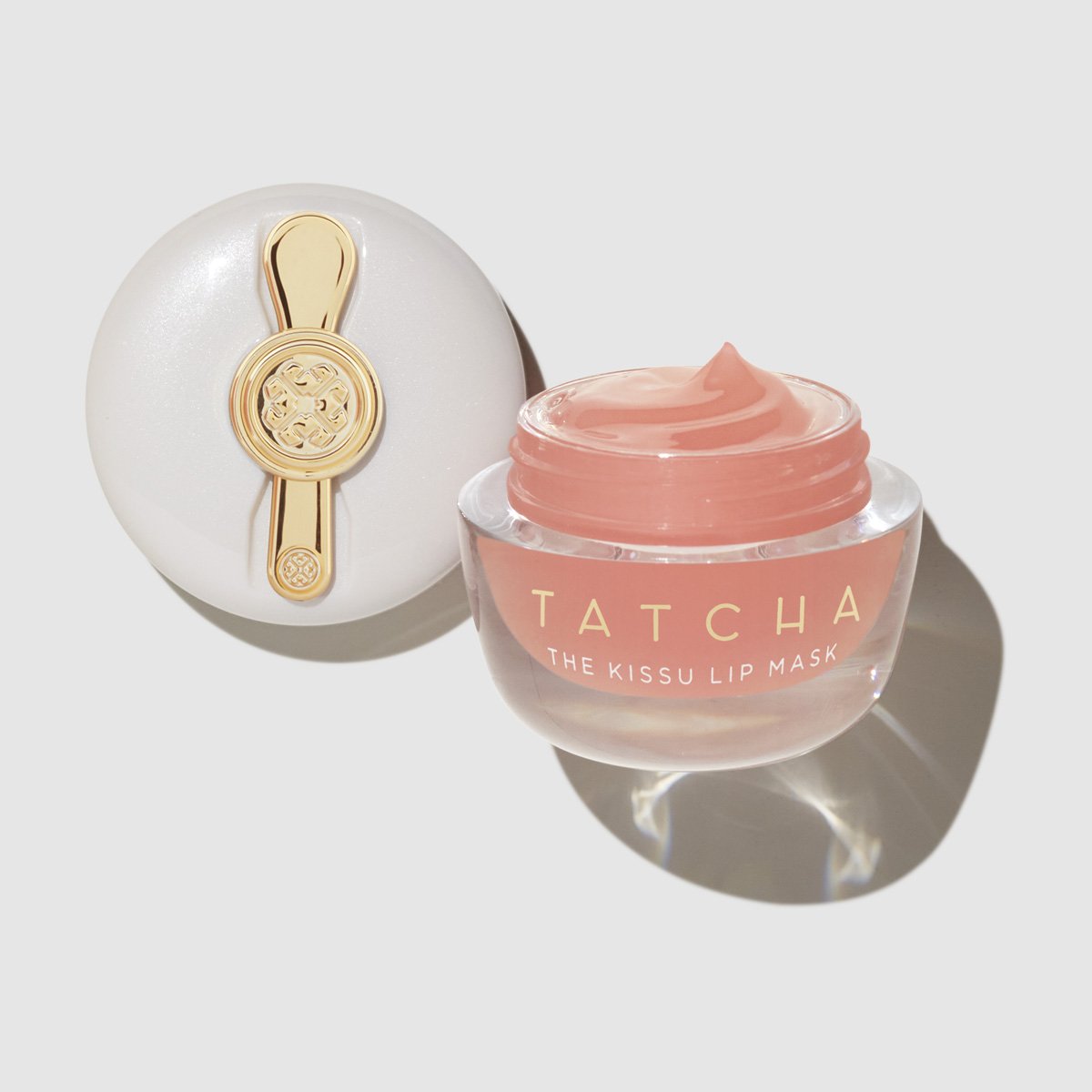
Tatcha’s Kissu Lip Mask is a best-seller for a reason: It distills Japanese skin superplants into a dense, gel texture that restores lushness to lips. One of the main ingredients, Japanese peach extract, is a traditional Japanese beauty secret used centuries ago to help repair damaged lips—and delivers a slight peachy kiss. Camellia oil, rich in oleic acid, vitamins, and nourishing Omegas 3, 6, and 9, makes a superb moisturizer. A pearl-sized amount can be applied to lips whenever necessary—a few times a week, or anytime in a pinch. It’s your nighttime BFF: Go to bed, and wake up with a more perfect pout.