You’ve surely heard the fact that skin is the largest organ on the human body. Measured on its own, it has about 1.5 to 2 square meters of surface area, or between 16 and 20 square feet—about the surface area of a twin-sized mattress.
Across this vast plain of skin types lies a unique and varying topography. In some places, skin is thinner than in others; it may have a different color, texture, or altogether behavior. The skin on our lips is completely different from the skin on our elbows. And over time—slow and gradually, or quickly like the seasons—it changes (and likely so does our skincare routine). Once taut skin will lose elasticity, tone may change, and sometimes you find spots where there once were none.
There are all sorts of reasons for spots, from acne to hyperpigmentation to scars to dark spots. Each dictates a different treatment plan, which is something a dermatologist or licensed aesthetician can tell you all about. The difference between blemishes vs. acne vs. dark spots, however, isn’t too tough to understand once you know the mechanisms behind each.
What are blemishes?
Technically, a blemish can be any undesirable feature. According to the Oxford English Dictionary, the word has roots in medieval times, and has historically been used to describe an imperfection—something that happens to something beautiful to make it less beautiful. While we might poetically call a raincloud a blemish on an otherwise gorgeous weather day, the word is more commonly associated nowadays with imperfections of the skin.
Blemishes vs. Acne
A blemish is a pimple is a zit: All are forms of acne, which are hair follicles or pores that become blocked. Infections can also stir in these blocked pores, though what causes these infections may vary, from stray bacteria to overactive sebaceous glands. The baseline level of oil, or sebum, that your skin produces also may have an affect on how prone to blemishes you are.
Infected hair follicles, known as folliculitis, look similar to acne, and can also be caused by bacterial infections, though they are a different breed of blemish. In fact, there are 6 different types of acne or blemishes. How and why they form often gives hints to what kind of acne blemish it is.
Blackheads & Whiteheads
Blackheads and whiteheads are called comedones, and are caused by sebum (or oil) buildup in the pore. Blackheads are “open” comedones, when dead skin and oil calcifies into a dark mass that sits in an open pore. (Melanin, when oxidized, turns a dark color.) Whiteheads, or “closed” comedones, have formed a seal over the blemish but appear as white dots sometimes ringed in red. They’re irresistible to pop, but experts say don’t: You can make things worse faster.
Pustules and Papules
The key term in “pustule” is “pus”, a thick fluid the body produces in response to an infection. Pustules contain pus, and may also appear red and inflamed. These are signs of an active infection. Like pustules, papules are also signs of infection, but form deeper down within the skin, so they don’t have a pus-filled surface. In fact, they may take on your skin’s color. Neither pustules or papules are contagious, but both should be checked out by a doctor.
Nodules and Cysts
The most severe forms of acne are nodules and cysts. Nodules form deep beneath the skin, and are hard and painful, like stones. Dermatologists don’t know exactly what causes nodular acne, but posit a combination of genetic and environmental factors. Cysts are softer than nodules, but can also be painful. Cystic or nodular acne should always be examined by a dermatologist who can recommend a treatment plan, as store-bought skincare solutions are unlikely to solve them—and could make things worse.
What are dark spots?
Put simply, dark spots are the result of hyperpigmentation, or a high concentration of melanin, skin’s natural pigment. They’re a natural byproduct of being alive, and are usually nothing to worry about. At the same time, some forms of dark spots, like freckles, can be signs of increased risk of skin cancer. (The Skin Cancer Foundation has advice for how to examine your skin at home.)
There are fewer types of dark spots, and while most of them can be attributed to “clumped” melanin cells, there are some distinctions between what exactly causes them. Some dark spots are the result of exposure to sun, while others may be left behind from acne or other inflammation. And while hyperpigmentation cannot be “cured”, and they come and go as they please, there are many ways to help fade dark spots and prevent new ones from forming.
Freckles
We know them, we love them, and we have them from birth. Freckles are genetically determined, but can intensify with sun exposure.
Age spots
Also known as lentigines, “age spots'' are benign skin lesions that appear in darkened patches. They’re caused by sun exposure, and commonly appear on the hands and face. They are also more common to appear in mature skin, as their nickname suggests.
Melasma
Melasma is a form of hyperpigmentation that occurs more commonly in women than in men, and especially during pregnancy, when estrogen and progesterone levels are high. It can also be caused by other things, like stress, sun exposure, or some medications. Melasma can be diagnosed by a dermatologist on sight, and may be treated with active topical ingredients or increased sun protection.
Acne Blemishes vs. Dark Spots
These two very common but very different skincare phenomena warrant different courses of treatments. Acne blemishes usually require more thorough cleansing and exfoliation, and unclogging pores of the sebum within them. Dark spots are a case of hyperpigmentation, and respond best to certain acids or other active ingredients. When in doubt, always talk to a dermatologist, especially when it comes to specific cases of areas of concern. The following should give you a clear idea of how acne blemishes vs. dark spots are managed using skincare.
How to address acne: Clarifying skincare
The good thing about acne is that, by the time it appears, your skin is already trying to contain and quash the issue. This is why it’s sometimes associated with an inflammatory reaction. But using the best skincare for acne-prone skin will help keep things clean and clear in an effort to minimize possible opportunities for blemishes. Gel cleansers like The Matcha Cleanse are popular among those with oily skin, not only for their ability to cleanse deep within pores but also to balance skin’s oil and water levels. Otherwise, a less frequent treatment, like a Clarifying Clay Mask, can be used to give a deeper clean from time to time.
How to treat dark spots: Glow-inducing skincare
For hyperpigmentation, simply cleansing pores won’t do much: This is, after all, a matter of melanin. Treating dark spots begins with prevention, either by avoiding sun exposure or by applying a broad spectrum sunscreen. Sunscreen should be worn everyday and applied at the right time. Here’s more about when to apply sunscreen in your skincare routine.
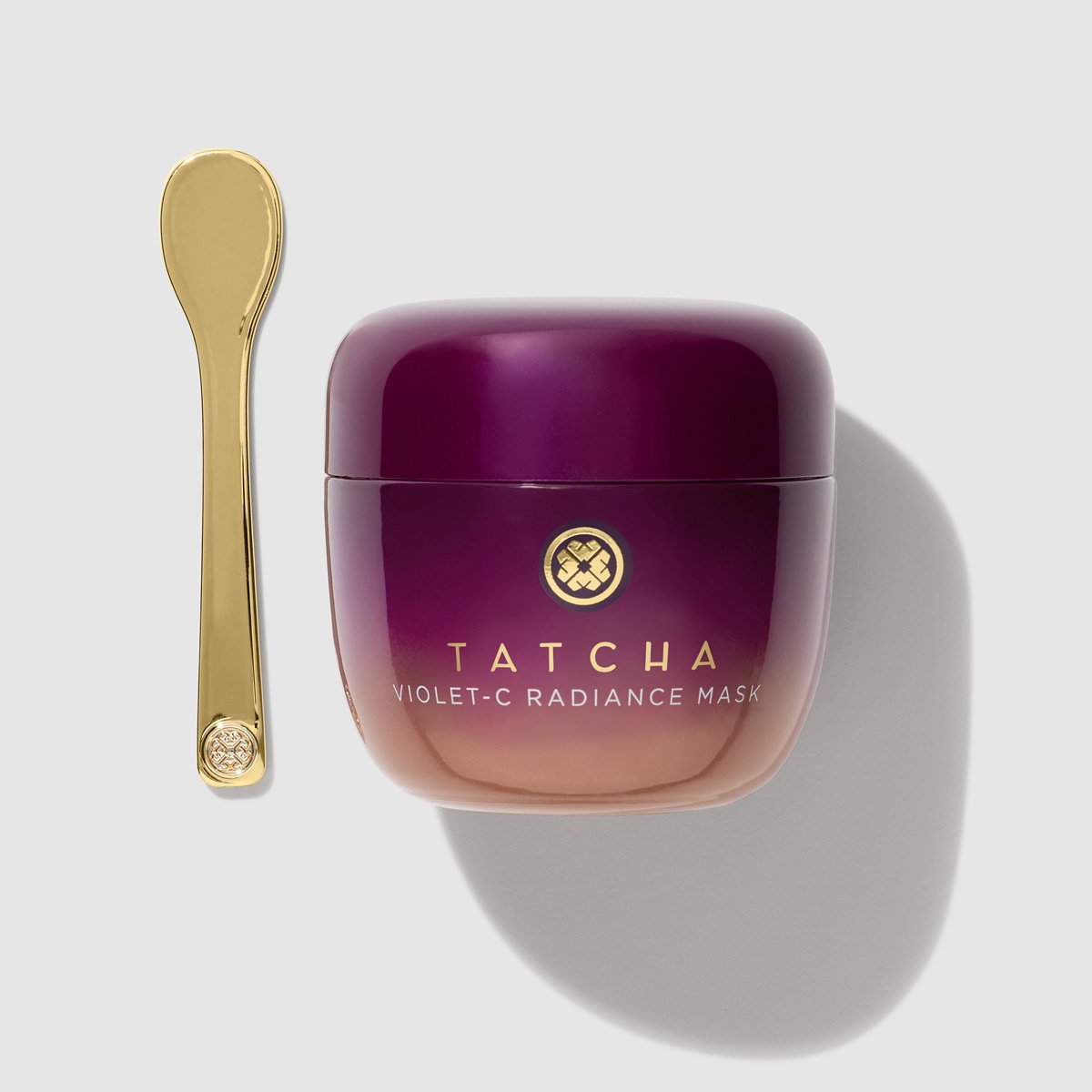
In addition to proper sun protection, a hyperpigmentation skincare routine should include certain acids and antioxidants for fading dark spots. Vitamin C, for one, is a tried-and-true ingredient recommended to those with hyperpigmentation. Here at Tatcha, we incorporate two types of vitamin C derivatives, one derived from the Japanese beautyberry, in the popular Violet-C Brightening Serum. It also contains a bevy of exfoliating alpha hydroxy acids, as does the Violet-C Radiance Mask. Hadasei-3, our proprietary blend of Japanese superfoods, lends a symphony of amino acids to promote natural skin surface turnover—revealing a radiant glow that drowns out spots at any age.