One of the basic elements of skincare is a good cleanse. So basic, in fact, that it’s a daily ritual. In order to keep our skin healthy, we rinse it of makeup, dirt, pollutants, or other impurities that may have collected on our faces throughout the day. The process of exfoliation takes cleansing to the next level by resurfacing the outermost layer of skin, purging dead cells to clear the way. But this step, which happens less often than daily, is just as basic.
Your skin type and concern should dictate the frequency and format of your exfoliation.
Below are some common questions about exfoliants—how to use them, when to use them, why to use them—and a few beloved recommendations.
Why should I exfoliate?
Exfoliation is highly beneficial for most areas of your skin. In the cutaneous sense, exfoliation describes the act of removing dead skin cells and build-up from the outermost layer of skin by one of a few means. When an exfoliant is applied, it reacts with this layer to dissolve bonds between old and new cells, and effectively resurfaces the skin, making it touchably softer, smoother, and in some cases more radiant than it was before.
Skin builds up almost everywhere, which means you can exfoliate almost anything. There are face exfoliants, formulated for every skin type; there are even exfoliants for lips, some of the most delicate skin on our bodies. Our vast beauty market is filled with exfoliant options, distinguished by how they’re made and where they go. The ancient Egyptians would be astonished at how we’ve advanced the practice.
The benefits of exfoliation are manifold, and include:
Improved look and feel of skin. When dead skin builds up on the skin, it can make it look ashen or change its texture to something scaly and craggy. Dry skin can be moisturized, but dead skin needs to be exfoliated. Immediately after exfoliating, you’ll notice a softness and sheen, and over time, an improvement in skin texture.
Stimulates skin’s turnover process. When you exfoliate, what you are doing is speeding up the “desquamification” process by which our skin naturally sheds its dead cells. Some exfoliants can also boost collagen production, or curb the production of extra sebum that caulks dead skin cells together. Many also boost circulation to the area they’re applied, especially in the case of scrubs.
Better product absorption. By clearing away excess dead skin, you give the other steps in your skincare routine—be they actives for the face, lotion on the body, or anything—unimpeded access to nourish your healthy skin, which is why many experts recommend exfoliation as part of a full skincare routine.
Improved makeup application. Those who wear makeup understand the difference between exfoliated and unexfoliated skin. Pigmented products, from concealers to lipsticks, get much better color payoff and wear on the smooth canvas of the former, making exfoliation a makeup lover's essential step.
Are there different kinds of exfoliants?
Exfoliants can typically be divided into one of two categories: Physical or chemical.
A more common term for physical exfoliants are scrubs, those ancient bathing instruments. That’s because physical exfoliation describes the use of finely milled particles, like the seeds-in-oil of yore, to slough away built-up dead skin. We use these kinds of scrubs all over; some are even gentle enough to apply to lips.
Meanwhile there are chemical exfoliants, which rely less on friction and more on reactions. These water-weight formulas often contain acids, like alpha hydroxy acid, which dissolve the bonds between healthy skin cells and dead ones. Many people who exfoliate choose their desired product based on their skin type, and their preference. The result is the same, even if the mechanism is different.
There is a third type of technique, known as mechanical exfoliation. Rather than employing a store bought product, like a scrub or acid, mechanical exfoliation uses tools like handheld blades or machines that can provide targeted resurfacing. But this kind of exfoliation is unlikely to be found outside of a dermatologist’s office or medical spa, given the skill required to perform it. For all of your at-home exfoliating needs, a physical or chemical formula will get the job done.
When do I use an exfoliant?
Exfoliants like The Rice Polish should be used after your cleanse, but before your serum or moisturizer. We wash our skin every day because it gets reliably dirty every day. Be it makeup, dirt, or particles in the air, stuff gets into your skin. And when you arrive to the mirror at night, it’s the first step of your skincare routine to rinse it away so it doesn’t get stuck in your pores. Then you exfoliate for a deeper clean.
Dead skin doesn’t build up so quickly, though you can see when it does. Skin that is paved in dead skin might appear grayer than usual, and be rough to the touch. On our faces, dead skin can become visible when it gets trapped in a pore and becomes a blemish. Exfoliation can help immediately improve the look and feel of skin, but continued exfoliation can help sustain skin’s health and appearance over time. Your dermatologist can help you suss out the right formula for your skincare goals.
How do I apply exfoliants?
How to apply your exfoliant depends on what kind of exfoliant it is. Here are a few common exfoliant types, how to apply them, and where they usually fit into a skincare routine.
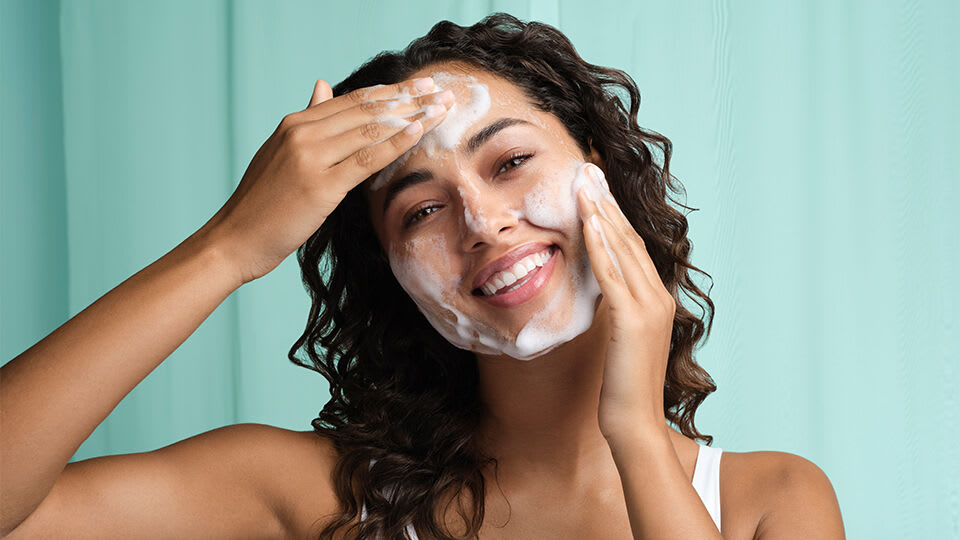
Face scrubs can be applied after cleansing and before using a serum and moisturizer. Usually a pea size of product is enough for the whole face and neck. Some face scrubs are activated with a little water. All require rinsing.
Body scrubs can be applied in the shower on wet skin after body wash. Rinse thoroughly before applying lotion.
Lip scrubs can be gently applied to lips, rinsed, and followed with balm or mask.
Exfoliating acid toners can be pat onto freshly cleansed skin with fingers or a cotton pad. No rinse necessary.
Exfoliating acid masks can be applied to clean skin and left on for as long as directed. After rinsing, they can be followed with a moisturizer or hydrating mask.
How often should I exfoliate?
Most exfoliants, be they physical or chemical, are only recommended up to a few (1–4) times each week. This ensures you’re getting the benefits of regular exfoliation without over-exfoliating your skin and subsequently damaging your skin barrier.
Though exfoliation is an essential step in countless skincare routines, dermatologists note that it’s not for everyone. Some, including those with sensitive skin, might find exfoliation too harsh. (As the American Academy of Dermatology Association notes, improper exfoliation can do more harm than good.) Though there are gentle forms of exfoliation, you should talk to your own dermatologist to figure out if exfoliation (and which form of exfoliation) is right for you. They can also give you more specific recommendations on frequency.
How long have we been exfoliating?
Exfoliation isn’t a newfangled skincare concept. There’s evidence in the historical record that suggests the ancient Egyptians made some of the earliest exfoliators known to man from ground seeds and stones suspended in luxurious oils and balms. In 18th century Japan, geisha performers, the “it-girls” of their time and place, took meticulous care of their skin by cleansing and exfoliating it. Their ministrations were recorded in a three-volume series called the Miyakofuzoku Kewaiden or Capital Beauty and Style Handbook, which was published in 1813. While some of its tips are outdated—like the lead-based oshiroi white face paint it recommended—others are simply timeless, like their use of camellia oil as a cleanser and skin-softener.
The Handbook described how geisha performers and their trainees would not only paint their makeup, but also care for the skin beneath it. If skin was treated properly and consistently, it could begin to take on the bouncy qualities of rice confections—in Japanese, “mochi hada,” or mochi skin. Cleansing and moisturizing are essential to achieving this level of softness, but a little exfoliation can also help you get there, too, if you know how to choose the right one.
What are some of the best exfoliants?
The best exfoliants will offer you noticeable benefits to your skin right after using. It may include ingredients that have worked for centuries, or newfangled chemicals given to us by modern science. But the most important quality of an exfoliant is something you will routinely use, as consistency begets the most benefits.
When she was working on developing the Tatcha skincare range, founder Vicky Tsai looked back in time: to the Capital Beauty and Style Handbook, and the beauty routines of Japan’s pre-Meiji It girls. It was there she discovered a beloved exfoliant from antiquity, in rice bran. This powerful ingredient is a diet staple for a reason, including a host of vitamins and antioxidants, as well as compounds known to hydrate and repair skin.
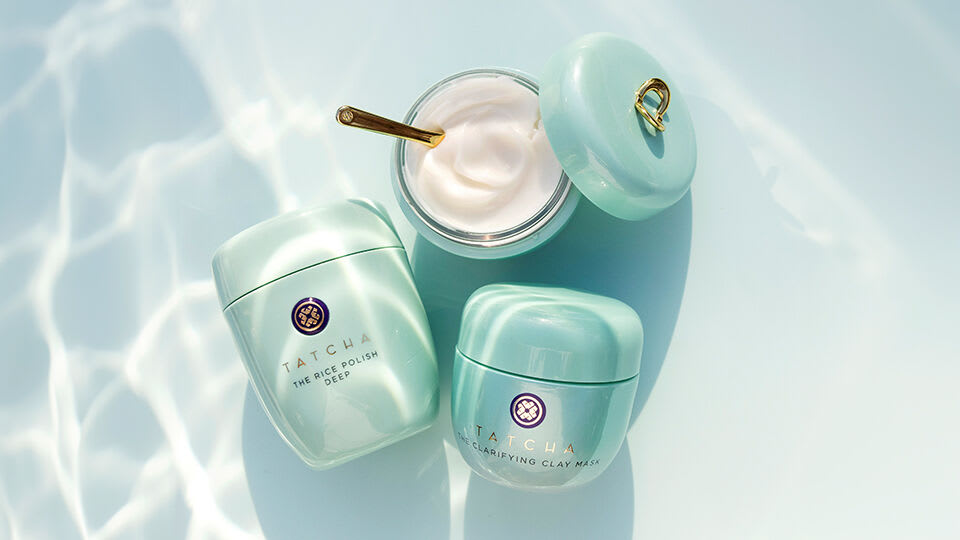
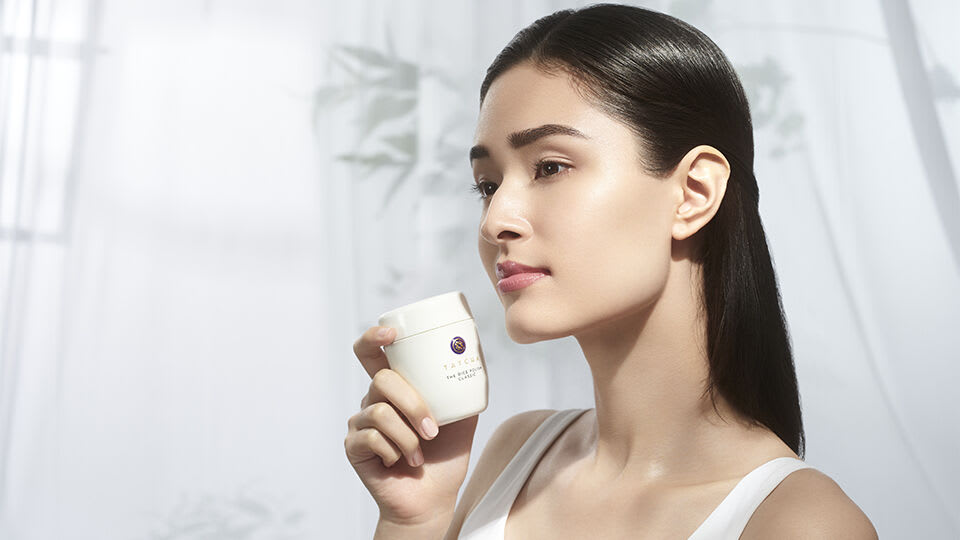
When it’s ground up into a fine scrub, rice bran’s benefits can be applied and amplified. This inspired the Rice Polish, Tatcha’s best-selling gentle exfoliant. When mixed with water, the Rice Polish lathers into a cloudlike foam. Rice bran helps to smooth the skin, while added papaya enzymes—a natural acid alternative—provide further exfoliation and help coax out skin’s glow. It’s so popular that it has inspired other versions tailored to different skin types, from dry to oily. There’s a rice polish for every face.
Those curious about chemical exfoliation might be more interested in the Texture Tonic, an exfoliating toner powered by fruit-derived alpha hydroxy acids. Inspired by the watery lotions Japanese women traditionally applied to cool, tighten, and balance skin, the Texture Tonic also reduces redness and visibly tightens pores. Exfoliants can’t do everything, but they can do a lot.