Chap happens. Throughout our lives, and regardless of our skin type, our skin may be prone to dryness in some areas, especially in arid climes or winter times. Dryness doesn’t always mean a lack of hydration in the skin, but usually refers to our skin barrier, that outermost layer of the cutaneous system tasked with keeping necessary moisture inside the skin, and minimizing water loss in the process. Everybody has had dry skin, and seen the many expressions it can take on, from redness to flakiness to scaliness.
On certain areas of the body, skin’s texture is different, and shows dryness in varied ways. Take the skin on your lips. Unlike elsewhere on your face, the skin on your lips is poreless and lacks the sebaceous glands that help skin self-moisturize. This, along with the constant use of our lips—to eat, to speak, to kiss, to breathe—makes them dry fast. This leads to chapped lips, which is what we tend to call lips that have dried out to the point of flaking, hardening, and lightening in color.
Chapped lips aren’t just dry, they’re inflamed. Chapped lips, also known as cheilitis, come in many different forms, and some of them are treated differently than others. Many can be solved in part by adopting a lip balm or mask. But you may be surprised to learn that there are a few other ways to heal chapped lips, too.
What Are Chapped Lips?
Lips that are dry and cracked are chapped, according to the American Academy of Dermatology Association. The skin on our cheeks may secrete sebum, a waxy substance we often liken to oil, in order to shore up the mortar-like binding between dead skin cells that make up our skin barrier. But without sebaceous glands, lips can’t automatically self-moisturize, leaving the task to us.
There is evidence all over the historical record that chapped lips have been a source of frustration—and a locus for moisturization—for at least centuries. Some say that the ancient Egyptians, those cosmetic pioneers, used beeswax for lip balm. Others cite the appearance of lip ointments in 16th-century English texts that describe different ingredients or an “odiferous and sweet smelling grease that keeps the lips and hands from chinks and chaps.”
Only in the past century or so have Chapstick, named for a petrolatum-based wax invented by an American, and similar balms been the go-to topical formulas for chapped lips. But chapping doesn’t always just mean everyday dry lips. There can be a number of reasons your lips are chapped, beyond a simple lack of sebum.
What Causes Chapped Lips?
Chapped lips can be caused by a variety of external and internal factors, from where you’re located to what you’re doing. A few common causes of chapping include:
Weather. A common culprit of chapped lips, the weather and climate can influence moisture levels in skin, which is why it’s not uncommon to consider a lip routine that applies more moisture than usual. If you’re a traveler, dry climates—or the plane rides it takes to get to them — can also dry out lips.
Sun damage. Every skincare devotee knows about the effects of sun on skin, and the risk applies to lips, too. The American Academy of Oral Medicine warns of solar cheilitis, or a premalignant degenerative condition of the lip’s skin tissue, as a particularly severe example of UV-induced chapping. It’s relatively rare, but another good reason to apply SPF everyday and everywhere, including on lips.
Topical irritation. Dry, flaky skin anywhere can be a sign of irritation, and the same is true of our lips. Contact dermatitis (or eczema) and allergic reactions from products can cause lips to become chapped. Some medications, like oral Accutane, can also cause chapping as a side effect. If you notice your lips becoming chapped in response to certain products, alert your dermatologist before you go solving it for yourself.
Infection. The Cleveland Clinic lists a few common types of chapped lips, including two caused by infections: Angular cheilitis, which is caused by a fungus, and infective cheilitis, caused by a virus or bacteria. (Herpes simplex is one example.) These cases tend to look a little more serious than regular chapping, and require a dermatologist’s advice to effectively care for.
Personal behaviors. Notice that you nervously lick your lips? Or do you have a job that requires frequent lip use, like a translator or reed player? These sorts of occupational hazards may contribute to dryness—and may necessitate a lip balm on hand.
How to Heal Chapped Lips
The best way to heal chapped lips is to prevent them from chapping in the first place. If it’s too late for that, a lip treatment can provide a seal of moisture over lip skin, and is one of the surest ways to prevent chapped lips. But it’s not the only way to care for or heal chapped lips. Here are a couple other considerations that can deliver you to soft, supple lips:
Stay Hydrated
There is some debate on if water consumption truly helps hydrate or moisturize the skin, and the jury is still out. Some experts say it doesn’t matter, even as organizations like the American Academy of Dermatology Association specifically recommend increased water intake for chapped lips. While a tall glass of water, or even a gallon, is unlikely to take your lips from chapped to not, it’s always a good idea to maintain hydration, especially when dry skin is present. It can only help.
Gently Exfoliate
Just as we exfoliate the skin elsewhere on our face and body, making use of a lip scrub can help clear away the dead skin and bio-debris that builds up on lips. Not only does gentle lip exfoliation smooth out and resurface lip skin, but it also makes it easier for lip balms or other moisturizers to work better, unimpeded by chapping.
Keep Lip Service to a Minimum
It’s a tic that follows us from our first years and well into adulthood: The need to put things in our mouth. If you find yourself absent-mindedly gnawing on pen caps, nails, or anything at all, the fact that it's contributing to your chapped lips may help you kick the habit.
Moisturize
A lip balm or a topical emollient provides a seal of moisture over lip skin, and is one of the surest ways to keep chapped lips at bay. But gone are the days of simple balms. The best lip balms not only moisturize but also provide other lip care benefits, from sun protection to superpowered ingredients.
Talk to Your Dermatologist
Dry lips are easy enough to diagnose on their own, but chapped lips come in many different causes. How do you distinguish between a fungal infection and too much sun exposure? If you can’t answer that question with confidence, it’s a good idea to consult your dermatologist on what you can do to moisturize your lips, especially if they’re chronically dry or chapped, or get drier in response to certain product or environmental stimuli.
Moisturizers for Healing Chapped Lips
For Day: Protect With Lip SPF
One popular type of lip balm is the lip tint, which, as the name suggests, adds color to lips in addition to moisturizing them. Not all lip tints are lip balms—some are oils, or serums, or are more makeup than skincare altogether—which is why it’s critical to find a lip tint with moisturizing power. The main ingredients in The Kissu Lip Tint include silk protein and botanical lanolin to form a moisture seal, and the tint comes in a wardrobe of wearable shades, from a bright pink to a jammy berry. Best of all, it provides SPF 25 sun protection to lips, making it perfect for all-day wear.
For Night: Treat With a Lip Mask
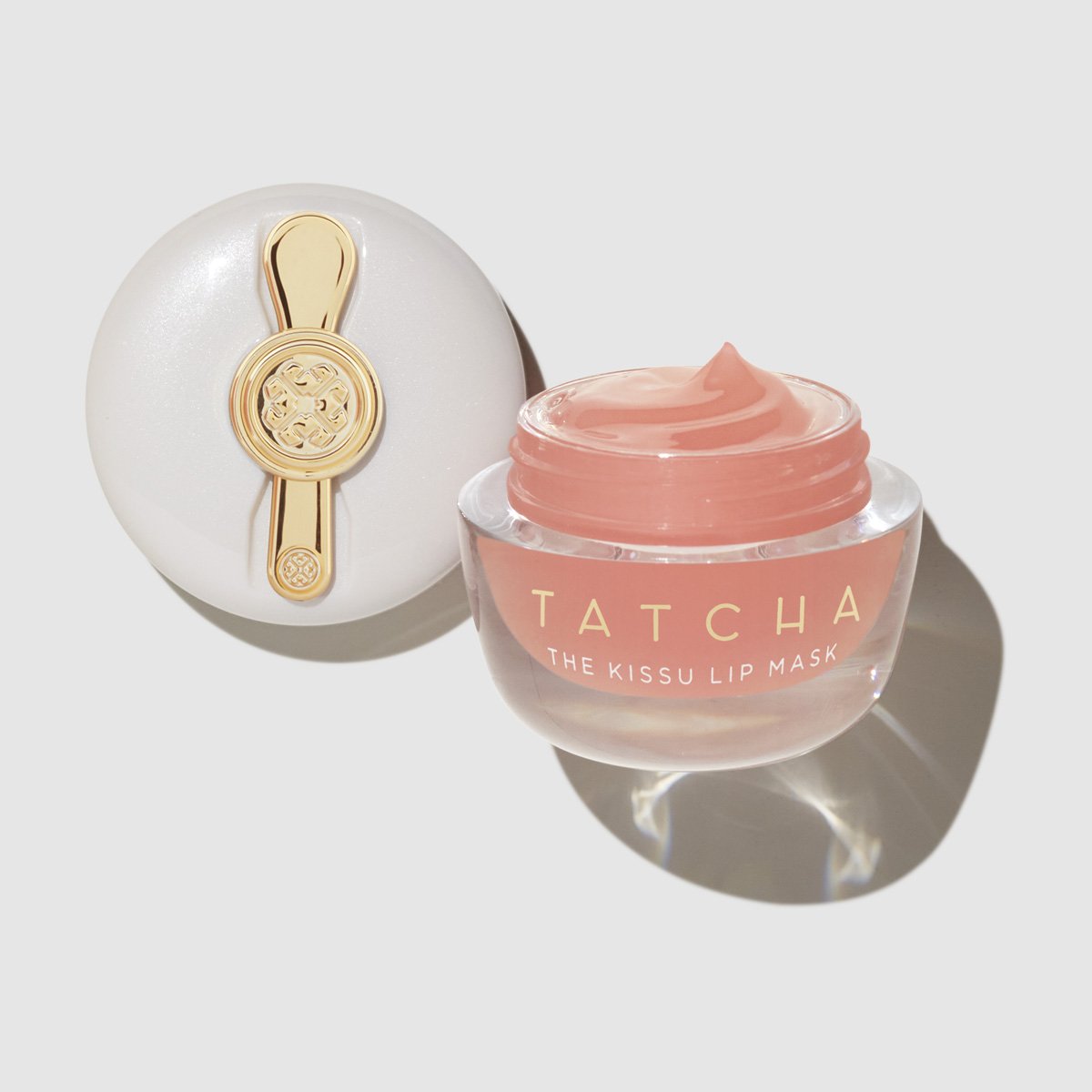
You can think of lip masks just as you might face masks: These thicker formulas offer more moisture than their everyday counterparts. Tatcha’s best-selling overnight balm, The Kissu Lip Mask supercharges lips with moisture with a combination of Japanese botanicals, like juicy peach extract, and tried-and-true powerhouses like natural squalane, one of the most effective emollients used in contemporary skincare.
For Both: Seal In Moisture With Lip Balm
Our Japanese skincare is endlessly inspired by time-tested botanical ingredients, and some are incorporated across multiple categories. Camellia oil is one such ingredient: This centuries-old botanical has long been revered for its moisture-sealing powers and its featherweight texture. It’s used in our best-selling oil cleanser, but finds its way into other formulas, like The Camellia Gold Spun Lip Balm—an actual pot of gold, for your lips, thanks to a dusting of 23-karat gold flakes. A floral softness paired with a metallic shimmer for radiant lips that feel happy, healthy, and hydrated—all day and night.