Summary
- There are two types of sunscreen: chemical and physical (also known as chemical). But there is also a third type: hybrid, which is when chemical and mineral sunscreens combine.
- While physical and chemical sunscreens are often pitted against each other, no filter is better than the other; it’s simply a matter of personal preference.
- There are major differences, pros and cons with all options, the most important factor is to weigh all the info and determine which is right for you. Because after all, if you want to have healthy skin, you must wear sunscreen daily, which means you must enjoy the feeling of it.
In the battle of sunscreens, physical and chemical filters seem to compete to become the top contender. However, each sunscreen has its positive and negative aspects; the trick is to pick the option ideal for you personally. We help you do exactly that.
So many of life’s most treasured moments occur outside in the sun: picnics in the park, walks with friends, and exploring a new neighborhood or destination. But while soaking up the sunshine, it’s imperative to protect your skin with sunscreen, wearing it each and every day. Before applying your sun protection, did you know there are two kinds of sunscreen — chemical sunscreen and physical sunscreen (the two can also be mixed for a hybrid formula)? Understanding the difference between the two iterations is fairly simple and can help you uncover your perfect SPF formula. Chemical vs. physical sunscreen — keep reading to discover more about the two types of protection and the best option for your skin type.
What is Physical Sunscreen?
Physical sunscreen contains active mineral ingredients, says the Mayo Clinic, like titanium dioxide or zinc oxide. This is why physical sunscreens are often interchangeably called a mineral sunscreen. A physical sunscreen works by sitting on top of your skin to form a shield and reflect against harmful and damaging UV rays.
What is Chemical Sunscreen?
Chemical sunscreen contains organic compounds, like oxybenzone, octinoxate, octisalate, and avobenzone. These ingredients gently sink into the skin and protect you by absorbing UV rays and changing them into heat, deactivating them, and then releasing that heat from the skin. (Very cool!)
Physical Sunscreen vs. Chemical Sunscreen
Both sunscreens are wonderful and necessary – it just depends on your personal preference. Here are a few notes to help you gather more information.
Physical Sunscreen
Pro: Works Immediately
Physical sunscreen is a natural broad-spectrum sunscreen, as it offers sun protection from both UVA and UVB rays. It also protects your skin from the sun as soon as it’s applied — you do not need to wait for it to take effect.
Pro: Great for Sensitive and Acne-Prone Skin
Physical sunscreen is usually a great option for those with sensitivities. The Cleveland Clinic says that mineral sunscreens are generally well-tolerated by people with sensitive skin or those prone to skin allergies because the mineral active ingredients are noted to be incredibly gentle. This is because zinc oxide is wonderfully anti-inflammatory and particularly great for sensitive and reactive skin.
Mineral sunscreens are also prized for their compatibility with acne-prone skin. (Although check to ensure the product is listed as non-comedogenic because other ingredients in the formula could trigger acne.) Zinc oxide is naturally antibacterial, helping to soothe and not trigger acne.
Note: Some Formulas Can Leave a White Cast
While mineral sunscreen has many benefits…it does have one very real issue: a whitish cast if the formula has a high zinc percentage. The other perception is a goopy feel, which some mineral sunscreens absolutely can possess due to the high mineral percentage. The zinc oxide can make it more difficult to rub in and still leave a white tint behind.
However, many, many brands have worked tirelessly to create lightweight zinc-based sunscreens without a white cast (including Tatcha!), so don’t count physical sunscreens out.
Chemical Sunscreen
Pro: Applies Easily – With No Cast
Chemical sunscreen tends to be thinner and spread more easily and flawlessly on the skin. They often don’t rely on zinc formulas, so they will appear more invisible on the skin, making them ideal for darker skin tones.
Pro: Skin Benefits
Chemical filters often work very well with other ingredients, so many formulas will be boosted with skincare ingredients that treat and protect the skin, like peptides, antioxidants, and enzymes. Making them a one-two punch of skincare and sun protection.
Note: Some Chemical Formulas Can Irritate
Multiple active ingredients are combined to achieve UVA and UVB chemical protection, so there may be a higher chance of stinging and irritation for some. Also, if acne-protection is a top priority, look for formulas that tout they’re non-comedogenic. Additionally, while we’re speaking on chemical sunscreens, the filters need at least 10 to 15 minutes after application to achieve full protection, so plan ahead before heading outdoors.
Chemical AND Physical Sunscreen In One Formula
For the best of both worlds, some SPFs combine both chemical and physical sunscreen in one product. The formula can take away the woes associated with each type of protection, allowing greater ease of application, longer-lasting wear, and stronger coverage.
Physical Sunscreen vs. Chemical Sunscreen – Which is Better?
The most important thing is to wear sunscreen daily. There is no superior SPF protection – whatever option you’ll use daily is the best sunscreen for you. There are many outdated and negative associations with sunscreen, like stinky, thick, or sticky formulas. But it’s an exciting, innovative time in skincare: modern sunscreens – whether they are chemical, physical, or a blend of both – are wonderfully advanced and not only protective, but oftentimes have cosmetic benefits that improve the skin’s overall health.
Still can’t decide which is right for you? There are a few things to consider that’ll help you narrow down your search.
Consider Your Skin Type
Take into account your skin type, as certain skin types might enjoy using a physical sunscreen over a chemical, or vice versa. Have reactive or sensitive skin? Tend to breakout a few times a week or month? A physical sunscreen (or a non-comedogenic chemical) is probably best for you. More oily skin? Or resilient, non-reactive skin? A chemical sunscreen might work beautifully for you. (That said, again, whatever sunscreen you enjoy using is the best sunscreen for your skin.)
Consider Your Skin Tone
Those with deeper skin tones can find physical sunscreens difficult to apply without leaving a frustratingly ghostly cast behind. Chemical protection can provide a more seamless, invisible application. But don’t count physical out entirely: there is a new genre of tinted physical sunscreens that might work perfectly for medium to dark tones.
Best Physical and Chemical Sunscreen Products
At Tatcha, we take the honor of caring for your skin very seriously, especially when it comes to something as important as sunscreen. We recommend choosing a broad-spectrum sunscreen with at least SPF 35 protection. Here are a few of our favorite formulas.
Best Chemical Sunscreen
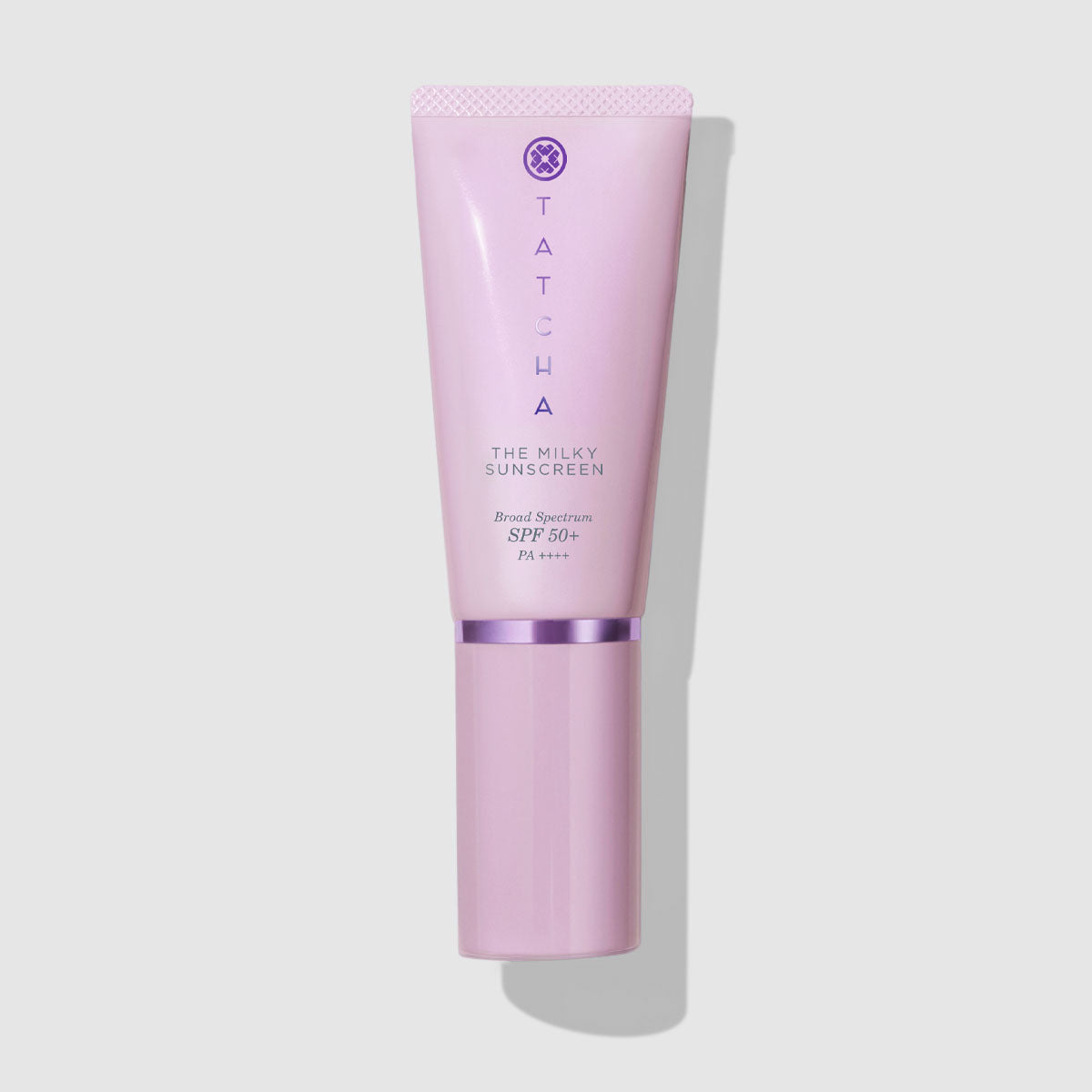
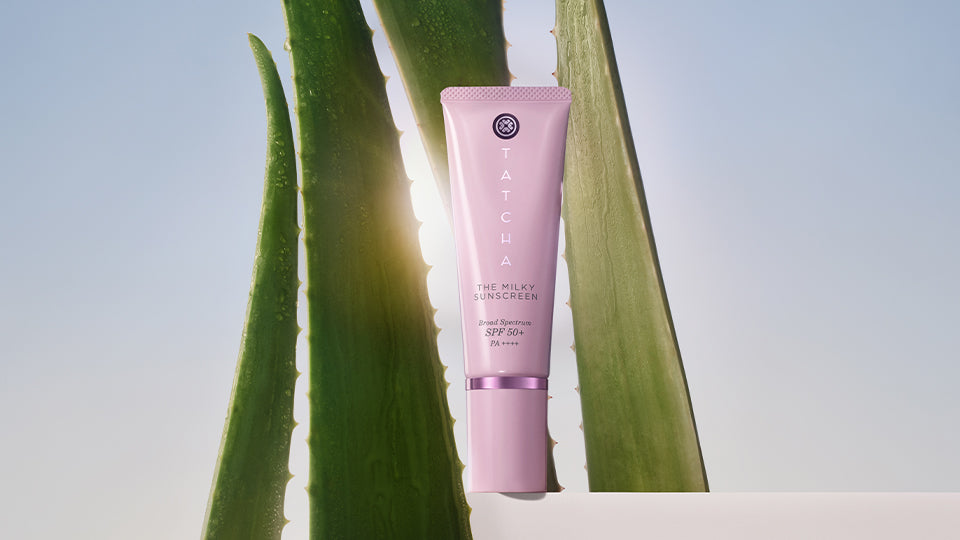
We’re thrilled to introduce you to our newest sunscreen innovation, The Milky Sunscreen. The groundbreaking sunscreen features chemical coverage, allowing the formula to instantly and invisibly sink into the skin. Powered by encapsulated ectoin, vitamin E, and Okinawa aloe, The Milky Sunscreen provides 50+ broad-spectrum protection and can also repair and diminish the look of previous UV damage. Shielding you from future damage while also addressing past UV damage is game-changing, but that’s not all it does. The ultra-lightweight lotion sunscreen also provides cellular-level hydration for all-day-long moisture. Refreshingly light, it absorbs quickly and leaves skin feeling soft and smooth with a natural finish that works across skin tones and types.
Best Chemical and Mineral SPF
Consider our Silken Pore Perfecting Sunscreen, a weightless sunscreen with broad-spectrum protection (meaning it provides coverage against both UVA and UVB rays). The SPF 35 blends effortlessly for refined pores and a matte finish. It features both chemical and mineral SPF, allowing for a nearly invisible finish while also providing lasting protection against the sun. The lightweight protection is formulated with silk extract for a silky-smooth feel and Japanese wild rose to help tighten the look of pores and smooth skin texture. Meanwhile, loquat leaf extract offers a rich source of antioxidants to protect and calm your skin.
Sunscreen of yesteryear used to sit uncomfortably under the skin, but Silken Pore Perfecting Sunscreen is perfect as a primer for your makeup, without leaving a chalky finish. This sunscreen is non-comedogenic, dermatologist-tested, cruelty-free, and formulated without parabens, synthetic fragrances, mineral oil, sulfate detergents, phthalates, DEA, or TEA.
Best Mineral SPF
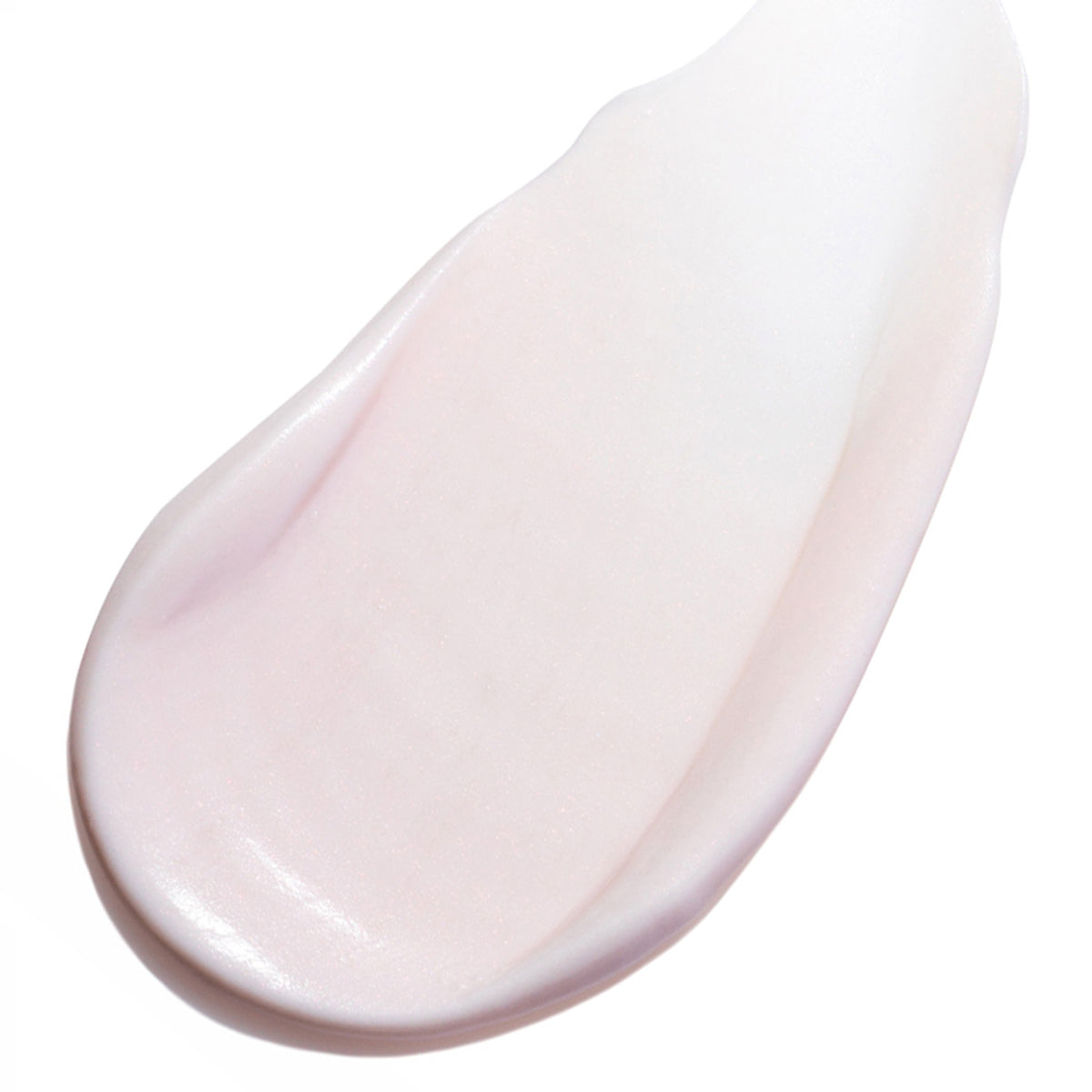
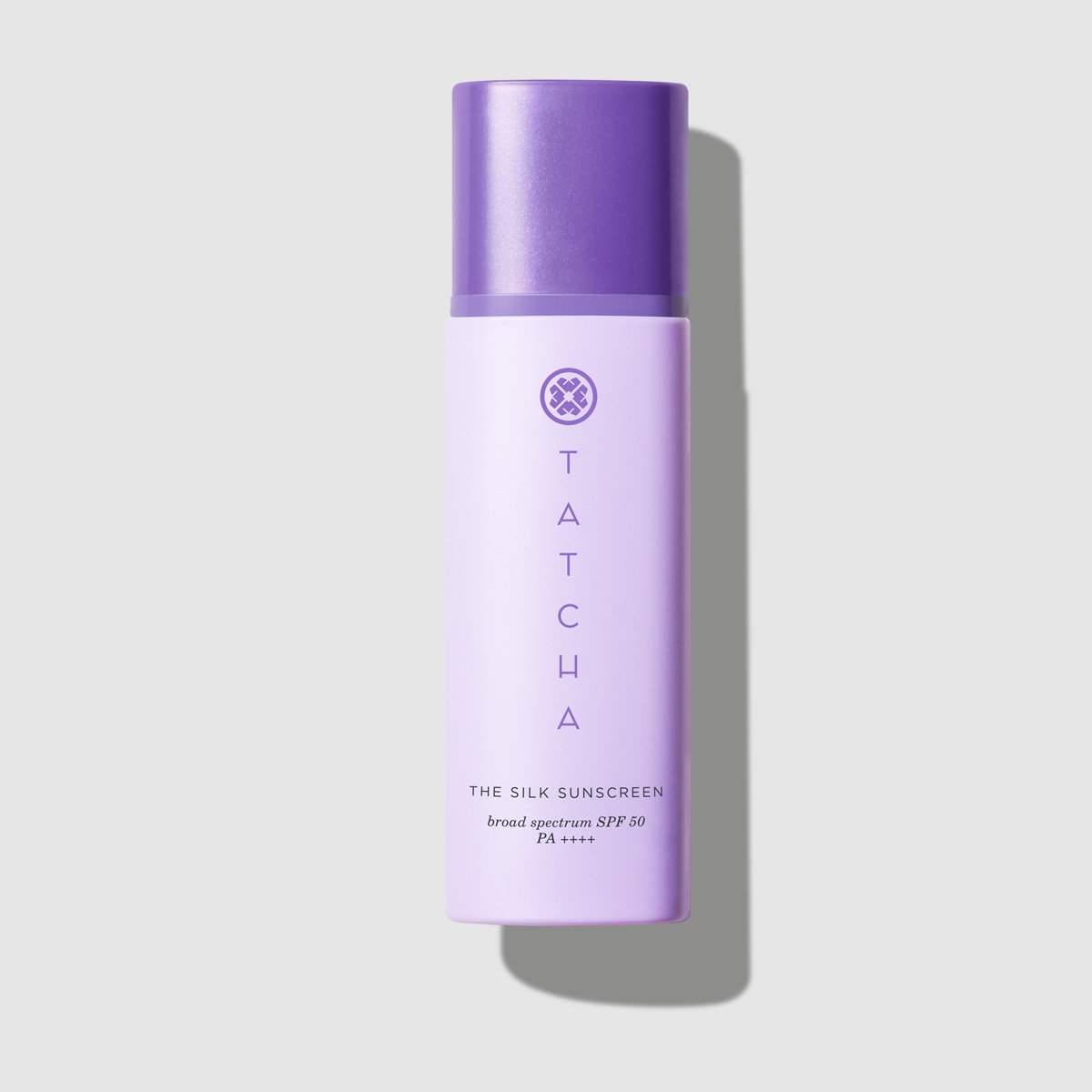
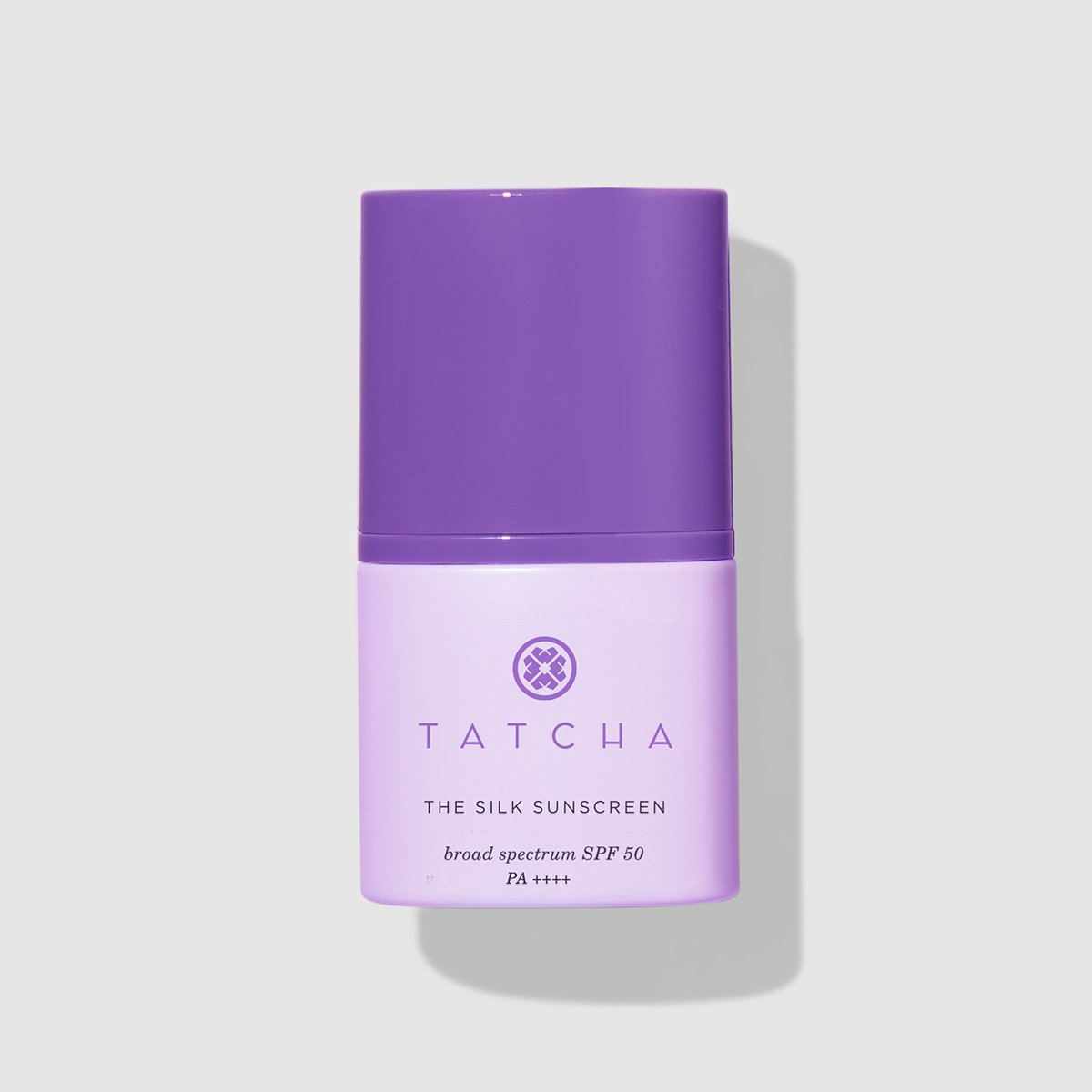
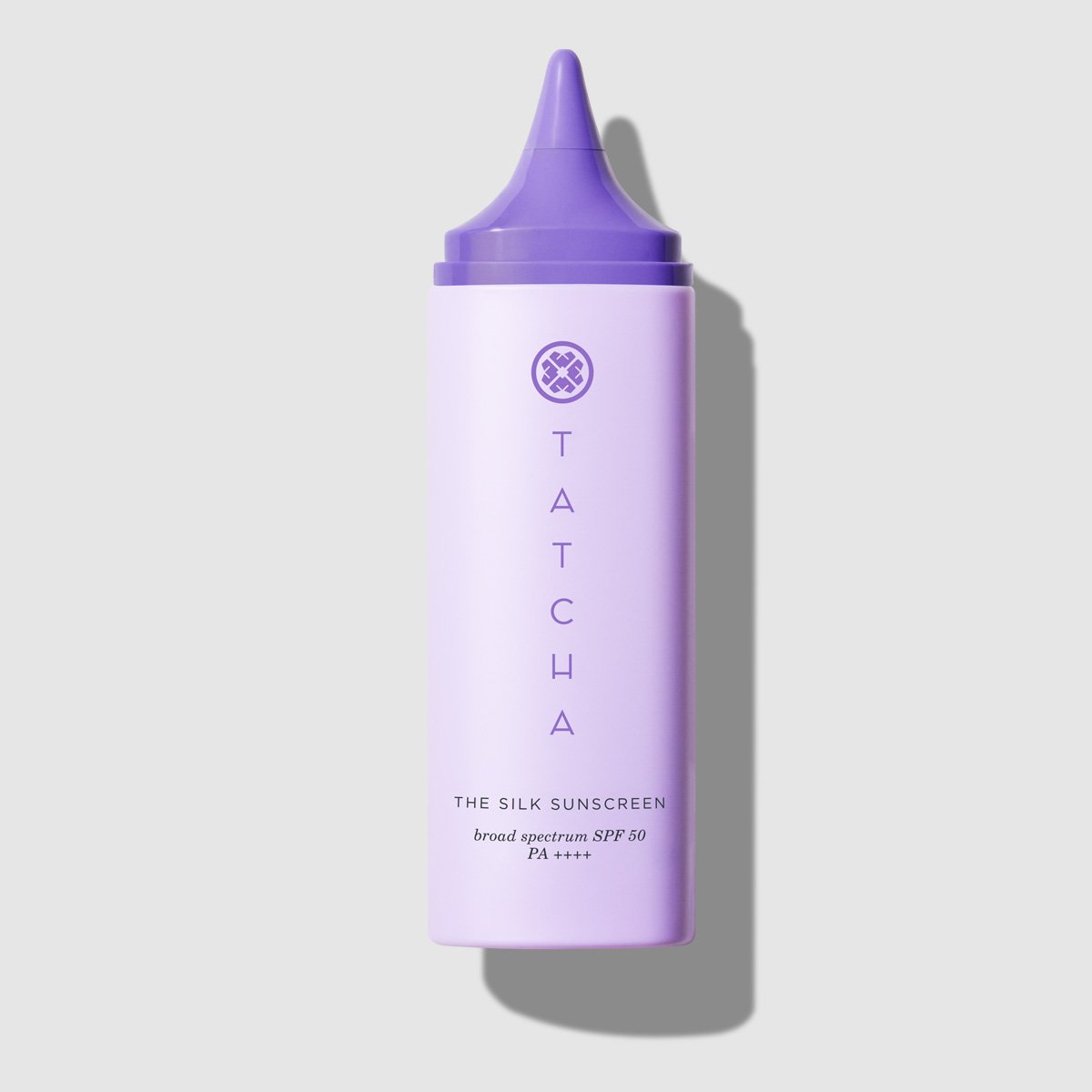
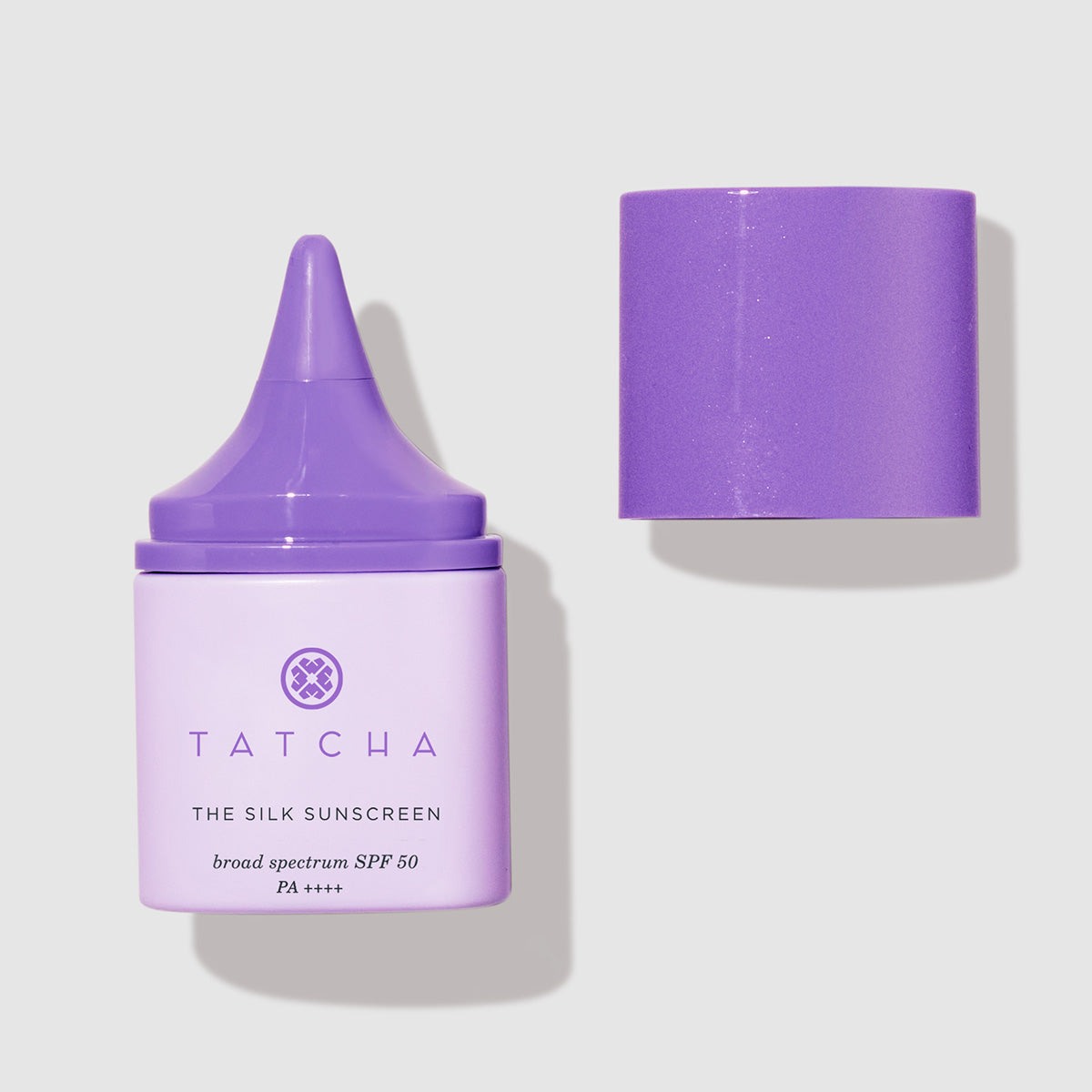
Looking for a silky, lightweight, and radiant sunscreen with 50+ mineral coverage? Try The Silk Sunscreen, which feels impossibly light and melts into the skin flawlessly, but also impressively minimizes pollutant and allergen disruption. In addition to silk extracts (which allow the formula to feel as soft as silk), the sunscreen has a handful of skin-bettering ingredients. Niacinamide visibly evens skin tone, reduces redness, and visibly firms the look of pores, while hyaluronic acid helps to immediately boost skin’s natural moisture levels, softness, and skin tone.
Most importantly, though, the sheer liquid provides 50 broad-spectrum protection against UVA and UVB rays, with 10 percent zinc oxide for a mineral, reef-safe filter. It is also sweat-resistant, so it can be worn on active days spent outside. The formula is also non-comedogenic, dermatologist-tested, cruelty-free, and formulated without parabens, synthetic fragrances, mineral oil, sulfate detergents, phthalates, DEA, or TEA.
Can’t decide between The Milky Sunscreen, The Silk Sunscreen, and The Silken Pore Perfecting Sunscreen? Seeking 50+ broad-spectrum protection that hydrates and repairs skin, grab The Milky Sunscreen. If you’re looking for higher sunscreen protection with a more milky, liquid format, Silk Sunscreen is perfect for you. If you prefer a cream with both mineral and chemical protection, our bestselling Silken SPF 35 Sunscreen SPF 35 is a superb option. No matter what broad-spectrum sunscreen protection you choose, though, the most important thing is to apply it daily. Basking in the sun is one of life’s simple pleasures – but only if you have SPF coverage on to enjoy it.