Skip to content

Bag

Your bag is empty

Continue shopping

Enjoy up to 15% off 4 full sizes of your choice with our set curator

Get Started

Select Gifts

The Best Tinted Lip Balm
Caring for SkinAug 24, 2024

The Best Tinted Lip Balm

The best tinted lip balms are multipurpose: deeply hydrating, while also leaving behind a flattering wash of color. But not all are created equally. We discover the best tinted lip balms to swipe on daily.

Tinted lip balms have seen a rapid rise in popularity in recent years—and for good reason. The best tinted lip balms are multipurpose: deeply hydrating, while also leaving behind a flattering wash of color. They enhance the lip’s natural hue, while also hydrating and nourishing the delicate skin. While some versions are more subtle and others more buildable and customizable, all tinted lip moisturizers hydrate. But that doesn’t mean all tinted balms are created equal.

Tinted lip balm: Makeup meets skincare

A tinted lip balm is one of those packaged goods that blurs the lines between categories. A foundation product is distinct from a face moisturizer, even though both are applied to the skin on the face; they’re designed to achieve chemically different ends. A lipstick is made to shade lips, not moisturize them. For that, you'll need a lip balm.

As the name suggests, a tinted lip balm is closer to its skincare cousin. You can use a tinted lip balm to hydrate and moisturize your lips throughout the day—the color is an added benefit, and one that helps simplify your makeup routine, too. You can save your heavier, untinted lip balm for your nightly skincare ritual.

Here are the best tinted lip balms, including the best SPF-boosted options and the most ideal balms for dry lips.

Best Tinted Lip Balm

The Kissu Lip Tint

Made with silk protein and botanical lanolin, this brand-new unscented formula hydrates lips and seals in moisture while protecting from sun damage. Available in three universally flattering shades, The Kissu Lip Tint SPF 25 is unique in that the formula is customizable and builds from sheer to medium coverage in just a few easy swipes.

Not only is it a beautiful lip tint, but it’s also one of the best SPF tinted lip balms, with SPF 25 coverage from UVA and UVB rays to prevent sun damage and age healthfully. Lips can burn in direct sunlight, and there are routines for how to heal sunburned lips, but they can also simply age just like the surrounding skin, with fine lines and dark spots. Bottom line, lip balm with sun protection helps shield your pout from the devastating effects of photoaging.

Another reason The Kissu Lip Tint SPF 25 is extraordinary? The thoughtful and one-of-a-kind ingredients, including the aforementioned silk protein and botanical lanolin. Silk protein, which is featured in some of Tatcha’s favorite formulas, smoothes and nourishes, while also providing a veil of weightless hydration. Botanical lanolin is a comforting emollient that not only seals in moisture, but also helps lips naturally retain moisture and color for a smoother and more pigmented look.

The smooth, non-sticky formula keeps lips moisturized and comfortable, and clinical studies agree. 100 percent of panelists agreed that the Kissu Lip Tint SPF 25 seals in moisture.* This tinted lip balm has been shown to apply smoothly** and improve lip moisturization*** with 100 percent of panelists. Additionally, after one week of use, 97 percent of users noted their lips felt protected when outside in the sun.****

*Based on a bio-instrumentation (TEWL) clinical study on 42 panelists.

**Based on a bio-instrumentation (Novameter) clinical study on 42 panelists.

***Based on an expert grading clinical study on 40 panelists.

****Based on self-assessment questions within a clinical study on 42 panelists.

Not to mention the hues! The three tints were intentionally designed and selected for their universality. The future classics are:

Plum Blossom: These resilient flowers, or ume as it’s known in Japan, symbolize patience. This soft pink, buildable tint is inspired by the Japanese plum blossom, whose petals announce the first sign of spring.

Camellia: Already a beloved ingredient and inspiration for Tatcha, this vibrant red tint is as gorgeous as it is wearable. Camellia, or tsubaki in Japanese, is an ancient botanical that blooms in the winter and early spring. The fresh red petals symbolize strength, just like the striking image of the bold red flowers peeking out of the white snow-covered surroundings.

Midnight Lily: The deep berry tint is inspired by the Japanese midnight lily, known as kuroyuri, which symbolizes love and admiration. The rare and mystical flower impossibly blooms in high elevation mountains and its rarity is thus linked to the rarity of true love.

Best Hydrating Lip Tint

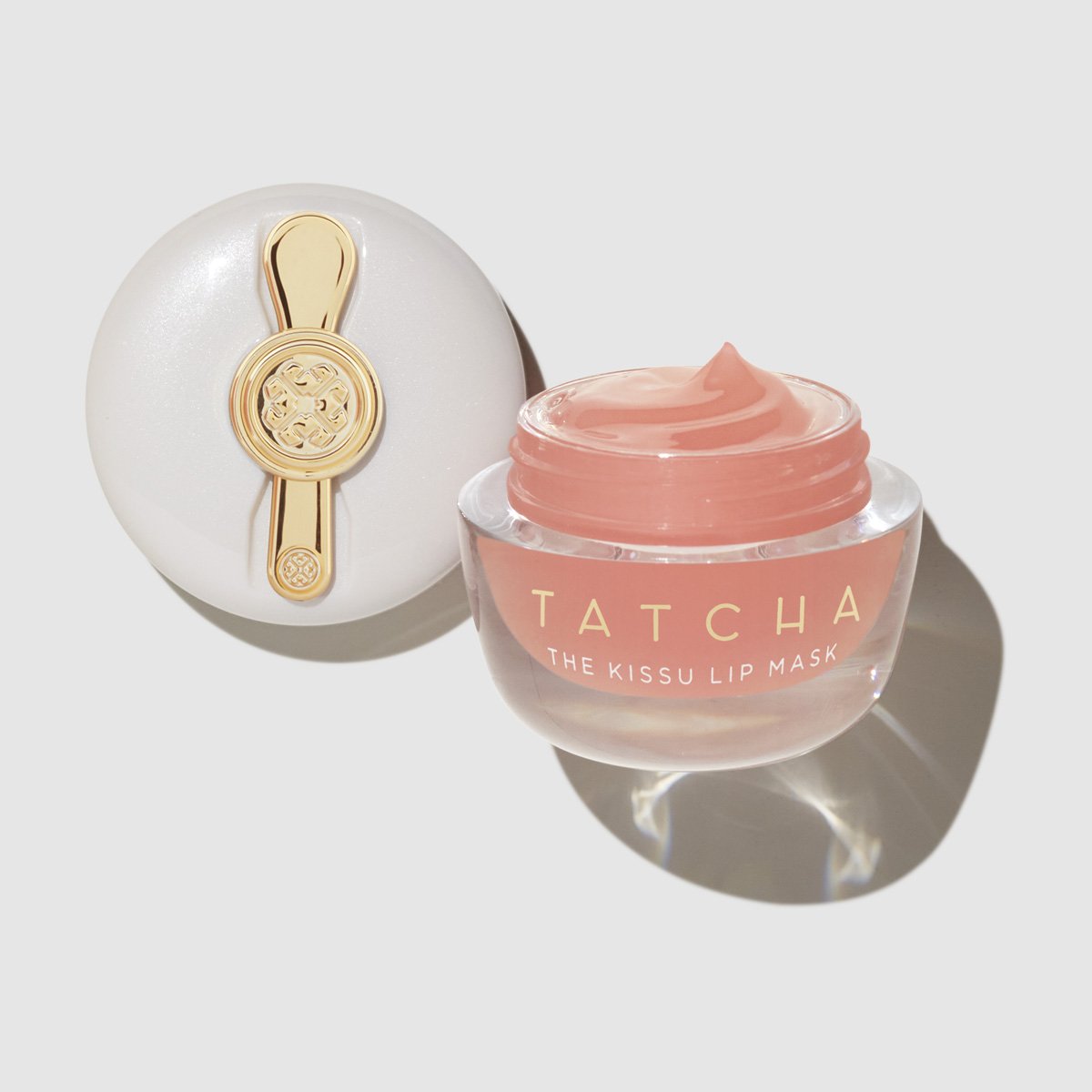
The Kissu Lip Mask

Just like how a face mask delivers a concentrated dose of potent ingredients to the skin, a lip mask works similarly, flooding the lips with hydration. A lip mask deeply replenishes a dehydrated pout, softens the look and feel of the skin, and can oftentimes give lips a juicy, plumped appearance. Grab the bestselling Kissu Lip Mask, which features olive-based squalane, Japanese peach extract, and camellia oil to nourish, calm, and restore lips’ lushness.

The lip mask that launched thousands of enthusiastic fans, this uniquely textured jelly treatment melts into lips, locking in moisture and repairing parched lips. Massage a generous, even layer onto clean, dry lips and leave it on to soak in indefinitely. While the original, untinted treatment can be used any time of day and particularly right before bed, the tinted hue is designed for daytime use. It’s ideal for those seeking a tint of color while also deeply hydrating the delicate lip area.

Why are my lips dry?

First, let's talk about the skin on your face. Skin is a matrix made up of multiple layers, some suffused with networks of blood vessels and neurons, others densely packed with dead skin cells. Skin works as a barrier, keeping us protected from the environment around us, and its sophisticated layered system allows it to traffic other substances, like sweat and sebum, up and out of skin. Beneath the thick stratum corneum, the dead skin layer that forms our outermost skin barrier, the skin on our face could have between 15-20 cell layers.

By contrast, the skin on our lips spans about three to five cell layers. This skin also lacks the hair follicles and oil glands that are found elsewhere, and as a result, it lacks the ability to self-moisturize. This is why the skin on our lips is prone to dryness, chapping, and cracking—and why regular moisturization is necessary, at least according to the American Academy of Dermatology Association. Their advice: Apply a non-irritating lip balm throughout the day, especially right before bed.

A short history of lip balm

It’s possible, more than likely, that forms of lip balm have existed as long as humans have—and indeed, there is plenty of evidence that we’ve been moisturizing our lips for centuries. In our contemporary beauty market, the history of lip balm dates back to just before the turn of the 19th century. A Virginian pharmacist made a small tin of petrolatum, waxes, aromatic oils specifically for chapped lips and called it ChapStick. In 1912, a tin of ChapStick cost as much as a suit, but the product flew off shelves anyway: Dry lips needed a salve.

A century plus later, it seems we still can’t get enough lip balm. There are waxes, oils, creams, tinted lip balms, even masks we wear on our lips. Why is this? It has a lot to do with the unique texture of the skin on our lips, which, while similar to the skin found elsewhere on the body, is crucially different in a few ways.

No matter which tint color you choose, a tinted lip balm is one of the most useful products in your skincare routine and makeup arsenal. In fact, it might be helpful to have a handful of tinted lip balms, one in your go-to bag, one at the office, and one in your car—ready to go wherever the day may take you.

Related Products

Bestseller The Kissu Lip Mask.

Restorative Lip Mask

Sale price $29

Recent Posts

View all
Is Matcha Good for Acne?
Caring for SkinJun 11, 2026
Is Matcha Good for Acne?

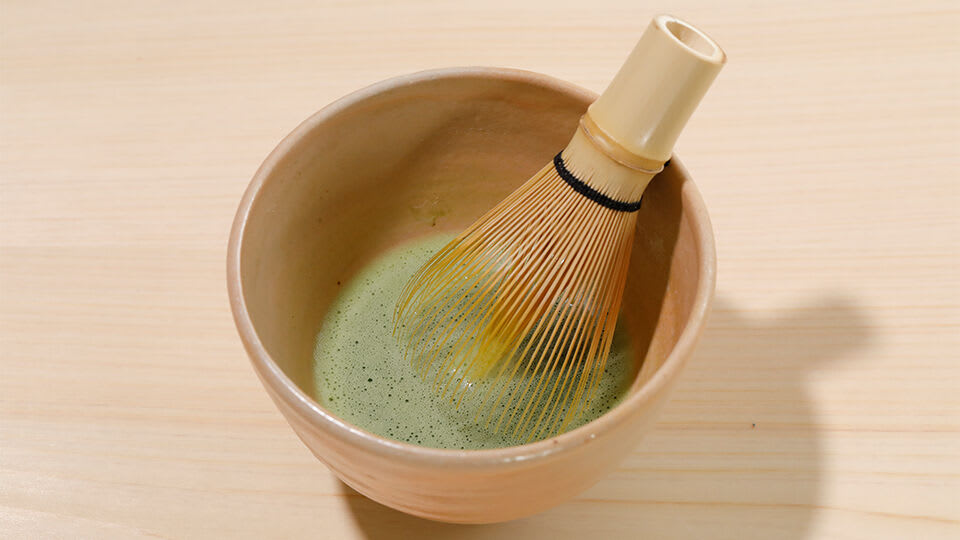
Matcha is a special type of finely powdered green tea prized for its bright green hue, distinct cultivation practices, ceremonial preparation, and transformative health benefits. The tea is linked with many health benefits, from improving mental alertness, fighting free radicals thanks to the potent antioxidants, and boosting numerous cognitive functions.  Additionally, matcha is also proven to be wonderfully beneficial for reducing blemishes when applied topically, an impressive fact proven by numerous clinical studies.

The Best Foaming Facial Cleanser
Caring for SkinJun 11, 2026
The Best Foaming Facial Cleanser

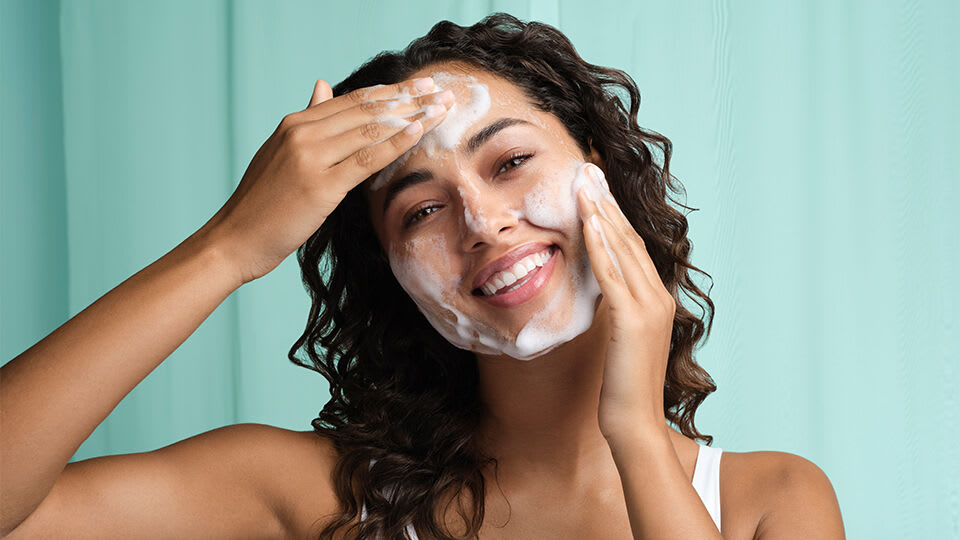
Foaming cleansers can be effective for all, but the secret to using them correctly is discovering a formula that is ideal for your skin type. A creamy foaming cleanser, which imparts a soft hydration onto the skin as cleansing, is more ideal for dry skin, while a refreshing foaming cleanser that includes oil-balancing ingredients is more ideal for combination and oily skin tones. Some formulas work by allowing the dense bubbles to grasp onto debris, sebum, and makeup, washing away in a single step. While other formulas might need an oil cleanser first to break down these trickier long-lasting ingredients. 

The Best Blemish Begone Skincare Products
Caring for SkinJun 10, 2026
The Best Blemish Begone Skincare Products

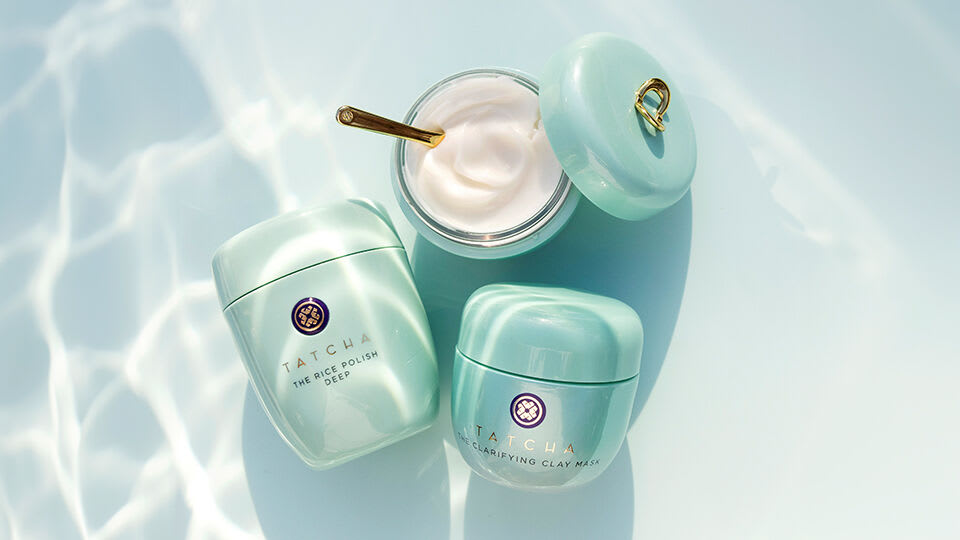
Blemishes can be caused by a variety of things, and are a fact of life. But choosing the right skincare products can help you keep breakouts at arm’s length. Blemishes happen to all of us. But to some of us, they happen more often than not. We call ourselves blemish-prone. And in addition to our usual skincare routines for morning and night, we make active choices about the products we use to make sure blemishes stay away. The word blemish, from the French blessmiss—to make angry—might be the most polite way to refer to many types of skin blemishes like acne, pimples, zits, and all of the other names we ascribe to those skin reactions that cause small unusual bumps. A bit ironique, considering that the word we now associate with acne connotes an imperfection or something else wrong. And while acne can be caused by imbalances in the skin, it’s common enough for all of us not to make it such a big deal. These are not mountains. They’re even much smaller than molehills. Still, those who deal with blemish- or acne-prone skin know that not all skincare products are created for the same skin type. All of us need to choose the right cleanser and moisturizer for our skin, but how we do so is up to us—and, usually, to the specifics of our skin’s behavior. A dermatologist should be your first stop on your skincare journey, but the following guide can help shed a little light on the acne-prone skin type, and some of the common skincare choices (and the optimal acne skincare routine!) made by those who have it. What is blemish-prone skin? Blemish-prone skin is another term for oily skin, which is one of the major skin types. Oily skin is usually categorized by skin that produces more sebum than so-called “normal” skin, but there are a few ways to glean more information about how your skin behaves at baseline. “Oil” is a poetic name for sebum, the waxy substance made of lipids like cholesterol, squalane, and glycerides that is secreted from sebaceous glands that sit within pores and hair follicles. Sebaceous glands are an important mechanism that our skin uses to moisturize and protect itself. Many of our sebaceous glands can be found on our faces and scalps, though there are a few places we don’t have sebaceous glands—like on our lips, or the bottoms of our feet. Sebum is a protective substance that helps to seal moisture by shoring up our skin barrier. In other words, it’s a good thing to have. But those with oily skin can have too much of it, and too much can lead to a higher incidence of breakouts. While oily skin can be a genetic trait, it can also be influenced by the environment around us—the climate, for instance—and our own behaviors—like how we take care of our skin. How do blemishes occur? You’re unlikely to find the term “blemish” in dermatology coursework. Generally, when we’re talking about a blemish, we’re talking about a form of acne, which is described most concisely as a blocked hair follicle. The pores that dot our skin are small channels that house sebaceous glands and hair follicles; they help traffic sebum up and out of skin. When sebum and dead skin clogs a pore, it may become what is called “common acne”, though there are a few types. Blackheads and whiteheads are caused by sebum buildup, and are distinguished by whether or not they’re open (and black) or closed (and white). When an infectious bacteria is introduced, it can cause a more robust infection, resulting in other forms of acne like papules and pustules that are painful to the touch. If you need help identifying what kind of blemish has popped up on you, head to your nearest dermatologist’s office to find out. What are the most important blemish skincare steps? Perhaps the most important thing to do in the face of acne is: Not panic! Breakouts happen to all of us, and usually fix themselves on their own. But if you identify with the oily skin type, and find yourself devoting more time to quelling breakouts than you’d like, you might want to consider some of the skincare products for oily skin, which are popular among those with acne-prone skin. A few common switches include: Cleansing with a gel. Dermatologists at the University of Florida Health once proclaimed that “the most important thing you can do for oily skin is to keep your skin clean.” Those with oily skin may want a cleansing formula with more reach than surface-level face washes—something that can cleanse pores deeply, ensuring they remain clear of acne-causing buildup. Gel cleansers are usually the ones for the job. Water-based gel cleansers are slippery, clear, and tend to foam up. Tatcha’s brand new Matcha Cleanse is a soapless gel that deeply decongests pores— thanks to a unique gel-to-foam texture—to reduce oil, and visibly calm skin without stripping. The Matcha Foam Cleanser takes on oiliness with a gentle touch: balancing the microbiome, soothing, and calming. Exfoliating with acids. There’s a reason that the inventors of alpha hydroxy acids have been honored all over the world. Their contribution to skincare includes one of the most popular exfoliating acids of all time—and it’s a boon for those with oily skin. AHAs, as they’re known, help to “peel” the skin by breaking down the bonds between old and new skin cells. Exfoliation is essential for all skin types, but the ease of AHAs and their efficacy in removing dead skin makes them great for oily skin. They’re commonly recommended to those with oily and acne-prone skin, especially in the form of a daily treatment. A product like the Texture Tonic, which takes the form of a lightweight daily toner, allows you to fit gentle exfoliation into your regular skincare routine—right between cleansing and moisturizing. Its AHAs come from a cornucopia of fruit sources proven to resurface uneven and dull skin—leaving it smooth and radiant. Moisturizing with water Sure, the idea of moisturizing with nothing but water may sound counterintuitive, or downright impossible. And yet it's the animating idea behind the Water Cream, Tatcha’s best-selling moisturizer for oily skin. This lightweight, oil-free cream has a bursting effect when applied, flooding the skin with vital and necessary hydration. It’s also beloved for its powerful superplant ingredients that address traits commonly found in oily skin, like antioxidant-rich wild rose (which has the benefit of smoothing the appearance of large pores) and anti-inflammatory heartleaf extract (a natural azelaic acid alternative). Masking with clay When it comes to natural ingredients that help oily skin, you can’t beat clay. Clay helps absorb excess oil, and is said to also draw impurities out of the skin. Anyone who has used a clay mask can attest to its drying powers, which is why it’s not usually a daily ingredient. Instead, it's suited for more irregular use, like in a face mask. The Clarifying Clay Mask, formulated as a treatment for oily skin, uses marine mineral-rich kucha clay sourced from the islands of Okinawa. For centuries prior, Okinawan women have cherished kucha clay for its superb oil-absorbing properties, using it as a hair powder or face mask. When mixed with volcanic ash and exfoliating Japanese konjac, it makes for smoother, clearer skin in no more than three minutes. 180 seconds per week may not alone calm oily or blemish-prone skin, but good holistic skincare habits will.

View all

Subscribe to our newsletter

By signing up, you agree with our privacy policy.