






A skincare routine happens daily. Most of the basic steps of that routine, from cleansing to moisturizing, are designed to maintain skin on a day-to-day basis. Washing off the day’s makeup, or the dirt that has accumulated throughout the day, and applying a layer of moisture that seals and shores up your skin barrier. But there are some products that are meant to be used more infrequently than that. Unlike some cleanser, they’re not rinsed immediately, and they’re usually packaged with more potent ingredients than you might find in a moisturizer. We sometimes call these products “treatments”, but we usually call them face masks.
Face masks come in a wide assortment that vary by the materials they’re made up of, the ingredients they contain, or the specific skin goals they target. Some are made of paper soaked in serum, and others come distilled in thick creams. A few contemporary masks even use electricity. But how these products are used tends to look the same across their many varieties: Face masks need a short period of time to work after they’re applied to the skin. For this reason, we tend to use them weekly or every few days.
Besides the downtime they offer by design, one advantage of masks is how they work on all skin types and fit into all routines. The best mask for you is within reach—but first, it’s a good idea to consider what you’re looking to get out of the masking process.
What is a face mask, and how does it work?
Here is how a recent article in an academic journal defines face masks: “Facial masks are the most prevalent cosmetic products utilized for skin rejuvenation… [with] some advantages for specific skin types based on the ingredients used.” Masks are divided into different categories. There are sheet masks, which are fabric or biocellulose soaked in potent serum. There are cream masks, which are like heavy-duty moisturizers used sparingly. There are masks that you leave on and others that you peel off. Some even work better when used in tandem.
Due to the infrequency with which you apply them, face masks can contain a higher concentration of active ingredients that you might find in a daily serum or moisturizer. The key to reaping the benefits of the best face masks is understanding which ingredients are likely to be found in which formulas—and which skin type they’re tailored to.
When should you apply a face mask?
Here’s the fun part: The best time to apply a mask is when you’ve got nothing else going on. If you can find a spare 20 to 30 minutes in your day, you might enjoy devoting one or two of them to applying a face mask, and the rest to relaxing while it works. If nothing else, it’s a good time to center yourself in the current moment of wherever you are. The Japanese term teinei loosely describes a state of mindfulness achieved by putting another person first—but for a brief few moments each week, why not practice a little self-teinei?
Depending on the sensitivity of your skin, you may be able to mask up to a few times each week. The mask’s directions should tell you how much to apply, and how long it should remain for—but the best advice will come from your dermatologist or licensed aesthetician. Before you incorporate a new product into your routine, it’s a good idea to run the idea by an expert, first.
What is the best face mask for oily skin?
Everybody’s skin produces oil—or, more accurately, sebum, a waxy substance secreted from our pores that protects and moisturizes our skin. But some people’s skin produces more sebum than others, and are typically categorized as oily skin types.
Managing oily skin is a balancing act, making sure that skin’s oil and water levels are in proportion. The American Academy of Dermatology Association has a few everyday tips for achieving this: Yes to frequent face washing and oil-free formulas, no to touching your face or sleeping in makeup.
There are also skincare products, like face masks, that are known to help oily skin in particular. Many of these formulas are based in clay, which may be the oldest skincare ingredient in human history, with some of the first appearing in ayurveda, or ancient Indian medicine. Tatcha’s Clarifying Clay Mask, perfectly suited for oily skin, is made with Kucha clay, a mineral-enriched marine soil from Okinawa. It naturally absorbs excess sebum and dirt from the pores, and minimizes those pores in the process.
What is the best face mask for dry skin?
In contrast to oily skin, dry skin might produce markedly less sebum. Sebum comes from sebaceous glands, according to the Cleveland Clinic, and one of its chief functions is as a lubricant that guards against moisture loss. Skin that has less sebum can be more prone to giving up its necessary moisture, and going dry as a result.
Skin that is properly hydrated looks bouncy and plump, but skin that is dry could be rough, flaky, or scaly. Untreated dry skin can break open, making things markedly more complicated. For that reason alone, it’s important to have the right skincare on hand for dry skin.
Sheet masks are particularly good for hydrating and moisturizing the skin. The “sheet” itself creates an occlusive seal that allows the skincare product to soak into skin—a greenhouse effect, but for nourishing skincare. Tatcha’s Luminous Hydrating Sheet Mask is made from a coconut-derived biocellulose, and infused with the brand’s proprietary blend of anti-aging superfoods. (We found that it boosts skin’s moisture content by up to 200% in 15 minutes.)
What is the best face mask for sensitive skin?
When it comes to sensitive skin, the idea of adding another product to one’s routine seems counterproductive. When a new interaction between skincare ingredients creates a possibility for a skin reaction, why try anything new? But the truth is that some skincare formulas can actually help with sensitive skin, if you know what ingredients you can use.
At Tatcha, we’ve long praised the healing powers of Japanese indigo extract, more commonly associated with a deep blue dye. But the plant has a long medicinal history. Centuries ago, in Japan’s Edo era, it’s said that samurai wore undergarments dyed with indigo to speed the healing of their injuries. The dye was also used for traditional firefighter uniforms to protect against burns, and many of these indigo pieces have been preserved as museum artifacts.
Indigo also forms one of the key ingredients of Tatcha’s sensitive skin care range, which includes a unique face mask called the Indigo Overnight Repair. This serum-cream has the density of a heavy moisturizer but functions like a mask that you can wear nightly to soothe even irritated, sensitive skin. The formula also includes ceramides that replenish lipids to keep moisture in and pollutants out, and Mondo grass root, which cultivates good bacteria, helping the skin perform at its optimal level and relieving irritation and dryness.
What is the best face mask for dull skin?
In short, dull skin suffers from a lack of light, but the dermatological truth is a little more complicated.
Dull skin can occur due to a lack of collagen and elastin, structural proteins that give skin its plumpness and bounce. It can also be due to a buildup of dead skin, owing to how cell turnover slows with age, according to dermatologists. A damaged skin barrier might also lead to roughness, cracking, or dryness that can contribute to dimming one’s light. With so many mechanisms contributing to this one skin type, how can you treat all of them with one skincare step?
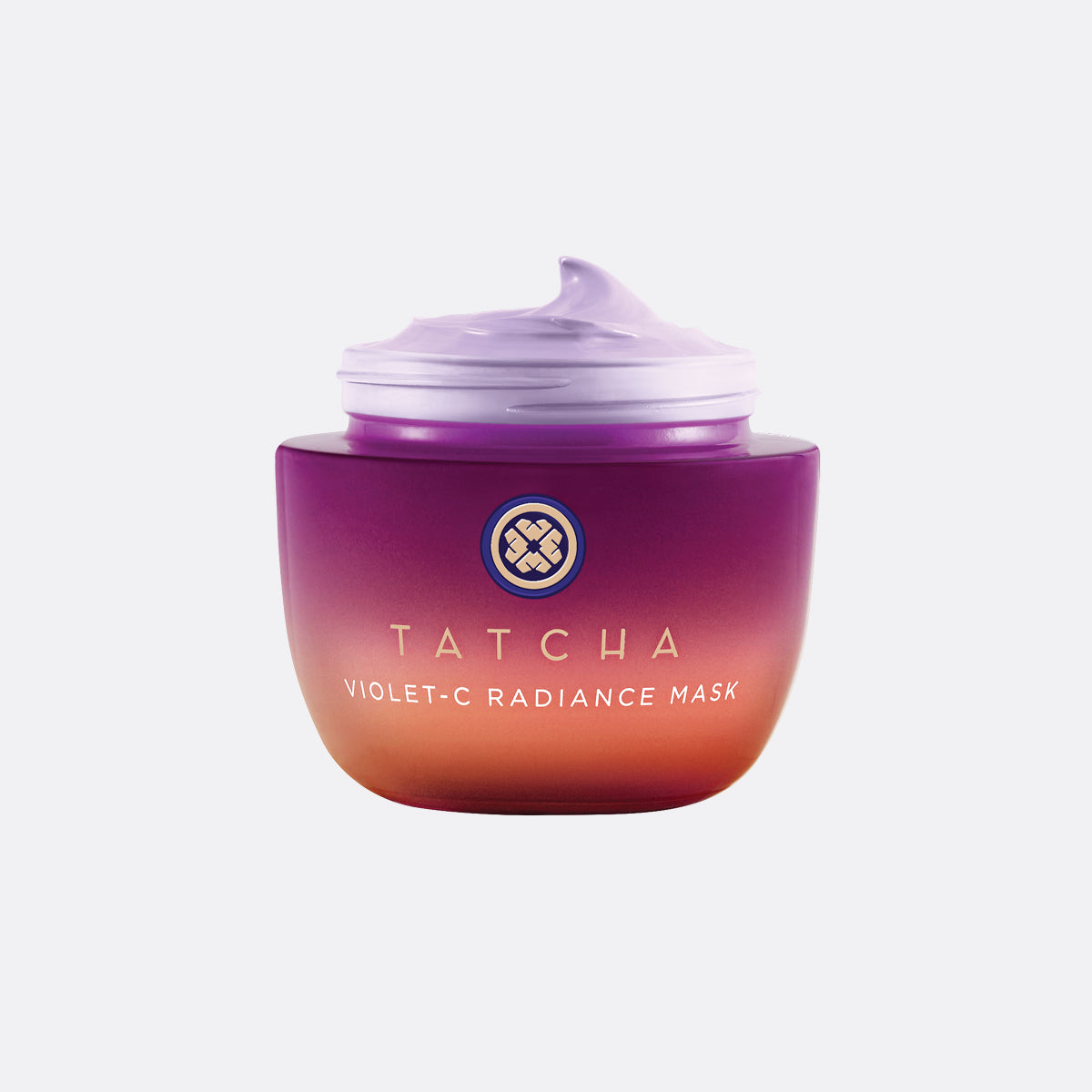
The answer, which might be obvious by now, is a good face mask. To treat dullness, you will want to look for a product that promises radiance but includes more than one active ingredient to provide it. Antioxidants, which help repair environmental damage within the skin, are hugely helpful for dullness—especially vitamin C, one of skincare’s most potent and popular antioxidants. It’s the star of Tatcha’s Violet-C Radiance Mask, which is also dosed with alpha hydroxy acids. These acids will help loosen the bonds between living and dead skin cells, resurfacing the face in the process. It’s a great way to turn on your light—and get some R&R in the process.