








T-House


The Milky Sunscreen vs. The Silk Sunscreen
Tatcha is becoming synonymous with effective sunscreens (we are honored!), but with multiple options to choose from, it can be difficult to choose which one is right for you. The Milky Sunscreen and The Silk Sunscreen are both beautiful options, but they do differ in notable ways. The Milky Sunscreen is the newest option, featuring SPF 50+ chemical coverage with a prestigious PA++++ rating (meaning it’s as high on the UVA protection scale as possible), has a natural finish, and contains a satisfying milky lotion texture that quickly absorbs into skin. The Silk Sunscreen is our beloved mineral SPF 50 formula, with a light-as-air feeling that is sheer and hydrating. It has a radiant finish for an instant glow and includes niacinamide to address uneven skin tone (for long-term, naturally glowing skin).
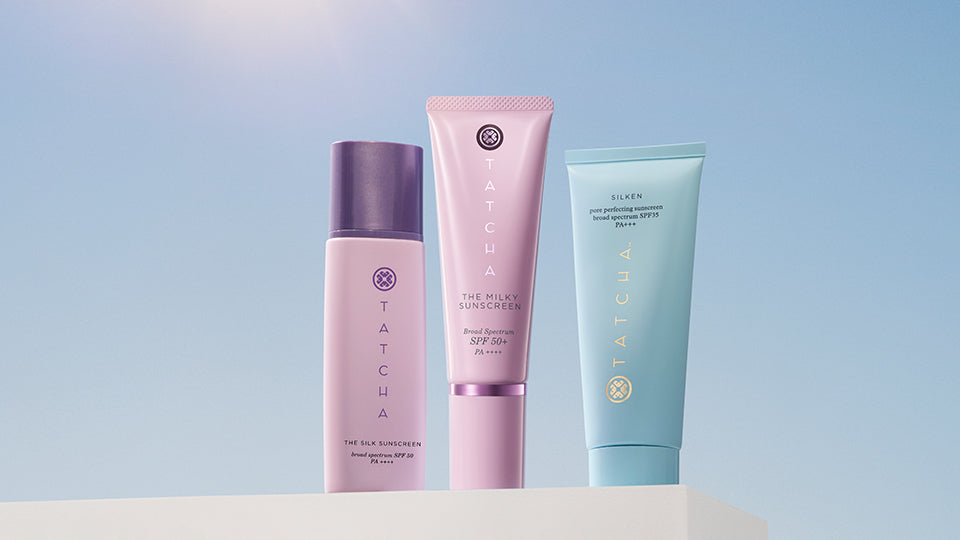
The Milky Sunscreen vs. The Silken Pore Perfecting Sunscreen
Tatcha is passionate about effective sunscreens, but with multiple options to choose from, it can be difficult to choose which one is right for you. The Milky Sunscreen and The Silken Pore Perfecting Sunscreen are both beautiful options, but they do differ in notable ways. The Milky Sunscreen is the newest option, featuring SPF 50+ chemical coverage with a prestigious PA++++ rating (meaning it’s as high on the UVA protection scale as possible), has a natural finish, and contains a satisfying milky lotion texture that quickly absorbs into skin. The Silken Pore Perfecting Sunscreen is famed for its ability to provide pore-blurring protection, smoothing skin texture, and creating a smooth canvas for makeup. With a silky cream texture, the SPF 35 formula is ideal for anyone seeking a natural, matte finish.
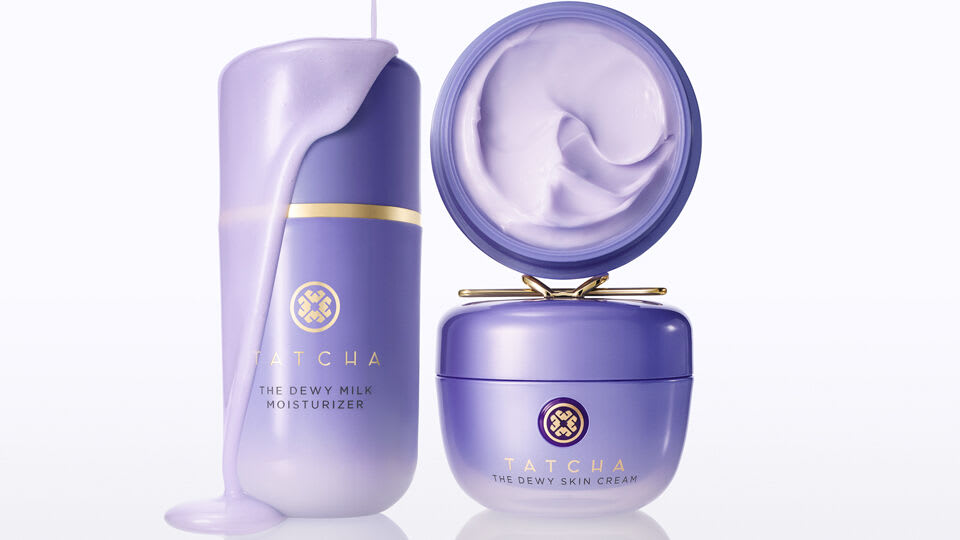
The Dewy Milk Moisturizer or The Dewy Skin Cream? We Explore the Differences to Help You Choose
The Dewy Milk Moisturizer provides oil-balancing hydration with a lightweight, creamy fluid texture, and leaves skin with a dewy finish. The Dewy Skin Cream has a rich, decadent texture and reduces the look of fine lines, improves skin barrier function, and provides antioxidant protection—while still imparting a dewy, radiant finish. While both The Dewy Milk Moisturizer and The Dewy Skin Cream give skin a healthy-looking radiance and hydration, The Dewy Skin Cream is designed to hydrate deeper and plump the skin significantly, so it’s best for those with drier skin. The Dewy Milk Moisturizer is ideal for combination to oily skin, helping to hydrate and boost radiance, while still keeping excess oil in check.

The Dewy Milk Moisturizer vs. The Water Cream
The Dewy Milk Moisturizer balances, hydrates, and leaves a dewy glow. The Water Cream balances, soothes redness, hydrates, and leaves a natural matte finish. Both formulas are lightweight and oil-balancing, making them ideal for combination and oily skin, and they’re noncomedogenic to keep pores clear. Either is a great option for skin; the difference between the two is texture, finish, and benefits: creamy fluid vs. gel-cream, dewy sheen vs. soft-matte, bounce vs. pore-smoothing. How to choose: Pick The Dewy Milk Moisturizer for bouncy, hydrated skin with a radiant glow, or The Water Cream for a matte, pore-refining, redness-soothing effect.
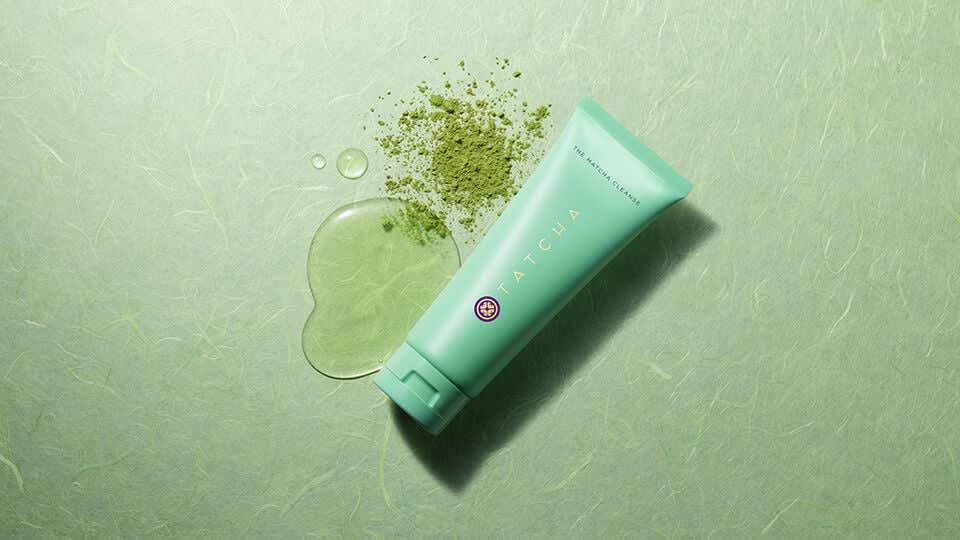
Tatcha Deep Cleanse vs. Matcha Cleanse
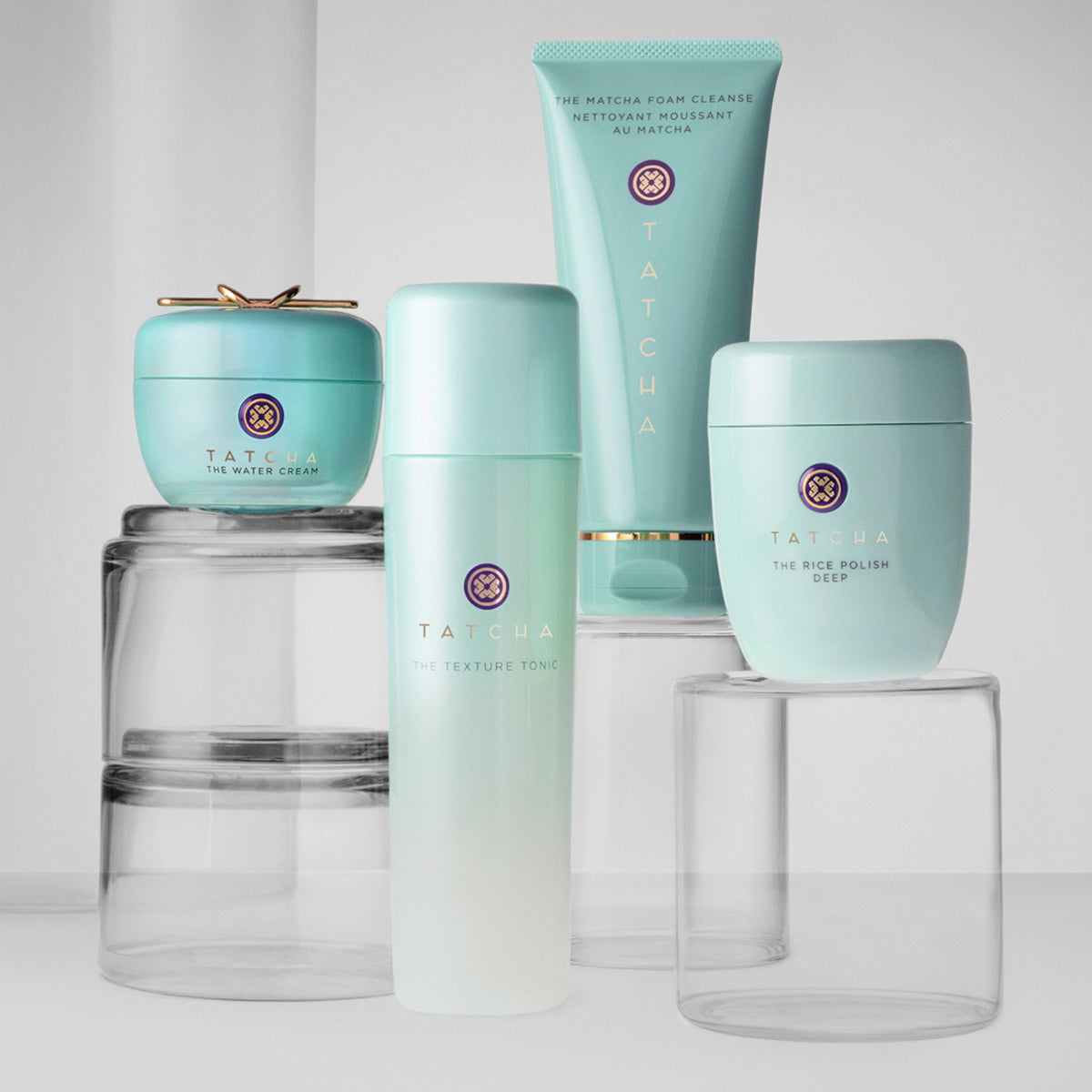
Cleansers are perhaps the most important tool in your daily skincare routine. They remove irritants, bacteria, sebum, oils, and everything else (including makeup, pollution, and sunscreen) from the skin, allowing for a clean base to absorb the powerful next ingredients and formulas in your ritual (like serums, moisturizers, and face oils). No longer are they one size fits all, facial cleansers have become, thankfully, hyper niche, allowing you to find the most ideal cleanser for your specific skin (and skin type). At Tatcha, we’re ever-innovating, and one of our newest and most exciting formulas is The Matcha Cleanse. This game-changing formula took years to perfect and is designed for a very specific type of skin. However, at first glance, it may look fairly similar to one of our bestselling cleansers, The Deep Cleanse. But the two formulas are vastly different. Keep reading to discover more about each facial cleanser and uncover which formula is right for you. The Matcha Cleanse We’ve listened to our beloved consumers' thoughts and suggestions since the origin of our brand and we’ve heard the same thing over and over again for years: It’s impossible to find a daily cleanser for oily and combination skin that doesn’t overstrip or make breakouts worse. Which is where The Matcha Cleanse steps in. The new formula is designed to purify, balance, and refine oily, combination, and breakout-prone skin—without stripping or irritating. With a unique watery-foam texture, the refreshing cleanser is gentle enough for daily use (even twice a day), helping to control oil and rebalance skin’s moisture level for a more hydrated complexion without makeup slipping or melting off during the day. Speaking of gentle, The Matcha Cleanse is fragrance-free and soap-free, so it can cleanse with unmatched pore-priming purification without irritating the skin. The Matcha Cleanse Ingredients The Matcha Cleanse’s ingredients are quite unusual and extraordinary, too, focused on celebrating the best of historic and time-tested Japanese ingredients, with a modern point of view. Here are a few of the ingredients that make The Matcha Cleanse stand out from the crowd. Japanese Matcha Sourced directly from Uji Tahara in Kyoto, this premium powdered green tea is prized for its quality in Japan and is grown under cover for weeks prior to harvesting. Our matcha is also ceremonial grade, meaning it’s the highest quality of matcha made. To this day it’s an essential part of the Japanese diet and is believed to help you live longer. Also, matcha has been scientifically linked with a significant reduction in acne when applied topically, thanks to the tea’s anti-inflammatory and antioxidant properties. Japanese Hatomugi (Coix Seed) A traditional cosmetic ingredient and superfood widely trusted in Japan, hatomugi, or coix seed, has been used in herbal medicines for centuries. Coix seed extract has potent anti-inflammatory properties, which are scientifically linked to reducing redness, swelling, and irritation. When used topically, coix seed can have a BHA-like effect, helping to decongest pores and support skin cell turnover. Additionally, the ingredient has double the protein of rice, is rich in vitamins B1 and B2, and is high in iron, calcium, fiber, and amino acids—making it a highly beneficial ingredient within your diet and skincare. Willow Bark Willow bark has been used for medicinal purposes for over 3500 years, when individuals chew on the bark of the tree to reduce their fever and inflammation. When used topically, the natural beta hydroxy acid alternative is known to support the skin’s turnover cycle, revealing a smooth and more balanced complexion. Willow bark is also known to balance the complexion and oil production, as well as gently exfoliate and soothe irritation. Japanese Yomogi (Japanese Mugwort) The beloved ancient medicinal herb known as the ‘Queen of Herbs’, yomogi, or Japanese mugwort, is a sacred botanical that has been used to treat both the skin and body for centuries. It’s also known for its effective healthy-aging properties and is used to calm and cleanse the skin. Who Is The Matcha Cleanse Right For? Searching for a daily cleanser for oily, acne-prone, and/or combination skin that won't overstrip or make breakouts worse? Traditional cleansers can strip too much moisture, causing the skin to overcompensate with excessive oil, leading to clogged pores and potential blemishes. Try The Matcha Cleanse, which cleanses and keeps skin hydrated without being oily. After just one use, users showed a visible reduction in the appearance of pores, a reduction in oil, and an improvement in moisturization instantly.* Tired of harsh ingredients? While potent ingredients might seem like the quickest way to target blemishes and oily skin, the harsh formulas can strip the delicate face, leading to long-term issues with excessive oil and dryness. Consider The Matcha Cleanse, which harnesses time-honored ingredients, including matcha, coix seed, and willow bark to decongest pores and support gentle surface turnover. The fragrance-free and soap-free formula has a gel texture that transforms to a refreshing watery foam to cut through excess oil and remove buildup but leaves skin feeling comfortably clean. Sick of makeup slipping or melting off midday? Traditional formulas with unbalanced ingredients can make skin look and feel greasier and shinier, leading to makeup slip-off or separation. Reach for The Matcha Cleanse, which controls oil for better and longer makeup wear throughout the day. In clinical studies, 97 percent of users demonstrated better makeup wear even after 8 hours, while 91 percent noticed a continued visible reduction in pores and shine control.** *Evaluated via bioinstrumentation on 40 panelists **Evaluated via expert grading on 36 panelists The Deep Cleanse A bestseller for years, The Deep Cleanse is a face wash doing double duty, working on the skin as both a cleanser and physical exfoliant at the same time. Geared towards oily skin, the gel-to-creamy-foam formula includes natural luffa fruit for purifying and exfoliation, but also wild rose and leopard lily to minimize excess oil and visibly calm skin. While it is designed for oily skin that doesn’t mean it’s harsh or drying. The formula includes amino acids derived from silk extracts to balance, while also leaving skin comfortably hydrated. The Deep Cleanse Ingredients Wild Rose In traditional Eastern medicine, wild rose is used to bring the body back into balance, improve circulation, and even calm the spirit. In The Deep Cleanse, the antioxidant-rich fruits of this fragrant blossom can balance skin, reduce the appearance of pores, and also improve skin tone and texture. Leopard Lily Found on the cool hillsides of Japan, this bright bloom has been prized for its numerous benefits for centuries. Used to decorate the streets of Kyoto’s geisha district during the Gion Festival, leopard lily has earned the name “the flower of Kyoto.” In skincare, the leopard lily can visibly calm skin, helping to soothe instantly. Luffa Fruit Used for centuries as a natural beauty multitasker, the ground fibers of the luffa fruit help to exfoliate skin. Additionally, the powerhouse ingredient helps to delicately turn over dead skin cells, deeply purifying and decongesting pores. Who Is The Deep Cleanse Right For? Searching for a daily cleanser that improves skin’s texture, radiance, softness, and hydration? In clinical studies, 100 percent of users* showed improvements in all of these impressive and noticeable benefits after just one use of The Deep Cleanse. The same study found the cleanser also showed improvement in the appearance of pores, too. Looking to exfoliate and cleanse in one single step? Reach for The Deep Cleanse, which sufficiently minimizes the daily skincare ritual, combining the purify and polish steps into one satisfying creamy foam experience. Seeking a reduction of that midday oil slick feeling on your face? The Deep Cleanse has been shown to reduce excessive oils in 100 percent of users in a clinical study.** But compared to harsh cleansers, the cleanser leaves skin soft and hydrated with amino acids. *Based on a clinical study of 25 women after one use **Based on a bioinstrumentation study conducted on 25 people The Matcha Cleanse vs. The Deep Cleanse While we treasure all of our creations equally, there are reasons why you might prefer one cleanser over the other. Here is a quick way to assess which formula is best for your skin. Use The Matcha Cleanse if… You don’t want to exfoliate with every face wash. The Deep Cleanse has a slight physical exfoliant to minimize steps, but for those seeking a gentle yet effective gel cleanser (sans exfoliation), reach for The Matcha Cleanse. This is particularly true if you are a fan of the award-winning Rice Polish: Deep. It’s ideal not to use The Rice Polish: Deep and The Deep Cleanse together, as that’s likely too much exfoliation for one ritual. You prefer a non-exfoliating gel cleanser. The Matcha Cleanse is a gentle-yet-effective cleanser, which provides a transformative sensorial experience. The soap-free formula allows for a more gentle experience, while also targeting excessive oil and addressing the overall congestion of the skin and the pores. Additionally, if you’re a fan of fragrance-free formulas, you’ll love The Matcha Cleanse. The Deep Cleanse has a slight natural scent, which may be not ideal for some users. You want a cleanser that’s ideal for all skin types. The Matcha Cleanse is perfect for oily, combination, and acne-prone skin, but it also is compatible with other skin types, too. The daily formula is specifically formulated to be gentle, yet effective—and that’s true for any skin type. You live in a humid climate. Whether you live in a more humid climate year around, or just a few months out of the year, The Matcha Cleanse is right for you. The formula targets excessive oil production, helping to curb and manage oiliness that leads to that oil-slick feeling and look during the day. No matter what cleanser you reach for, we’re always here to help you along the way in your skincare journey. Need help narrowing down your ideal ritual beyond a cleanser? Consult The Ritual Finder to uncover your perfect skincare ritual in mere moments.

Mother's Day Skincare Gifts & Gift Sets
Treasure the mother in your life—whether you’re shopping for your mom, grandma, mother-in-law, or a mother figure, find the perfect gift to make them feel special. From skincare sets to luxurious facial tools, we’ve got the gifts that shower them with gratitude and love. The Dewy Skin Cream - Limited EditionIf dewy skin is their top priority, give more glow with our value-size Dewy Skin Cream. This limited-edition jar is beautiful too—just like her. The Water Cream - Limited Edition Gift mom clarifying (and lightweight!) hydration with this value-size Water Cream. This long-lasting moisturizer is clinically proven to refine pores and smooth skin texture. The Kissu Lip Tint SPF 25Let her pamper (and protect) her pout with our SPF lip tints. Coming in a variety of flattering shades, she can try them all with this luxe set. The Silk Sunscreen SPF 50Keep her skin powerfully protected with our newly repackaged SPF innovation: The Silk Sunscreen. This broad-spectrum SPF 50 mineral sunscreen not only provides powerful protection, but also visibly evens skin tone over time. Plus, it feels light-as-air leaves a sheer, radiant finish behind. Get ready for her to give you rave reviews! The Kissu Lip MaskNeed a gift that will surprise and delight every mom? Give their lips some extra TLC with our restorative leave-on mask, which hydrates, nourishes, and smooths all year long. Akari Gold MassagerFor moms that love to indulge in a touch of luxury and self-care, give this handcrafted 24k gold face massager. The luxurious tool is multipurpose: it can be heated or cooled to awaken skin, release tension, and reduce puffiness. The Silk SerumHas mom mentioned she’d like to visibly firm and smooth her skin? The Silk Serum was practically made for her then. Silk, upcycled cranberry extract, and sea fennel act like a retinol to visibly firm and smooth the look of deep wrinkles without visible irritation. Ageless Revitalizing Eye CreamDark circles and dry undereyes are a common occurence, but our Ageless Eye Cream is here to retvitalize. The rich, velvety eye cream nurtures the delicate skin around the eyes with antioxidants, while also visibly firming and smoothing fine lines and wrinkles. Ageless Enriching Renewal CreamOur most intensely rich and hydrating cream is perfect for any mom that craves hydration. Let her moisturize and nourish skin with the Ageless Renewal Cream. The RobeDoes she love Tatcha? Allow her to wear her affection on her sleeve with this soft, light-as-air robe. It’s the ultimate spa-day-from-home accessory.
The Truth About Tatcha Dupes
You’ve heard about them on social media, or in the whispers of your beauty-obsessed friends: The promises of the dupe, or duplicate. For most of the English language, a duplicate has referred to an exact copy of something. But in the context of the fashion and beauty markets today, the term “dupe” relates not to exact copies of particular products, but inferior replicas made to resemble the original product. A dupe can copy the design of a handbag, or the texture of a moisturizer, while actually being a distinct product. Dupes are not a new concept, and have existed for about as long as contemporary commerce. It was the rivalry between the companies Gillette and Schick—and the shaving technology they created and expanded on between each other —that helped birth the safety razor industry. A century later, hyperconsumerism has thrown the industry into overdrive. Not only have beauty products of all kinds flourished, but so have copies of those beauty products, vying for a piece of the pie. Without some form of duping, would we have such a big beauty market today? It’s not uncommon for one brand to adopt the technology of another, or take inspiration from existing products when trying to formulate their own. The crucial difference is intent. Some dupes are designed to closely mirror other products—the hope being that a potential customer will confuse them, or think they’re paying a lot less for a premium product. But there’s reason for caution. This guide will help you understand how to tell dupes apart from the real thing, and what you’re buying into when you shop for dupes. What are Tatcha dupes? Consider a different kind of dupe: The handbag. A premium handbag might be assembled by hand according to an intricate, proprietary design, using high-quality materials. A dupe of that handbag might look awfully similar to the real thing, but it isn’t guaranteed to be made to the same exactingly high standards that make the handbag premium quality. (Cheap materials, machine assembly, and obvious imperfections are hallmarks of handbag dupes.) Tatcha dupes are quite similar. Where the craftsmanship of a handbag is evident in the way it looks and feels, so, too, is a premium Tatcha product created. But whereas accessories are often duped to replicate the look of the product, most beauty products look the same. The question is: What are you buying when you buy a Tatcha dupe? “One of the most important questions to ask yourself before getting a Tatcha dupe is: ‘What aspect of the high-cost product am I attempting to replicate?’” asked the South China Morning Post last year. Some oft-duped Tatcha products have a high price point because of proprietary technology or rare ingredients that are, in turn, expensive to source or manufacture. Dupes are cheaper by design, which is how they’re able to be sold at low, low prices. Essentially, a Tatcha dupe is a replica of an existing Tatcha product made with cheaper materials and ingredients. A handbag dupe may look nice at first, but start coming apart after the first wear. This lower standard of craftsmanship is less immediately visible with beauty products. That can be a dangerous thing. What are the pros of Tatcha dupes? There is one unimpeachably irresistible trait of Tatcha dupes: Their price. Who among us wouldn’t want to shop premium skincare at a drugstore price? It just seems like an economical decision. Unfortunately, the cost is more than just the one on the tag. As a dermatologist once explained to Byrdie, “The difference between an affordable moisturizer versus an expensive moisturizer can be a few things: marketing, packaging, and possibly proprietary ingredients.” Many moisturizers, for one example, have a carefully calculated price to reflect the cost it took to make, as well as a number of other factors. Whether expensive is always higher quality is a question to be applied on a case-by-case basis, but by and large, the price is high for a reason. There are ways for price-conscious consumers to get premium skincare benefits affordably. One simple trick is shopping for travel sizes, which package products into substantial samples. Alternatively, larger, economy sizes can give you more bang for your buck. And shopping for your beauty from a large retailer can increase your chances of getting rewards and discounts. What are the cons of Tatcha dupes? The cons of dupes far outnumber the pros. What’s at stake is your skin. Many skincare companies invest in testing their products and formulating for optimal skin health. (To bring a product to market is costly, but to bring one to market with proven benefits is even more challenging.) They might perform clinical trials, or consumer perception studies, or both. This is to ensure a high level of integrity in their skincare formulas—a level not typically associated with inexpensive dupes. When using Tatcha dupes, it’s possible to notice differences in texture, unpleasant odor, or residue after application. Without the same consideration for overall skin health, Tatcha dupes can produce adverse reactions and/or less dramatic results. People with some skin types, like those who have sensitive or reactive skin, should be especially cautious around dupes. There’s also the fact that dupes crowd the market without adding innovation, or by playing fair. Allure investigated the wide world of fragrance dupes, and made the point that perfumers, who are craftspeople just like carpenters and ceramists, are the ones who hurt the most. In general, dupes can do harm not just to individual consumers, but the industry as a whole. Why can’t Tatcha products be duped? Since the brand’s launch in 2009, Tatcha has become a beloved skincare brand with fans all over the world. This has led to growth into other countries and new categories. It has also fostered dupes of Tatcha products. Rest assured: Tatcha products are unable to be duped. One big reason why is the Tatcha Institute, otherwise known as our in-house research and development team. All formulas are made from scratch—a stark contrast to the wider skincare industry, where brands often work with multiple manufacturers to create their products. Using manufacturers makes minting products easier, at the expense of less oversight and consistency among formulas. There’s also Hadasei-3, our proprietary complex which amplifies the performance of powerhouse ingredients within our formulas. This cannot be found in non Tatcha products—even purported “Tatcha dupes.” Our approach is rooted in classical Japanese skincare, which is about respecting the skin barrier first and foremost. We believe that potent formulas should never sacrifice skin barrier health for the sake of results, which makes one more reason to be wary of Tatcha dupes. Brands like Tatcha make it easy to see the ingredients and discover the processes behind your favorite formulas. After all: Nothing beats the real thing.

Why the Matcha Cleanse Is the Best Balancing Cleanser
Before you learn about the benefits of a pH balancing cleanser, it’s crucial to understand the importance of skin pH—and what happens when imbalances occur. It’s as if the world runs on an endless series of balancing acts. The expansive universe, of which we are just a microscopic particle of a particle, expands and contracts constantly, maintaining its density while growing infinitely. Inside of our bodies, a complex array of systems run to keep us in homeostasis, our lives dependent on their balance.Indeed, balance might be at the heart of everything we do. Shintoism, Japan’s national religion, emphasizes the quality of balance through its rituals and teachings. Harmony staves off chaos. You can see reverberations of this philosophy through many facets of Japanese culture, from ritual acts of bathing to mindful skincare practices.When it comes to washing one’s face, balance takes on a special meaning. Not only do we want to keep oil and water in check, or cleanse and moisturize at the same time, but we also want to keep our skin’s pH balanced. Some ingredients are better at balancing skin than others. Read on to find out about the best pH balancing cleanser for your skin—but first, in an effort to achieve some balance in your own understanding, we’ll provide a little background on what pH is, and how it affects the ecosystem of our skin. The meaning of skin pHFor centuries, scientists have known about the chemical composition of liquids, and that hydrogen in particular plays an important role in understanding the properties of those liquids. But it wasn’t until the beginning of the 20th century that a Danish scientist condensed this understanding into a simple scale, in which each liquid can be categorized with a pH—or potential hydrogen—value. The pH scale ranges from 0 to 14, with water representing the dead center of the scale, at 7. Any value lower is considered acidic, and anything higher is considered basic, or alkaline.pH is important because it helps us to understand how a liquid behaves, and how it may interact with other liquids or substances. The United States Geological Survey takes a measurement of pH any time water is studied. If you work in a chemistry lab, you probably hear the term pH uttered multiple times daily. Otherwise, it’s possible that the last time you heard the term was in high school science class. But knowing that our bodies are made up mostly of water, it should come as no surprise that pH levels exist throughout the systems of our body—including in our skin. (After all, our skin is mostly water—about 64%.)Skin’s average pH is between 4 and 6, on the acidic side of things. It can be slightly higher in different areas of the body, such as in the groin and armpit, where microbial activity is distinct from, say, the skin on the chest or back of the calves. The average pH of the skin on the face is 5.5, according to The Cleveland Clinic. But it’s important to note how these values can fluctuate from person to person due to genetics, environmental factors, and even the skincare we apply to our faces. Your skin’s pH is not fixed. This is where the quality of balance enters the picture. The purpose of pH balancing skincareWhat happens when our skin’s pH goes out of whack?Think of the world’s ecosystems, from arid deserts to drenched rainforests. All have unique flora and fauna that depend on the climate of the region to allow them to live. Change in those weather systems can cause life to die out and the ecosystem to change. In a way, this is how pH functions in the body: By providing location-specific conditions for a particular system to work. You can see how balance is critical to maintaining these systems.Our skin’s pH can and will change depending on what we apply to it. Even washing one’s face with alkaline tap water is shown to increase pH up to six hours after application before things start returning to normal. Balance means staying acidic—but not too acidic. As Dr. Oz explained to Good Housekeeping, "the skin’s pH maintains the balance of acidity and alkalinity that protects us from germs, the elements, and toxic substances while keeping us hydrated and storing nutrients and minerals." When pH goes too acidic or too alkaline, you can see it in your skin via dryness, or roughness, or the surfacing of inflammatory skin issues like eczema.The skin barrier, often the target of our skincare attention, is sometimes called the acid mantle, reflecting its acidic nature. Keeping it in this balanced zone is critical for maintaining skin health. But it’s easier said than done—unless you know about pH balancing skincare. The difference between pH balanced and pH neutral While the terms pH balanced vs. pH neutral sound similar, they are critically different. The latter term, pH neutral, refers specifically to water, which has a pH of 7—the midpoint of the pH scale. Washing your face with pure water is beauty advice as old as time. But keep in mind that water is more basic than your skin. The term pH balanced, when applied in a skincare context, usually means keeping skin’s pH near its slightly acidic baseline.Our skin remains balanced thanks to the work of buffers, which are found throughout the body and help keep pH at the right functional level. Generally, being gentle with your skin, avoiding over-washing or extra exfoliation, is good for maintaining pH balance. But a good skincare formula can also help keep things under control—especially when it comes to cleansing your face. The best pH balancing cleanserAll of this is why Tatcha formulated the Matcha Cleanse—the newest addition to its bestselling face wash lineup. Soaps and harsh detergents can be disruptive to your pH level, which is why dermatologists and other experts alike recommend gentle formulas that cleanse skin without stripping. Products that work with skin, not against it, is the philosophy behind all of Tatcha’s products, and is achieved using a combination of centuries-old Japanese botanicals and contemporary skincare technology. Enter the Matcha Cleanse, a soft gel cleanser that lathers into a cloud of foam—made with a combination of BHA alternatives, as well as kyo-matcha and Japanese mugwort—time-tested ingredients that have been used to balance body and mind, inside and out.The Matcha Cleanse is particularly good for oily skin types. Maybe they’ve overwashed their skin and dried it out, leading to bouts of over-oiliness. But in essence, they’re looking for balance in their daily skincare routines. Regular use of the Matcha Cleanse, along with proper exfoliation and moisturization, can help achieve the skin balance you seek. With both a balanced complexion and mind, it’s hard not to feel peace radiate from within.