






A Scientific Deep Dive Into Tatcha’s Revolutionary Hadasei-3 Complex
Hadasei-3™ is a fermented complex designed to resurface and hydrate the skin. We explore some of Hadasei-3’s most notable scientific findings.
Hadasei-3 is the backbone of Tatcha. The proprietary, fermented complex blends time-honored ingredients with advanced science techniques to harness a formula that plumps skin, supports the barrier, and minimizes visible signs of aging. To understand the tireless research, testing, and innovation that have made Hadasei-3 happen, we’d love to take you on a journey through its creation, from the origins at the Tatcha Institute in Tokyo to the evidence-aligned claims. Here is a scientific deep dive into this novel skincare complex.
What Is Hadasei-3?
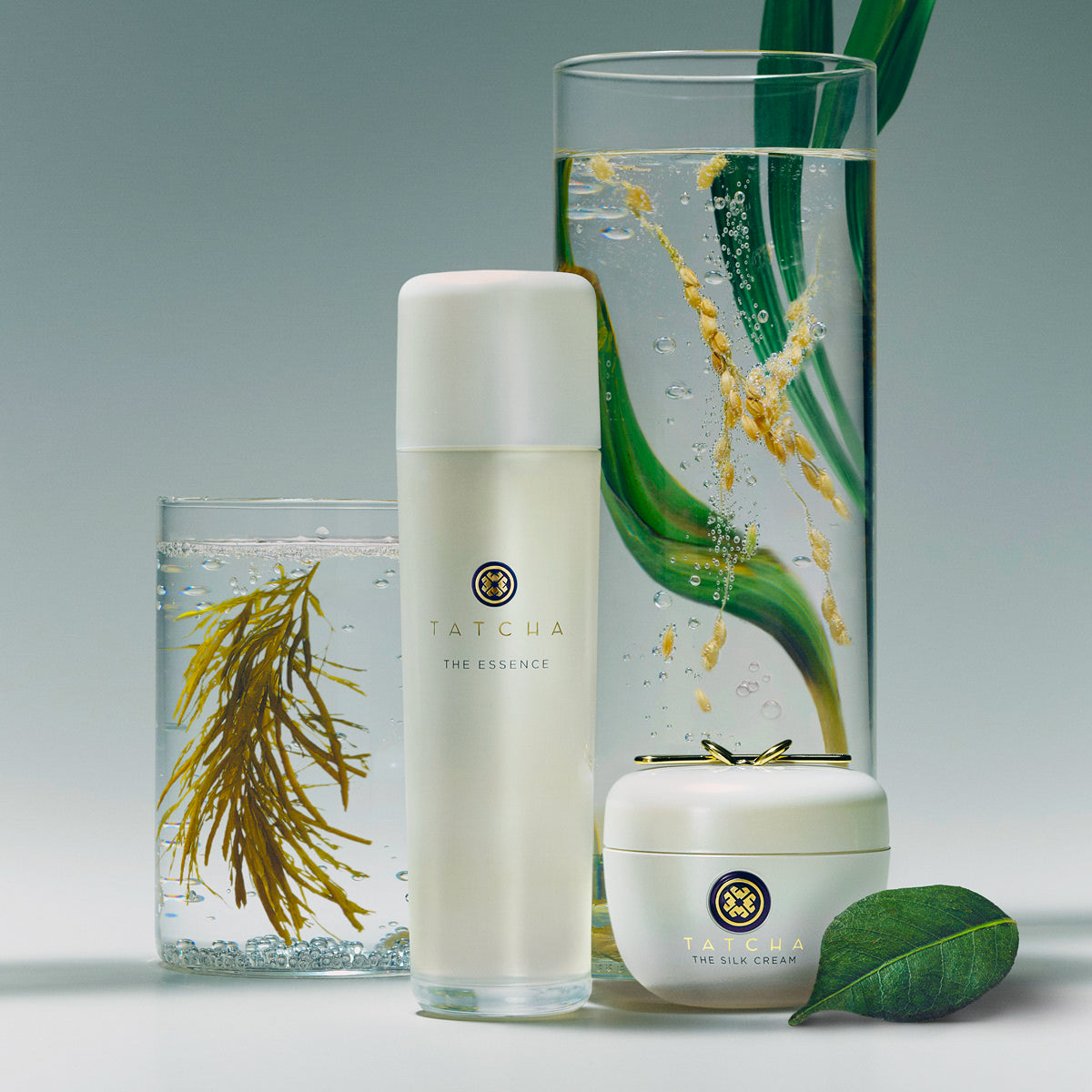
In Japanese, hada means skin, and sei means life. As for the number 3, it refers to the foundational ingredients that power the complex: Akita rice, Uji green tea, and Okinawa algae. Inspired by the nutrient-rich Japanese diet, the Tatcha Institute took a page from a practice used for centuries in Japanese food and wellness: hakkō or fermentation. These three ingredients come to life when paired with a special yeast and a proprietary fermentation process.
Double-Concentrated Fermentation
Manufacturing Process and Sourcing
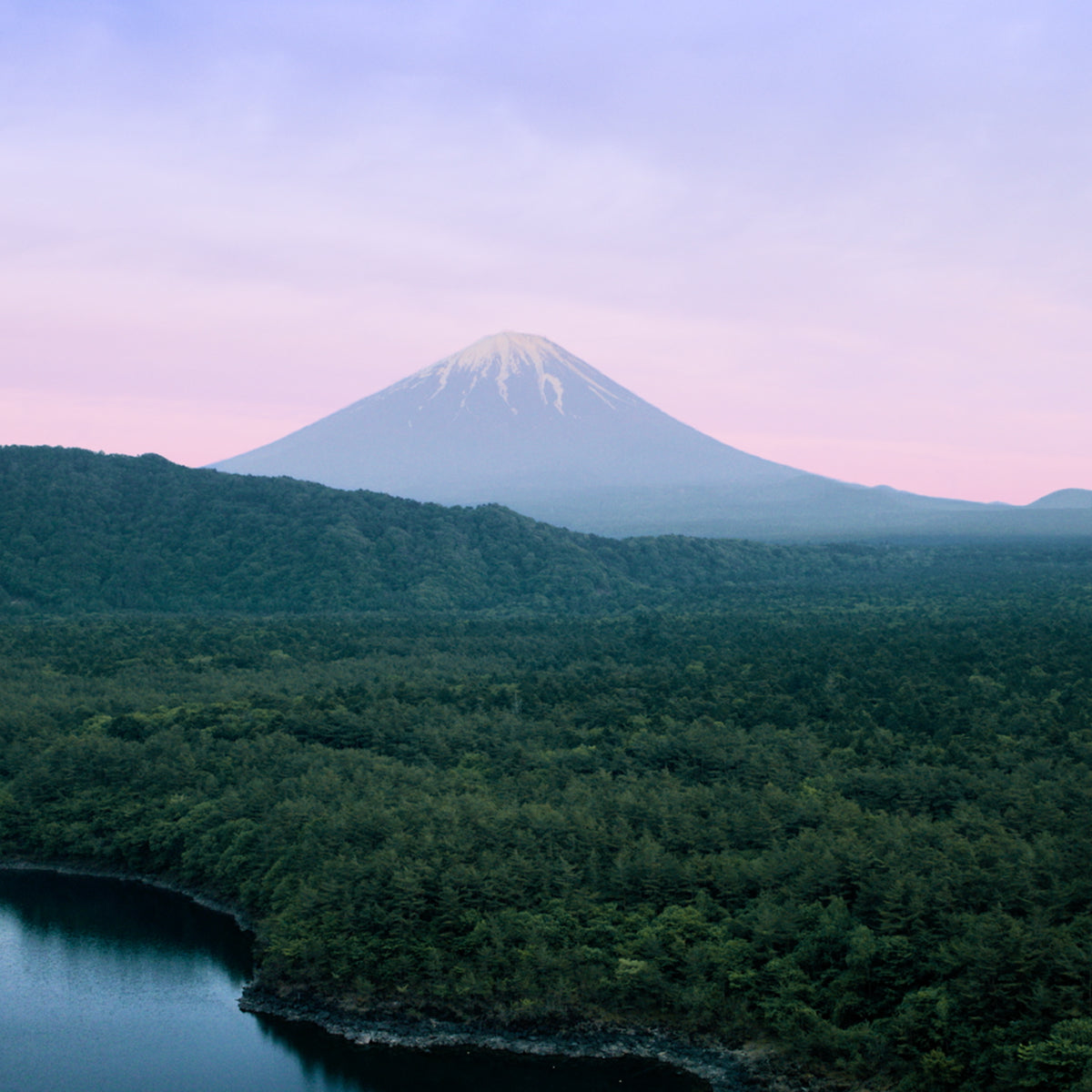
Hadasei-3 is composed of three ingredients chosen with exacting precision and sourced from the specific regions of Japan where conditions are perfect for the most potent formula. Akita rice comes from the cold northern part of Japan, where refreshing, pure water and brisk seasons produce extraordinary quality grains of rice. Uji green tea comes from the misty hills outside of Kyoto, where tea has been painstakingly cultivated for centuries. Lastly, Okinawa algae comes from the waters surrounding the stunning island, known for its residents' exceptional longevity.
While each ingredient on its own is powerful, when the trio is combined with careful and thoughtful precision, the process is transformational. The Akita rice is fermented first with a specially selected yeast strain, creating a base that delivers nutrients directly into the skin. Then all three ingredients are combined and fermented once more—boosting their potency, generating amino acids and naturally occurring lactic acid, and unlocking a whole new complex that could not have been achieved without Tatcha’s double-fermentation process.
Tatcha Institute
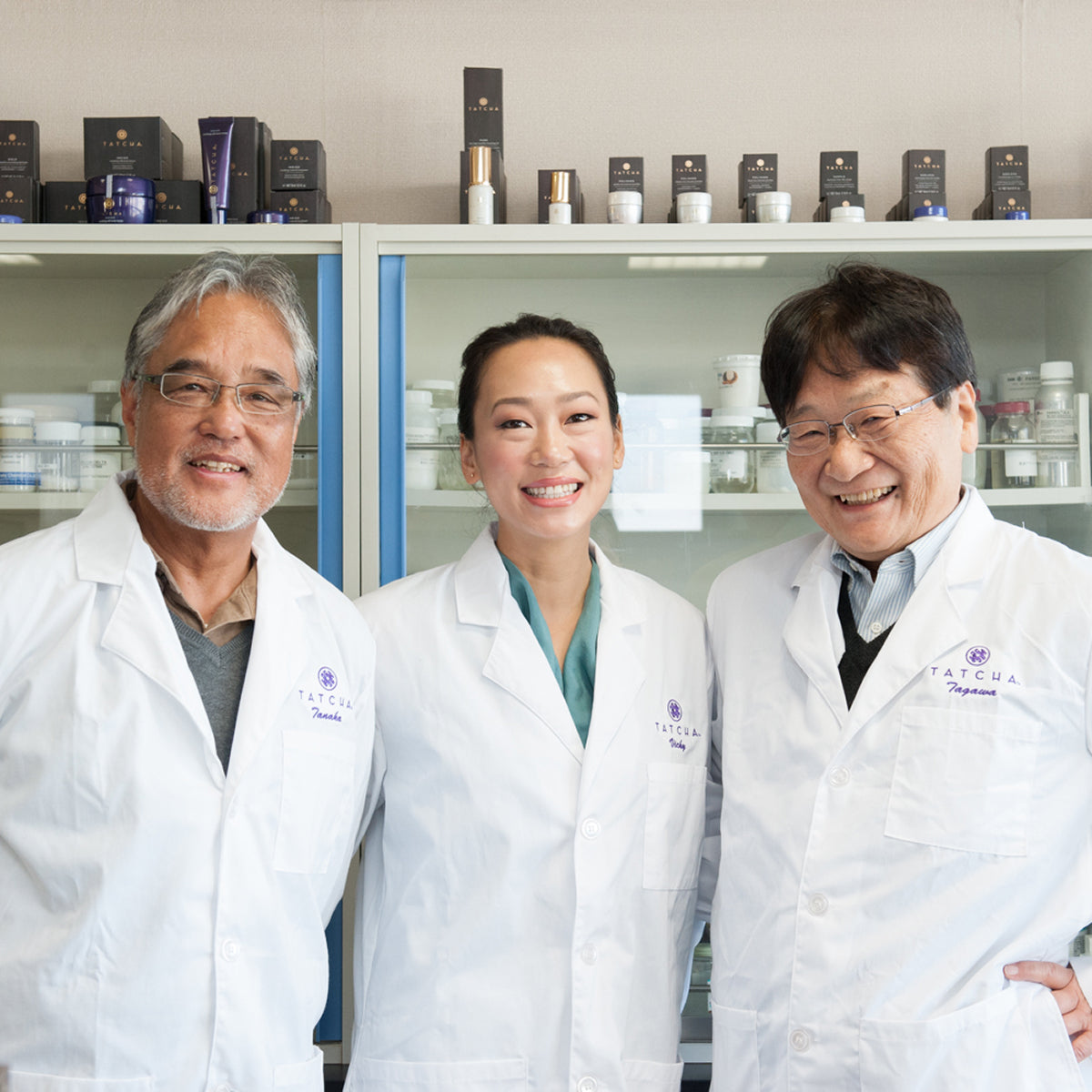
Founded in Tokyo in 2010, the Tatcha Institute bridges the gap between ancient Japanese wisdom and modern innovation. Every formula is developed, tested, and perfected with rigorous care, all overseen by the Tatcha Institute scientists. Tatcha formulations are not just combined, but rather the entire process—from ingredient sourcing to scientific testing—works in harmony, much like nature itself.
Hadasei-3 Research Themes
While Hadasei-3 is the heart of Tatcha, research is the basis of Hadasei-3. The Tatcha Institute uses a research progression that moves from cellular and mechanical understanding toward more skin-relevant models. This is to ensure that Hadasei-3 is proven in all key scientific themes of barrier support, skin structure support, and skin resilience. Here are the four processes that the Tatcha Institute employs to ensure every product is thoroughly tested.
-
In vitro cell studies
-
Living skin equivalent models
-
Ex vivo human skin explant studies
-
Human in-use clinical studies
In vitro cell studies: In vitro is Latin for “in glass,” meaning in vitro testing usually occurs in controlled environments with cells and microorganisms studied in petri dishes or test tubes. This is a great first step to study specific cellular behaviors and interactions before advancing to more specific testing.
Living skin equivalent models: These are tests conducted to mimic the structure and function of skin (usually as a non-animal alternative within skin research). These are helpful models to assess reactiveness, irritation, and compliance before further testing.
Ex vivo human skin explant studies: Ex vivo means “out of the living” in Latin and refers to experiments or procedures performed on tissues or organs extracted from a living person, often from plastic surgery procedures. In a laboratory, tests are run to analyze skin viability, efficacy, and penetration.
Human in-use clinical studies: The final step in our process allows for real-world simulation. These are studies that are tested on real users in a clinical setting, allowing for realistic settings and ensuring the safety between the user and the product. This process focuses on usability and confirms safety, evaluating the entire user experience—including packaging, application, and labeling.
Hadasei-3 Benefits
While the complex has a handful of benefits, three elements are clinically proven and showcased in published abstracts.
Supports healthier-looking skin under environmental stress
In a 2023 published abstract, Hadasei-3 was found to be two times more potent than a single-rice ferment, thanks to its composition and double-fermentation process. The two-step fermentation process was shown to significantly improve the antioxidant effect, thus helping to protect skin from UV-induced damage by reversing UV dysregulated genes. This means that Hadasei-3 increases cellular resilience against UV-induced aging, helping to protect the skin against superficial aging through multiple mechanisms.
A handful of key scientific methodologies made this abstract’s findings possible. To discover that Hadasei-3 is two times more potent than a single-rice ferment, Tatcha’s research and development team utilized an antioxidant capacity assay. This chemical test measures the strength of ingredients and assesses the total antioxidant capacity. In this test, scientists compared double-fermented rice to single-fermented rice and found that the double fermentation is twice as effective.
To assess cellular resilience against UV-induced aging, the Tatcha scientists utilized an ex vivo human skin explant study. In this experiment, researchers applied a cream containing the double-fermented mixture to the skin once daily for three days. They then exposed the skin to UV radiation and extracted RNA—basically the messenger present in skin that acts as a set of active, real-time instructions that your skin uses to build proteins, regulate healing, and manage inflammation. They discovered that enzymes that break down proteins (MMP3, a major contributor to photoaging) were inhibited, and enzymes and proteins (TIMP2 and SERPINH1) that resist collagen degradation and structural aging caused by the sun were increased.
Supports skin structure and visible skin quality
In a 2024 published abstract, Hadasei-3 was shown to work at a cellular level to strengthen and stabilize the skin barrier by multiple pathways, including antioxidation, filaggrin expression, and oxytocin. Tatcha’s proprietary complex was proven to play an important regulatory role in skin barrier function, helping to maintain epidermis homeostasis. Also, Hadasei-3 is clinically proven to provide immediate soothing comfort to visibly inflamed skin, while gradually helping to restore a youthful, radiant appearance.
To verify these findings, the Tatcha scientists utilized whole transcriptome sequencing, a comprehensive technique that analyzes the entire RNA, on human keratinocytes and fibroblasts treated with Hadasei-3. In keratinocytes—the predominant cells in the epidermis—Hadasei-3 was found to activate pathways critical for keratinization, a natural biological process where skin cells mature and fill with keratin, which helps to form a protective outer layer that strengthens the skin barrier. Fibroblasts are connective tissue cells in the dermis that produce collagen, elastin, and more to provide strength, elasticity, and structure for the skin. Fibroblast activity naturally declines with age, leading to wrinkles and sagging. The scientists analyzed these important fibroblasts treated with Hadasei-3 and found that cellular renewal genes (EGFR and MKI67) were increased, as were genes responsible for extracellular matrix (ECM) integrity and dermal scaffolding (COL7A1 and VCAN). This demonstrates that the complex directly strengthens the skin barrier.
Supports skin barrier function
In a 2024 published abstract, Hadasei-3 was shown to protect cells from UV-induced suppression and restore filaggrin synthesis, which is essential in repairing the skin barrier. Also, Hadasei-3 is noted to protect and enhance the skin barrier against UV damage.
A few key scientific takeaways are worth mentioning here. A living skin equivalent test showcased that Hadasei-3 actively increases filaggrin gene and protein expression. Filaggrin is a vital protein responsible for building, maintaining, and hydrating the skin's outermost barrier. It binds keratin fibers together to strengthen skin cells and breaks down into amino acids that act as the skin's natural moisturizing factor (NMF). In a study conducted by Tatcha’s scientists, Hadasei-3 was shown to increase filaggrin gene expression, meaning it increases the skin’s natural capacity to retain moisture and defend against transepidermal water loss (TEWL). The study also showcased Hadasei-3’s ability to sustain filaggrin levels even when subjected to UV stress, mitigating environmental damage and preserving barrier integrity.