




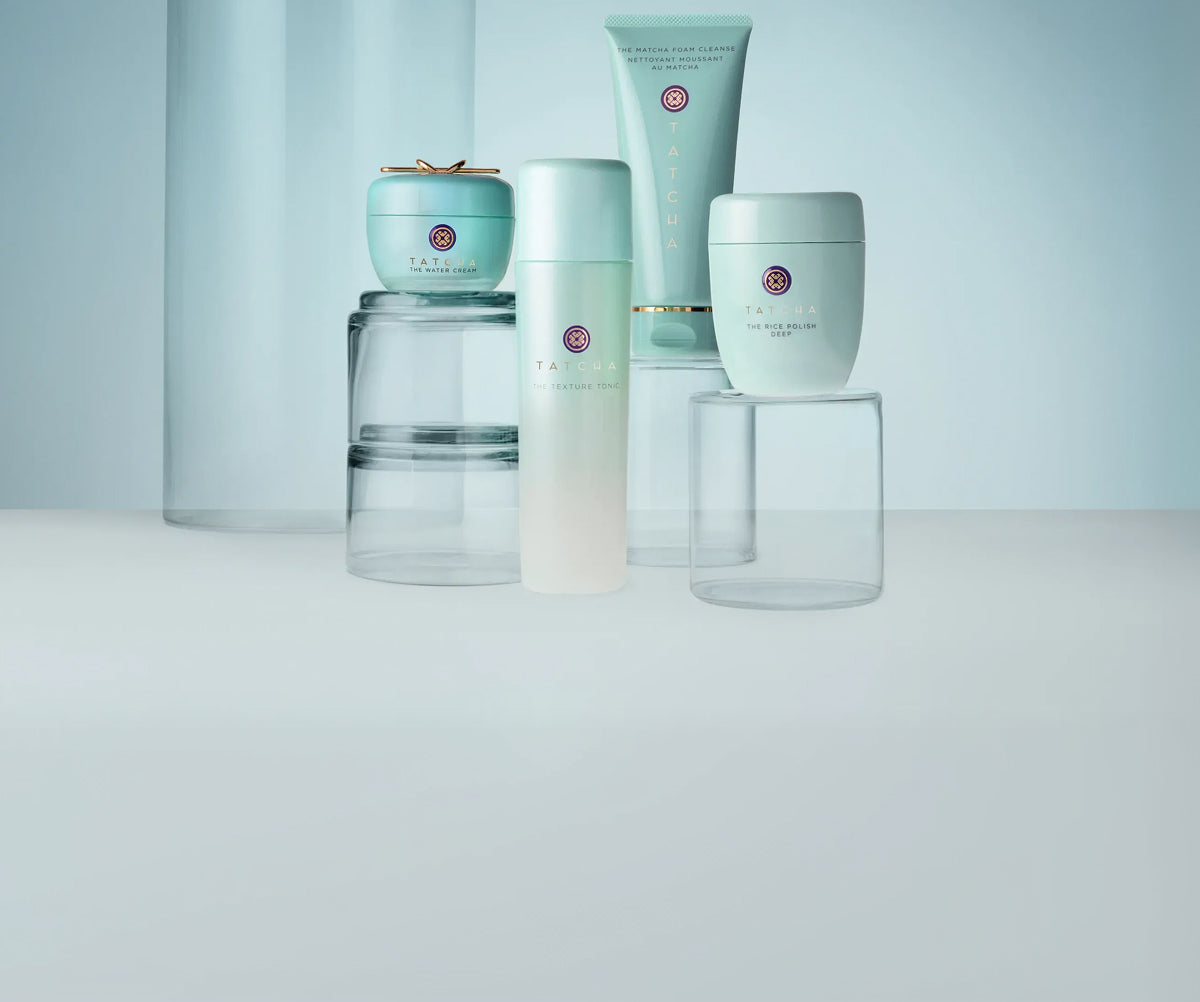
T-House

Here's the Story
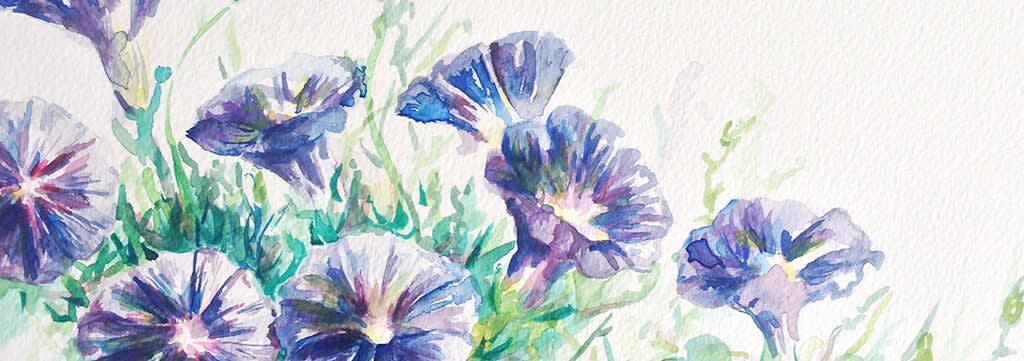
Just as ubiquitous cherry blossoms symbolize springtime, summer in Japan belongs to the bolder-hued Morning Glories, or asagao. The name means “morning face,” a lovely description of the flowers’ unfurling their trumpet-shaped petals at sunrise to herald the day. Popularized in the Edo Period, they appear frequently in literature and paintings, are celebrated with an annual festival every August and in a thoroughly charming tradition—Japanese elementary students are given Morning Glory seeds at the end of spring to nurture over the summer holiday. When returning to school, the children bring their blossoms back to the classroom where they are dried and used for all kinds of decorations and projects.“...a single flower I spotted years ago inspired the particular hue we now refer to as “Tatcha Purple.”Morning glories are special to Tatcha too, because it was a single flower I spotted years ago that inspired the particular hue we now refer to as “Tatcha Purple.” The color was so vibrant in the summer sunlight it seemed to be glowing, yet there was an artful delicateness to the crown-like opening and funnelform. This simple flower recalled the brilliant blues and purples of silk kimono, and the geisha’s graceful sophistication. The picture I took on my phone that afternoon was studied by our creative team and was the subject of countless conversations.Another lovely thing about Morning Glories is that they remind me of the benefits of getting out of bed sooner rather than later, which is why I planted several of them in my back yard years ago. Seeing them in the morning is one of my favorite ways to th start my day. Since January, I've gone to sleep earlier and wake up at dawn, which has truly changed my life for the better. It makes me more productive and clear-headed, in addition to giving me more time to spend with Alea, cook, and even exercise. Starting my day with calm and quiet helps keep me grounded even when things get hectic later in the day. If you’ve been wanting to get an earlier start, I thought I’d share some of my favorite ways to ensure my “morning face” looks its best:• Create a lovelier waking experience. Waking up on your own without an alarm is a beautiful thing, but it can take time to achieve and is not always practical (especially if you have an early flight). However setting your alarm to ring more quietly, or to the sounds of birds chirping is a gentle way to help your body adjust. There are also clocks with lights that gradually become brighter instead of making noise that work very nicely for this too.• Go to sleep sooner. When you’re well-rested, your body and mind feel and perform better. More sleep affords your body more time to recover and recharge for the day.• Hydrate. In the later phases of sleep, skin tends to lose moisture. Be sure to drink water throughout the day and evening to stay hydrated, but limiting liquids can help you sleep more soundly for longer stretches.• Treat yourself to a relaxing and rejuvenating facial massage. Facial massage helps release tension and improves circulation, leaving skin glowing. Using a light facial oil, such as the Gold Camellia Beauty Oil, and your fingers or a massage tool like the Akari Gold Massager, give yourself a short and sweet massage. One of my favorite massages is the quick Yuyake massage. If you’re using your hands, use your fingertips in a light, tapping motion along your jawline, between the eyebrows, and around your temples.• Use a silk pillowcase. Unlike cotton or polyester blends, silk doesn’t absorb the natural oils produced by the skin. A silk pillowcase will help your skin retain its moisture.• Enjoy a moment with a loved one. Every night, I read with Alea. This nightly ritual is one of my most treasured, and I sleep so much more soundly after tucking her in.Are you an early riser, or trying to wake up earlier? I’d love to hear your tips or tricks on moving up your morning.
Oshiroi: The Inspiration for Our Sunscreen
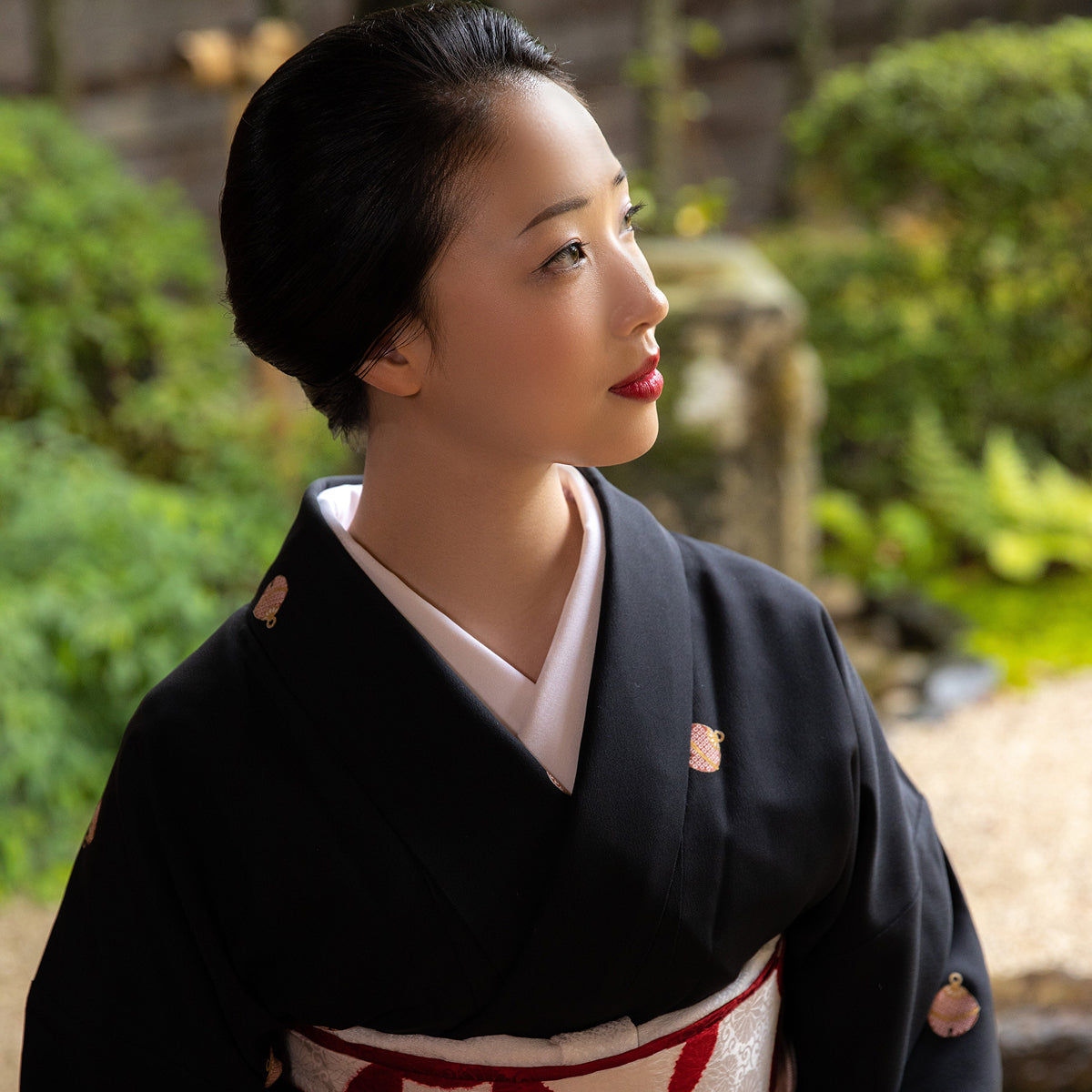
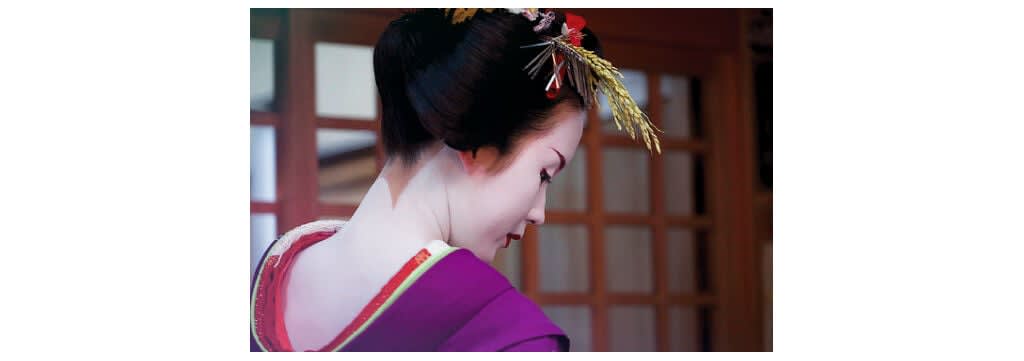
Meeting a living, breathing geisha for the first time is a bit like looking at someone who just stepped out of a museum painting. The elaborate kimono and perfect hair capture the eye first, but it’s the iconic white makeup that mesmerizes me the most. The layered pigment, called oshiroi, was one of the main inspirations behind our new sunscreen because of its flawless, smooth-as-silk finish. “Oshiroi is comprised mostly of natural ingredients, including titanium dioxide and zinc oxide ...” During the four-year journey to create a modern-day, translucent version of this complexion perfector, I learned many fascinating things about oshiroi—including its theatrical origins. Centuries ago geisha performed in candle-lit rooms and relied on oshiroi to illuminate their faces. The tradition continues largely unchanged to this day. Oshiroi is comprised mostly of natural ingredients, including titanium dioxide and zinc oxide, which have sun protecting properties. Moist to the touch but solid in its small pan, the makeup is gently brushed onto skin in thin layers to achieve the look. Before applying it, geisha use a thin layer of wax-based primer, called bintsuke to protect their pores and create an even canvas. The combination of primer and makeup allows geisha to wear their performance makeup for hours without any creasing or caking. Its mineral-based ingredients created a protective veil that reflected and scattered the sun’s rays, serving as one of the earliest forms of sun care. From the beginning, I knew our Silken Pore Perfecting Sunscreen would include light-deflecting protection from zinc oxide, which we blended with Japanese Wild Rose extract to tighten pores and leave skin petal-soft. For those who wear makeup, it doubles as a primer so that cosmetics look better longer. For those forgoing foundation, it gives skin a naturally beautiful finish that lasts all day. Even though our version of everyday oshiroi is not as recognizable, it effortlessly imparts the same elegant, skin-perfecting look that geisha mastered long ago.
10 Things I Learned From a Geisha
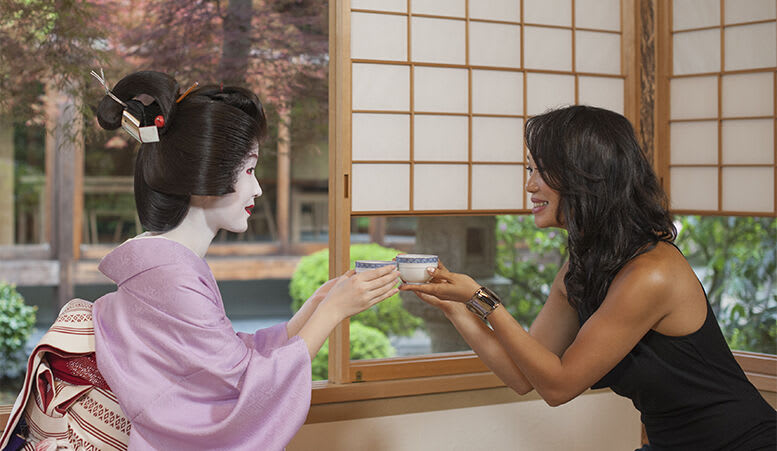
The geisha have shared many secrets with me over the years, but the ones I treasure most are not the beauty tips—although I love each and every one of those too!—but the things they have mentioned in passing or taught me through elegant example. Whenever I am feeling tired or in need of a boost, I find myself returning to these truths and find myself feeling better before long. 1. A large part of the allure of the geisha stems from the fact that they’re a little bit unknowable. I’m no longer single, but if I were I would definitely take some learnings from that. It's a good thing to be a little bit mysterious. 2. Red lipstick looks good on everyone. 3. True beauty begins in the heart and mind. 4. There are many attractive women out there, but it is hard to not be attracted to someone who is confident, courageous and has a point of view. 5. When it comes to showing some skin—less is more. When in formal kimono almost every inch of their body is covered. The only areas exposed are the hands and the nape of the neck, tantalizing the imagination. 6. Although the West has largely misappropriated the geisha as concubines, they are in fact highly trained professional dancers and musicians, very well educated and very good at what they do. Being excellent at what you do is undeniably appealing. 7. There’s a lot to be said for dressing up. Especially in this land of hoodies and jeans, putting on a dress or something special not only feels good, it celebrates your feminine side. 8. Wash your face every night. Because purification is at the heart of the geisha beauty ritual, taking the time to properly cleanse my face every evening makes me feel like I am getting a truly fresh start. 9. Stay out of the sun! I will walk across the street to stay in the shade and always wear sunscreen. Long before science proved how damaging UV rays are for the skin, the geisha knew that staying out of the sun kept their skin looking healthy. Using a deeply hydrating moisturizer, like the GOLD Camellia Beauty Oil, is one of my favorite ways to end the day. 10. Some of the most attractive, mesmerizing geisha I have known are the ones who were in their 70s and beyond, because they have honed the art of being an interesting person over all those decades. In the West, we are obsessed with youth and beauty, but these women have taught me that beauty is something to be gained over time, not something that is lost over time.

Introducing the Tatcha Institute
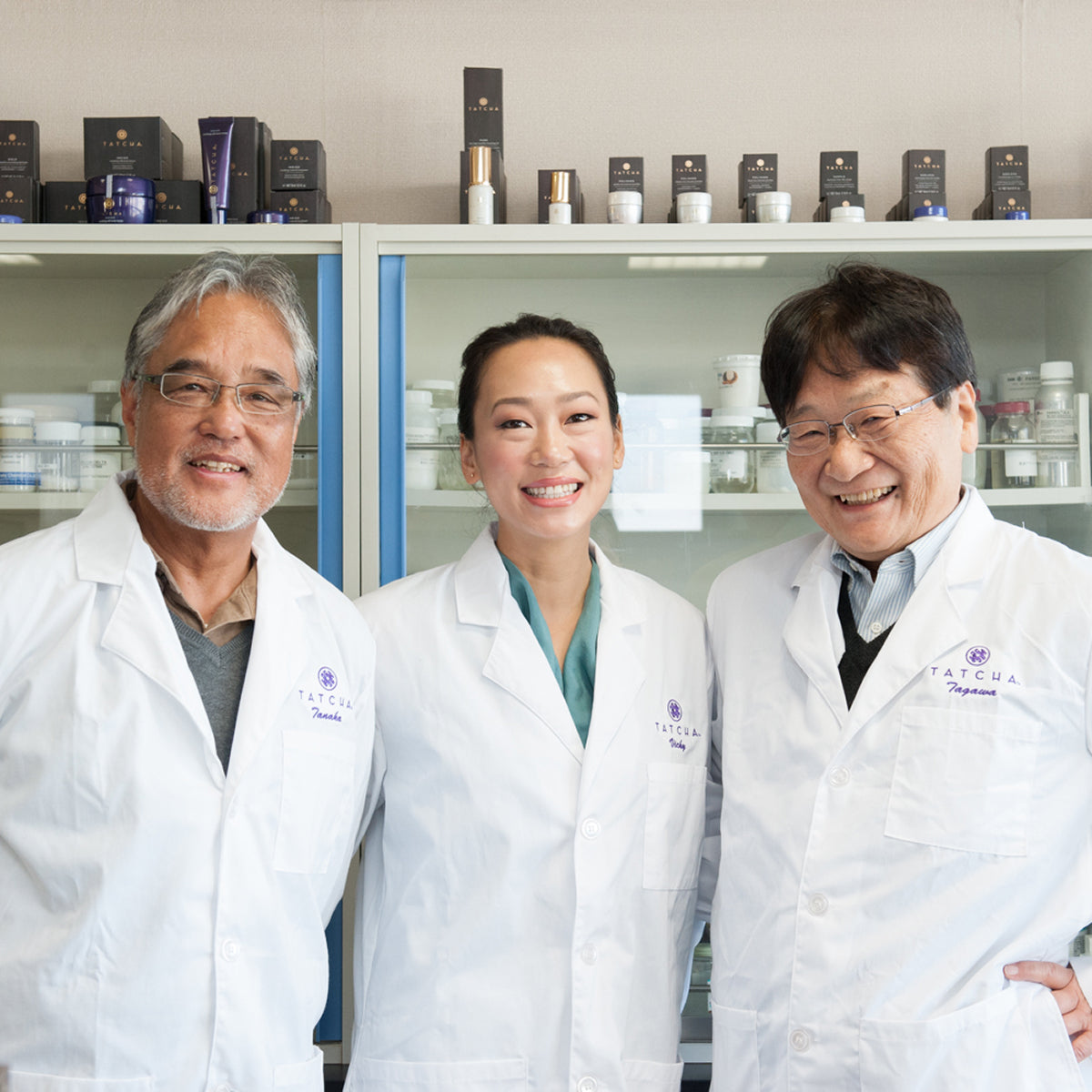
The beauty rituals of the geisha fascinate me endlessly, and inspire everything we create here at TATCHA. Honed by generations of women, their secrets feature pure, natural ingredients and centuries-old techniques that are as effective today as they were in the Edo period. I learned that often, their recipes are mixed in small batches to maintain purity and maximize benefits. To share these secrets with modern women everywhere, we worked with renowned chemists to marry these ancient methods with advanced scientific technologies.. One of these outstanding chemists—and the head of our new TATCHA Institute—is Masato Tagawa. A world-renowned skincare chemist and gifted educator, Tagawa-san is a pleasure to work with and a true visionary when it comes to skincare. I am honored to introduce him here and share his story with you. V: What inspired you to become a chemist? T: Ever since I was young, I have very much admired my father. He was a doctor, and after the second World War he developed the first emulsifier (a substance made by suspending one liquid into another). He really influenced me—I saw his amazing work and wanted to do what he did. V: What is the greatest joy in your work? T: TATCHA is a young company, but it has an old soul, and it's a very exciting place to work. I have worked with many companies that are well-established, but have an unexciting internal culture. When I first met you, I really felt the passion and curiosity that you have. It left a strong impression. Before, I had always worked to help many people in many different companies, where the main requirement was that I had to keep costs under a certain cap. But at TATCHA, the only rule is that we have to be authentic to our heritage and be the best in the world. We never discuss cost; we just do whatever we need to create something genuinely transformative to the skin that our clients will love, because they deserve nothing less. On the other hand, there are challenges because there is a long list of no-no ingredients because of TATCHA's promise of purity. So it can be exceedingly difficult to recreate from scratch some formulas because of the ingredients that are not allowed, although this is the most fun part of the process for me. V: What changes have you seen in skincare since you began? T: I began by studying both chemistry and skincare. The principles of both are inseparable from dermatology—how actives are absorbed by the skin, how they affect it. Understanding that relationship is very important. The surface of the skin is covered by what is called the “horny” layer, which is very important to the skin’s appearance. If the structure is good, it is healthy and protects the body. Below the surface, skin is very sensitive. To me, healthy skin is beautiful skin. V: How do you find kodawari in the work that you do? T: Kodawari has many meanings. It’s difficult to explain exactly, but it speaks to the history and the culture of Japan. Promising to formulate without harmful ingredients, that is a form of kodawari. Creating skincare that our clients always want to use, that is also kodawari. The history, culture, ingredients, and quality—everything together creates kodawari and makes TATCHA special. For me, creating a formula requires perfect harmony. Many people think that one ingredient is the most important, so you should have more of that ingredient. But it’s just as important to consider how Ingredient A will interact with Ingredient B, and how that combination will work with Ingredient C. It is like an orchestra—you have the violin and the piano and the cello, many players with amazing skill. But still, if one rises above the others, they are not harmonized. So it is in formulating: if you make it harmonious, you create beautiful music, you create a beautiful product.
A Mon of Our Own
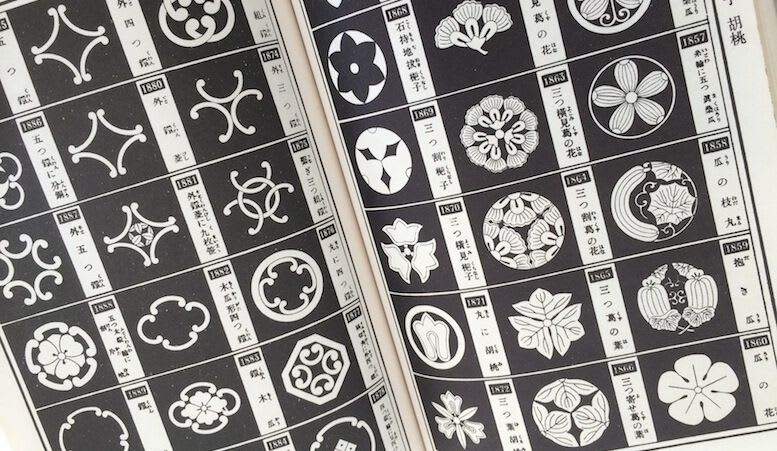
Though our TATCHA team has grown quite a bit, our shared dedication to bringing the secrets of the past to life has created a deep bond—we truly consider ourselves a family. In Japan, as in other parts of the world, many families have a crest, called a mon, used to decorate everything from formal kimono and swords to vanity sets banners outside the home. These symbols, used as historical representations of a family’s lineage, were first used in the 9th century by nobility and later extended to the wider population.Just like monograms and coats of arms, these motifs communicated more than a name alone could convey. So it was only natural that we were creating TATCHA, we wanted a mon of our own. Nami Onodera, our Senior Director of Product and cultural advisor, found a stunning book containing over 20,000 family crests and their meanings. I loved the detail that each entailed: A fan, for example, represented a family of dancers; a chrysanthemum symbolizes loyalty. Our mon, created by our co-founder Stanley Hainsworth, is a representation of the petals of a single standing flower, a visual extension of the meaning behind our name and the promise of the purity of the products we create. Like other familial banners waving from rooftops across Japan, our mon is a symbol of pride, purpose and heritage – which is why its included on each and every item we make. Always, Vicky
The Meaning of Tatcha
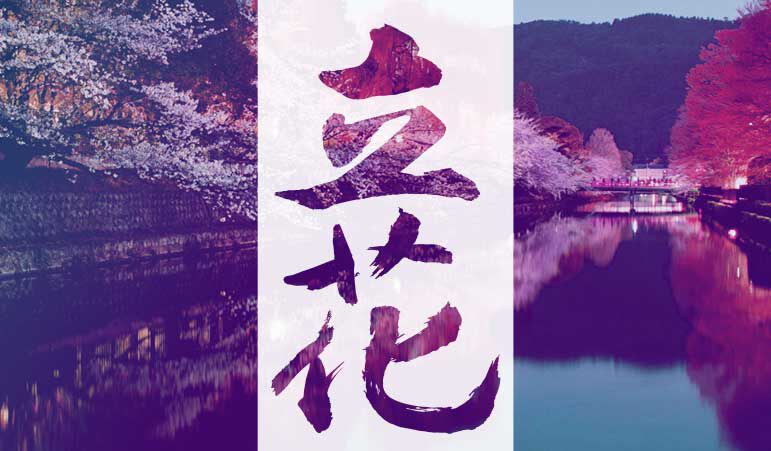
I sought a single, perfect word. Just as I pored over books of names before my daughter was born to find one that represented a lifetime of hopes and dreams, coming up with a word to represent the company I was creating at the same time presented an equally weighty challenge. Nothing in dictionaries or reference books seemed right, and I quickly came to realize that I needed a new word – one that would stand alone in elegant simplicity yet be substantial enough to convey the passion for the ancient beauty traditions that inspired the collection and the modern science used to perfect them. It had to feel classic, yet contemporary -- syllables symbolic enough to pay homage to the time-proven beauty secrets of the geisha while strong enough to become the hallmark of a new beauty heritage -- an approach to skin care that is pure, spare and delivers on its promise to create healthier, glowing skin. We turned to nature for inspiration, specifically to ikebana, the Japanese art of flower arranging where each branch, leaf and flower is painstakingly selected and placed harmoniously with one another and with nature. The oldest, most formal interpretation of ikebana is a minimalist practice known as tatehana, which translates from Japanese as “standing flower,” and features a single stem positioned alone in the center of a vessel. The stunning, simple result belies the complexity of its composition, honoring the bloom’s inherently beautiful essence and intrinsic glamour. Another word that resonated deeply with us was chabana, arrangements created for use as part of the Japanese tea ceremony. Like freshly unfurled petals from a grafted plant, TATCHA was born from combining the first three letters of each of these deep-rooted phrases. TATCHA’s approach to luxury is informed by these floral disciplines, in part because botanicals are at that the heart of our formulas but also because they honor the Japanese appreciation for the beauty found in simplicity. My greatest wish is that everything this name was created to embody – simplicity, purity and quality – is felt by each and every person who experiences our collection. Thank you for being a part of this journey and giving us the opportunity to live up to our name. Always, Vicky
A Geisha's Skincare Routine
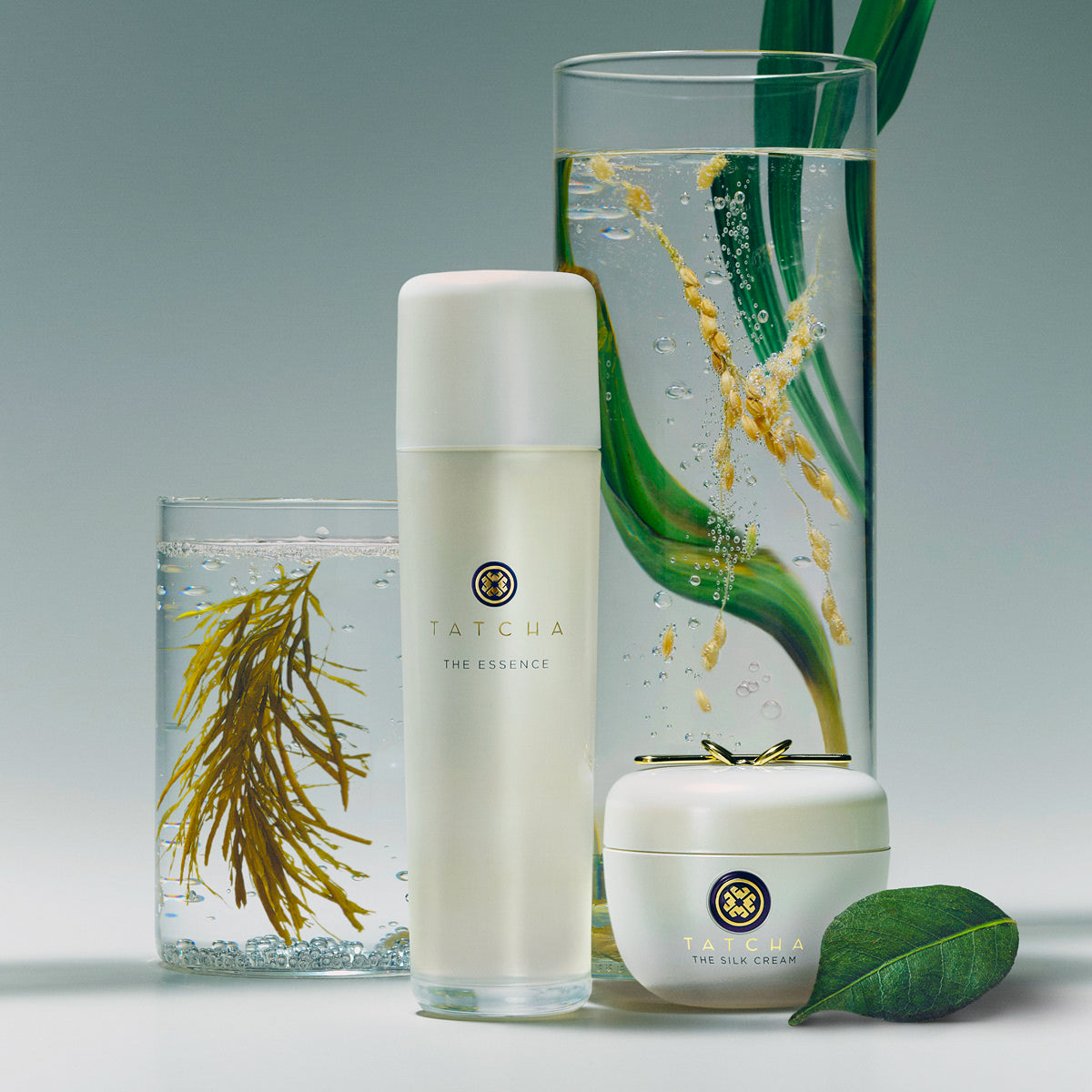
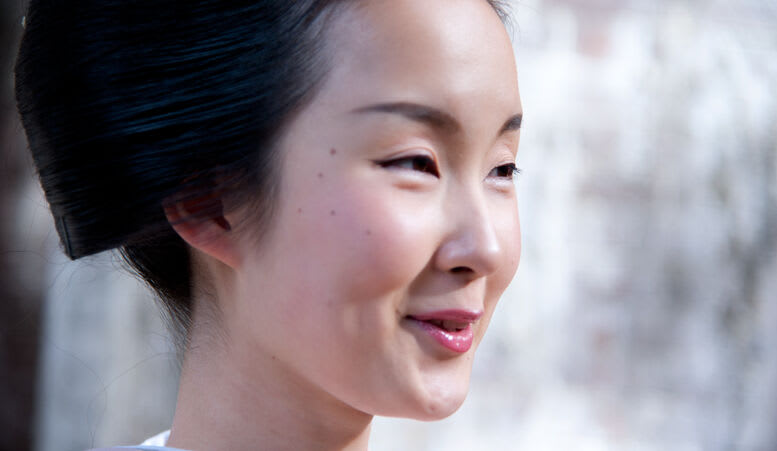
When I began spending time with the geisha, they would schedule me to interview them in between formal appointments. Thus, I only saw them in full costume with the flowing kimono, delicately painted white faces and vermillion lips. Pictures rarely do justice to their otherworldly appearance because the harsh glare of a flash bounces off the white makeup and creates an extreme effect in photography. In person, the geisha’s makeup glows under the moonlight and has an almost transparent quality. As the geisha began to truly welcome me into their world, I started to spend time with them as they rested between classes. This was when I realized the real story behind a geisha’s beauty: Underneath their iconic white makeup is the most breathtakingly pure skin I had ever seen in my life. I have met trainee geisha as young as 19 and senior geisha as old as 70, but regardless of age they all share the same exquisite complexion. The Japanese actually have a name for skin like this. They call it “mochi hada,” which refers to the pure, gleaming, soft quality of a baby’s skin. Given the demanding hours geisha keep, the full makeup they constantly apply and perspiration that comes with their intricate and demanding dances, I never expected these women to have such beautiful skin. Naturally, I had to ask what their secrets were and, amazingly, their ritual is simple and straightforward: Purify: Removing makeup and environmental impurities from the face is the most important secret to mochi hada skin. Geisha must be diligent about this step because of their white makeup, so they use a tsubaki (camellia) classical cleaning oil to melt away the day. Polish: Gently releasing dead skin from the surface of the skin daily not only leaves skin with a soft, healthy gleam but also improves the efficacy of any treatments used afterwards. For centuries, they have used komenuka (Japanese rice bran) to polish the skin. Brighten: When geisha are not in performance makeup, they are required to keep their skin fresh and free of makeup, but they are still expected to have porcelain complexions. As a result, they are keen on addressing age spots and have found licorice root extractextract to be amongst the most effective natural ingredients for preventing and improving the appearance of hyperpigmentation—without sensitizing the skin to the sun as so many modern day brighteners do. Nourish: The final step in the geisha’s ritual is nourishing and sealing in moisture with luxuriously lightweight creams. A popular classical ingredient for such moisturizers is silk extract, which forms a weightless, invisible network on the skin to hold moisture in all day without the heaviness of oils and butters used conventionally in the Western world. Blot: During makeup application and throughout the day, keeping the skin petal-fresh without disturbing their intricate makeup is essential to keeping the geisha’s complexion clear. This is how they discovered the benefits of the gold-leaf beauty papers. Drink Sake (optional): Geisha swear it works.